Japan's oldest wrestling
Sumō (相撲) is the traditional wrestling of Japan, in which two wrestlers (rikishi) meet in a circular ring (dohyō) and each tries to force the other out of the ring or to touch the ground with any part of the body other than the soles of the feet. Japan is the only country where the sport is practised professionally, and it is widely regarded as the national sport. Although its present organised form is classed among the modern Japanese martial arts (gendai budō), sumō preserves ritual older than almost any other, and its history reaches back through recorded centuries into legend.
From myth and rite to court spectacle
The earliest Japanese written records, the Kojiki and the Nihon Shoki, place wrestling among the deeds of gods and legendary strongmen, most famously in the contest between Nomi no Sukune and Taima no Kehaya. Whatever the historical value of these tales, they show that wrestling was bound up with religion and myth from the beginning. By the Heian period the imperial court held an annual sumō ceremony (sumai no sechie) in which wrestlers from the provinces competed before the emperor, formalising the sport as ritual and entertainment. Many of the Shintō elements still seen today, such as purification with salt, descend from this religious background.
A wrestling match that never stopped being a religious rite.
The rise of professional sumō
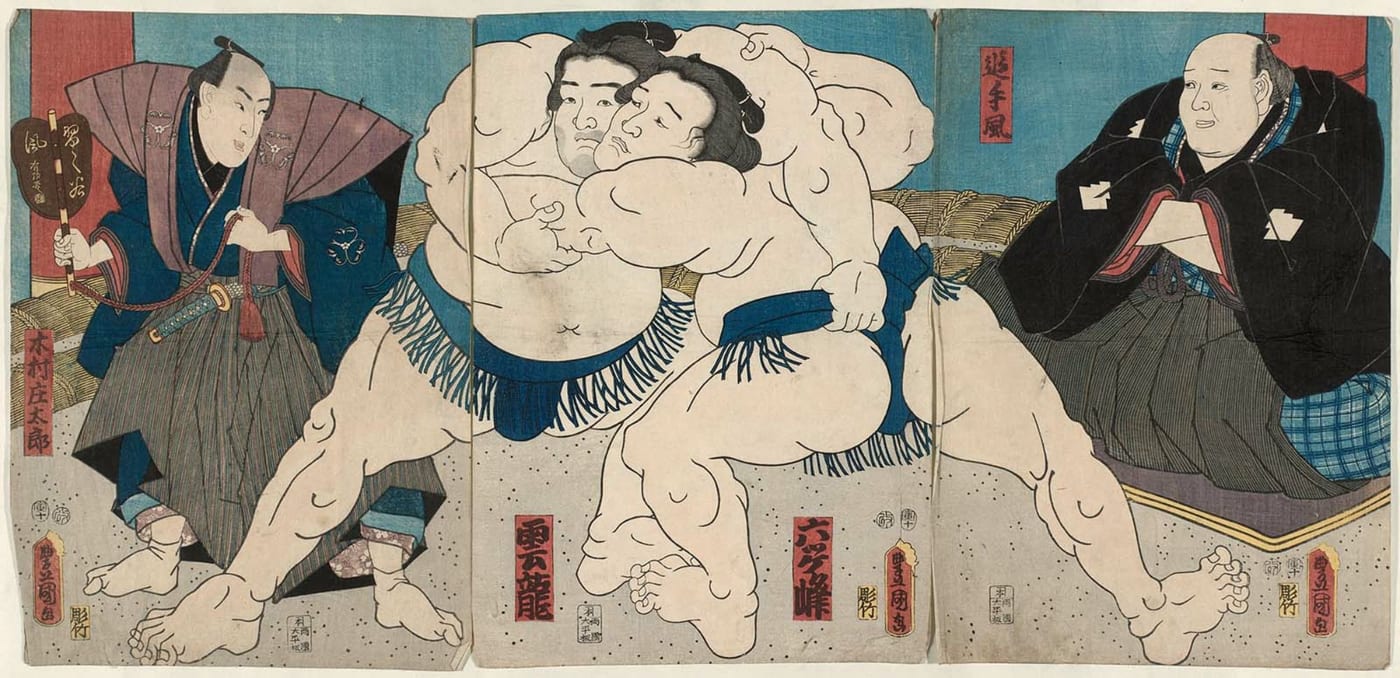
The sumō that fills arenas today took shape in the Edo period, when troupes of professional wrestlers performed at benefit tournaments (kanjin-zumō) held to raise funds, often for temples and shrines. Across the seventeenth and eighteenth centuries the ranking system, the ring, the refereeing and much of the ceremony were standardised into recognisable form. From this professional world descends the modern grand tournament, with its ranked wrestlers, its stable system, and its elaborate ritual framing around every bout.
The living tradition
Professional sumō is governed today by the Japan Sumo Association (Nihon Sumō Kyōkai), which oversees the tournaments, the wrestlers and the training stables (heya) in which they live under strict tradition. The association is the direct institutional heir of the Edo-period professional sumō world, and it maintains the sport's distinctive blend of athletic contest and religious ceremony. Amateur and ceremonial sumō also continue at shrines and festivals across Japan, keeping alive the ritual roots from which the professional sport grew.
How much is certain
The documented history of sumō as an organised sport, from the Edo professional tournaments to the present association, is well recorded. Its ancient and mythic origins are another matter: the legendary contests of the chronicles are cultural memory rather than datable events, and Ryūpedia presents them as the tradition's own account of its beginnings rather than as established history.