The Kokuryūkai, usually rendered in English as the Black Dragon Society, was a Japanese ultranationalist political organisation founded in Tokyo in 1901 under Uchida Ryōhei. It belongs first and foremost to the political history of imperial Japan rather than to martial arts tradition. Its historical significance lies in propaganda, information politics, strategic agitation, and its role within the wider nationalist climate of the Japanese empire.
Origins and Membership
The Kokuryūkai emerged from a broader nationalist environment tied to circles around the Gen'yōsha and figures such as Tōyama Mitsuru. Its early membership was notably shaped by Kyūshū networks, especially Fukuoka, with Saga and Kumamoto also prominent. This concrete social geography identifies it as a real political organisation embedded in the world of ultranationalist activism, pressure politics, ideological networking, and imperial ambition. The name is geographic rather than occult: kokuryū (黒龍, “black dragon”) refers to the Amur River - 黒龍江, the “Black Dragon River” - which formed the Russo-Chinese border in the northeast and marked the limit of Russian expansion into Manchuria. The society named itself after that river to signal its central aim: pushing Russian influence back beyond it. The “dragon” was a border, not an omen.
Historical truth is always more complex than legend, and more instructive.
Documentary Record
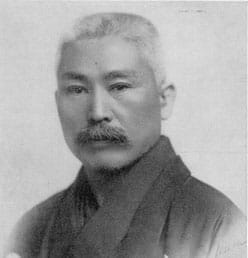
The organisation's footprint survives through publications, archival references, official descriptions, and postwar occupation documents. The Kokuryūkai published material under its own name, including the 1903 work Kankai Tsūgyo Shishin, which survives in digital holdings and points toward geopolitical and strategic interests. Archival material in the Japan Center for Asian Historical Records identifies Uchida as 黒龍会主幹 and places him in a context of inflammatory political writing, including material tied to the atmosphere surrounding the Great Kantō Earthquake. The documentary residue is that of a nationalist political body engaged in propaganda and agitation rather than a sporting association or a mystical combat order.
Postwar Dissolution
Postwar sources reinforce this understanding. SCAPIN-548 lists the Kokuryūkai among the organisations to be dissolved by the occupation authorities, and the International Military Tribunal for the Far East refers to it as an organisation that agitated in support of expansionist policy. These official sources do not record the organisation's inner life in detail, but they show how it was understood in serious political and legal contexts: as part of the ultranationalist landscape of imperial Japan.
Later Mythology
The dramatic-sounding name lent itself to later reinterpretation. Once "Black Dragon" entered Western martial arts imagination, it was treated more as a brand than as a specific historical organisation. The claim that the Kokuryūkai used "kumite-like" no-rules fights for recruitment is not supported by the primary Japanese and official Western sources prioritised in serious research; the stronger source base simply does not establish it. The word kumite itself, in ordinary martial arts usage and especially in karate, refers broadly to sparring or partnered practice, and is not a synonym for a secret death tournament or initiation rite, a meaning it acquired only as it passed through later sensational narratives.
The Count Dante connection illustrates the same process. The Black Dragon Fighting Society belongs to the American martial arts world of the 1960s and 1970s, a milieu of branding, self-invention, dojo rivalries, and promotional culture. That world is historically real and worth studying for what it reveals about how martial arts identity was marketed in the United States, but the leap from this Black Dragon branding to a proven genealogical continuity with the Japanese Kokuryūkai is not demonstrated by the evidence. It is a mythic bridge rather than a documented one.
Sources and Interpretation
The two bodies of evidence differ in kind. On the Japanese historical side, the record is uneven but serious, publications, archival traces, official classifications, and scholarly reconstruction. On the later mythic side, especially in the West, the evidence often comes through interviews, magazine culture, promotional language, and narrative retellings. These latter sources are valuable for understanding myth-making, subculture, and media circulation, but they do not perform the same function as administrative files or archival catalogues.
Two conclusions can therefore be held together. The Kokuryūkai was a genuine ultranationalist political pressure group in imperial Japan, with a concrete documentary footprint and a clear place in the politics of empire, best understood through its publications, archival traces, and official references. Separately, the later Black Dragon and kumite narratives, particularly in the United States, belong to a different evidentiary world in which image, legend, commercial culture, and selective memory predominate. Confusion arises chiefly when these distinct categories (the Meiji and Taishō political network, the postwar American promotional fantasy, and the cinematic archetype) are melted together and presented as a single seamless history.