Bujinkan is a martial arts organisation founded in 1970 by Masaaki Hatsumi in Noda, Chiba, Japan. It draws together nine ryūha (classical schools) that Hatsumi inherited from his teacher, Takamatsu Toshitsugu. Rather than being a wholly modern creation, the system is presented in Japanese sources as a continuation of older traditions, though some of its historical claims sit in areas difficult to verify by modern academic standards.
Background and Transmission
Bujinkan is sometimes described as having begun in the 1970s, but its roots lie in an inherited transmission. Hatsumi's teacher, Takamatsu Toshitsugu, was born in 1890 in a modernising Japan that was already leaving the feudal world behind, yet he carried systems that claim roots reaching back centuries. This produces a tension between documented modern history and traditions that extend into periods where documentation becomes selective.
Survival through adaptability, the body learns to move before the mind decides how.
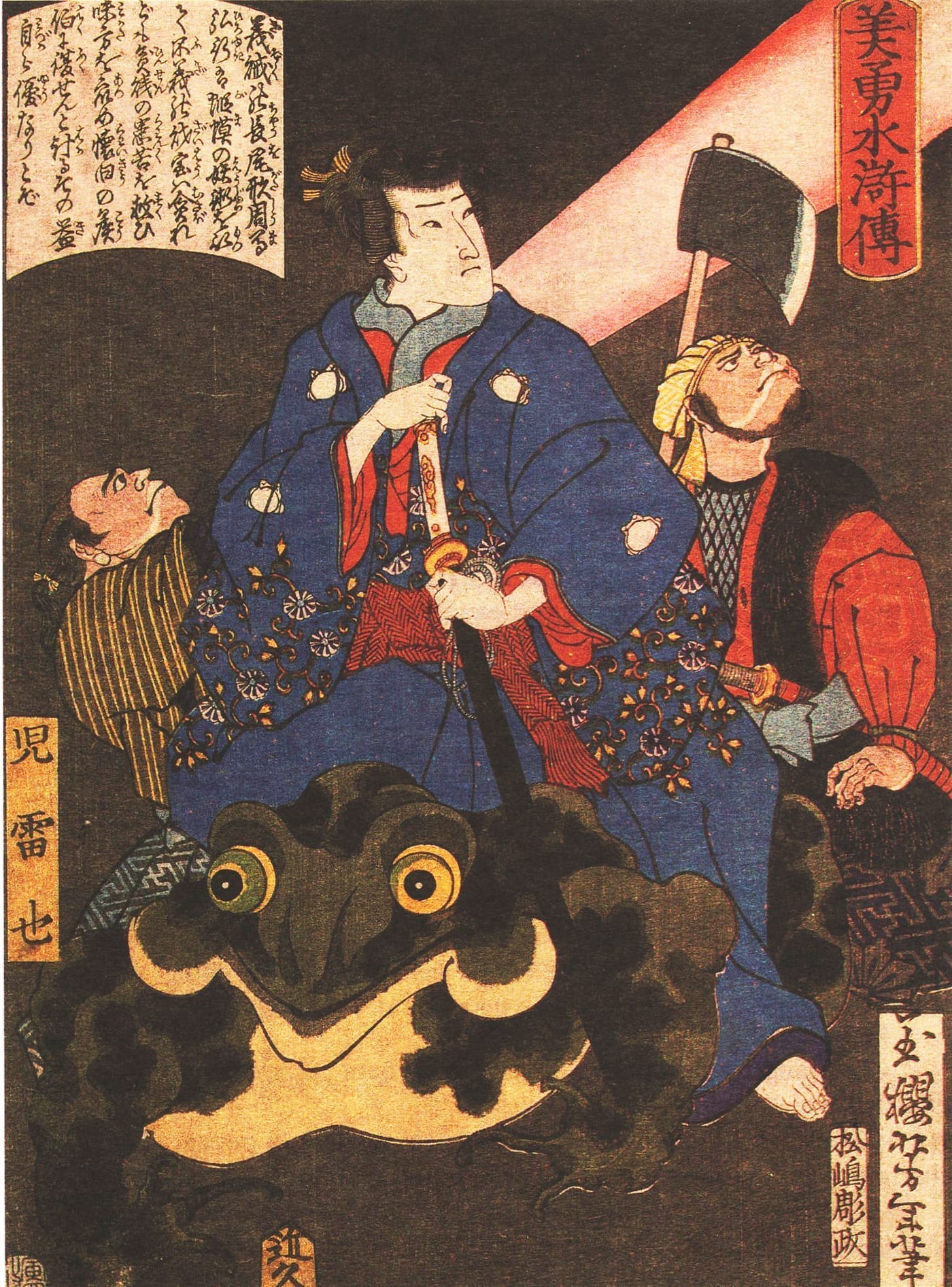
Takamatsu trained under several teachers, most notably Toda Shinryūken, a name tied in Japanese sources to several ryūha and acknowledged in Japanese publications and museum-level references. He received menkyo kaiden, or full transmission, in several schools, including Shinden Fudō-ryū, Koto-ryū, and Togakure-ryū, among others. Japanese accounts also describe him travelling to China and living an eventful life there, presenting these episodes as part of his biography rather than as exaggeration. He returned to Japan around 1919 and increasingly took on the role of a transmitter.
Hatsumi and the Founding of Bujinkan
Hatsumi met Takamatsu in the 1950s as an adult who was already trained in other martial arts and searching for something deeper. He trained under Takamatsu for about fifteen years, and in 1958 Takamatsu named him successor to multiple schools. From that point, the legitimacy of Bujinkan rests on that transmission: accepted, it makes the organisation a living continuation of several classical traditions; rejected, it makes it a modern reconstruction wrapped in older language.
Japanese sources generally do not treat this transmission as controversial, stating plainly that Takamatsu taught Hatsumi, that Hatsumi inherited nine ryūha, and that Hatsumi founded Bujinkan in 1970 in Noda, Chiba. The more heated debates over authenticity have tended to arise outside Japan rather than within it.
The Nine Schools
The nine ryūha that make up Bujinkan include Togakure-ryū, often singled out because of its association with the "ninja" label, as well as Shinden Fudō-ryū, Koto-ryū, Gyokko-ryū, Kukishin-ryū, and Takagi Yōshin-ryū, among others. Each has its own claimed history, its own densho (transmission documents), and its own internal logic.
These schools belong to a transmission culture that does not operate on the same rules as modern historical documentation, relying on oral tradition, scrolls, and teacher-to-student relationships. This means that the individual historical claims attached to them can be neither uniformly verified nor uniformly dismissed by modern academic standards, leaving certainty limited.
Global Spread
In the 1970s and afterward, Hatsumi transformed what had been an essentially private transmission, taught in small circles, into something open to the world. This allowed practitioners outside Japan to access, learn, and spread the teachings. As with any system that spreads globally, this openness also brought dilution, varying interpretations, and uneven quality, with training in different countries ranging widely in standard. Inconsistent quality among some practitioners has fed criticism of the system as a whole.
The Ninja Question
The word "ninja" is closely associated with Bujinkan, particularly through Togakure-ryū, and it has strongly shaped popular perception. The historical context of the shinobi, espionage, and unconventional warfare is often obscured by theatrical and cinematic imagery. Japanese sources tend to treat the subject in a more grounded and less dramatic manner.
Assessment
A balanced view of Bujinkan acknowledges the documented facts, that Takamatsu existed and taught Hatsumi, that Hatsumi founded Bujinkan in 1970, and that the nine ryūha are part of that system, while recognising that some historical claims remain difficult to verify by modern academic standards. The organisation occupies a middle position: its lineage is clearly documented in parts and less clear in others, and it was shaped by real people in real places whose decisions still influence how it appears today.