Danzan-ryū Jūjutsu (檀山流柔道) is a modern Japanese-Hawaiian jūjutsu tradition founded in the early twentieth century by Okazaki Seishirō (岡崎星史朗), a Japanese immigrant to Hawaiʻi. Its name is itself a piece of evidence: 檀山 is an abbreviation of 檀香山, the Japanese name for Honolulu, locating the art precisely where it was built, not in a feudal Japanese valley but in the rough, plural, immigrant world of early-twentieth-century Hawaiʻi. The strongest Japanese-language evidence for the system is not an unbroken homeland lineage preserved in temple silence, but a cluster of Hawaiʻi-based Japanese sources, foremost among them Okazaki's own 1939 transmission catalogue.
A Founder in Exile
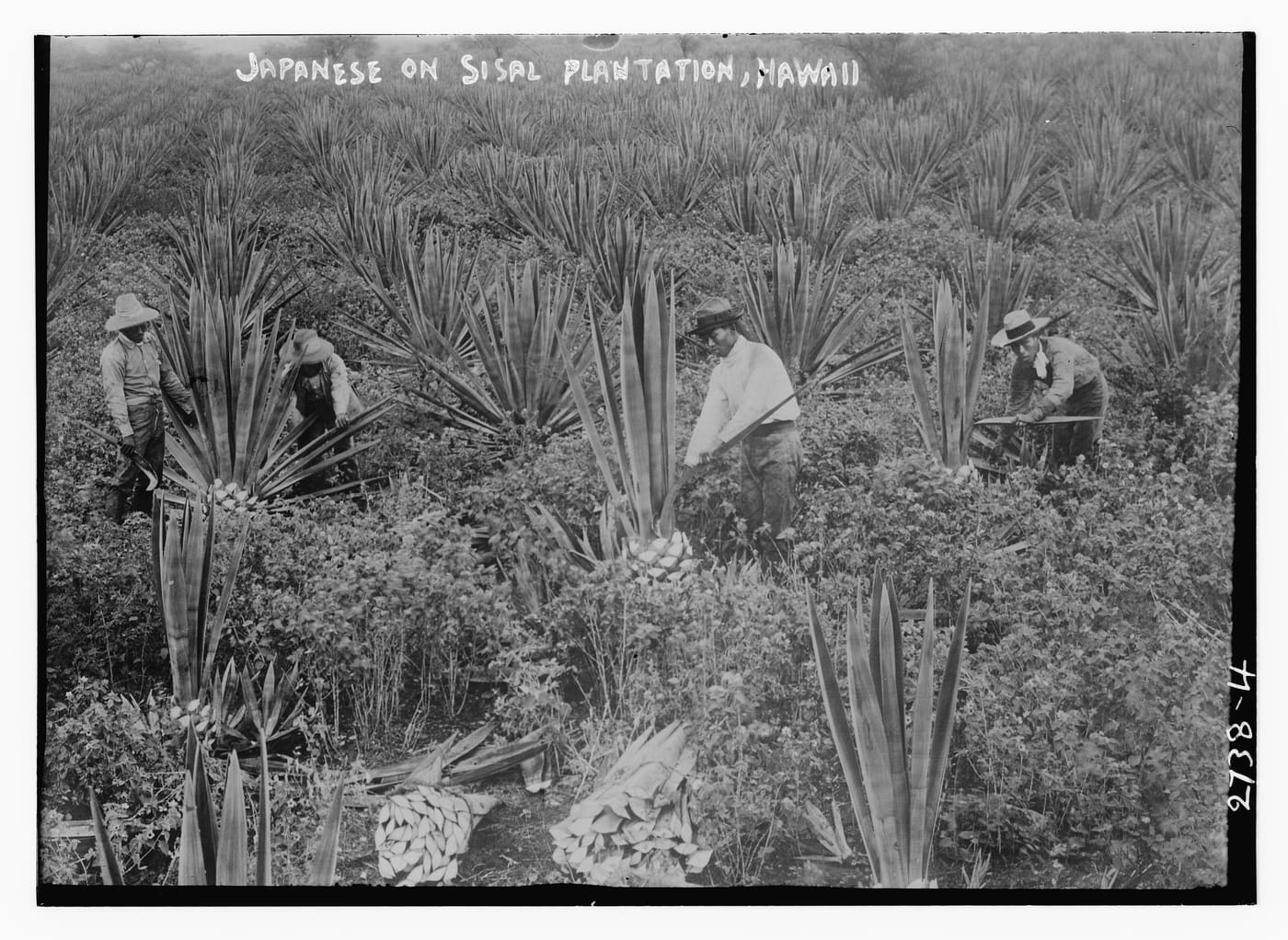
Okazaki was from Date district in Fukushima and, by his own account, moved to Hawaiʻi in 1906. The 1941 Hawaii Hōchi (ハワイ報知) biography places his entry into the Hilo Shinyūkai dōjō (ヒロ心勇會) on July 15, 1910, against a familiar backdrop of illness, training, and recovery. His own chronology records a 1922 public challenge match in which he defeated an American boxer named Morrison, less important as a feat than as a sign of an art meant to stand in public, before mixed audiences, in a society where Japanese immigrants negotiated dignity under pressure. In 1924, according to the 1939 mokuroku, he travelled through Japan, visiting more than fifty dōjō between Morioka and Kagoshima and gathering 675 techniques. By 1929 he had established the Kōdenkan (古傳館) in Honolulu alongside the Okazaki Seifukujutsuin (岡崎整復術院), a restoration and therapy clinic.
共存共栄, mutual existence and mutual flourishing; hands that learn to break inherit the duty to heal.
Synthesis, Not Sealed Lineage
In the 1939 mokuroku Okazaki describes his background as the study of several jūjutsu traditions (揚心流, 岩賀流, and 古曽我部流) later combined with Okinawan karate methods (琉球ノ唐空手術) and Filipino knife methods (比律賓ノナイフ術). This is the language of synthesis, not of a single sealed inheritance. The 1941 newspaper names teachers and lineages differently (Tanaka Yoshimatsu (田中吉松) with 揚心流, Sasai Saisuke (笹井才助) with 心明心揚流, and Horimoto Haruji (堀本春治) with 齋法院流) and later Japanese summaries normalise the roots into 揚心流, 心明心揚流, and 齋法院流. These accounts do not align perfectly. The tradition's early history is layered memory (founder self-description, near-contemporary newspaper biography, and later reconstruction) rather than a single documented river.
The 1939 Curriculum
The 檀山流柔道目録 lays out a structured curriculum, not a random drawer of techniques. The 初傳 (beginning) level holds four blocks (やわら (yawara, close-range control), 投手 (throwing), 絞手 (chokes and constrictions), and 幼年部ノ型 (children's forms)) totalling eighty forms: twenty yawara, twenty throws, twenty-five chokes, and fifteen children's forms. The throwing vocabulary uses names intelligible across Japanese grappling (deashi-harai, seoi-nage, tomoe-nage), though shared terminology does not by itself prove direct borrowing from Kōdōkan jūdō. The 中傳 (intermediate) level adds 奥ノ手 and the 氣合ノ巻, which mixes body conditioning and demonstrations of focus with weapon responses for the iron fan (鉄扇), knife (短刀), sword (大刀), staff (棒), and pistol (短銃). Later Japanese summaries, notably the 1997 月刊秘伝 article, describe a broader syllabus including women's self-defence, police arresting methods, kappō, seifukujutsu, and added striking and half-staff material, though these later additions rest more on secondary discussion than on the 1939 primary.
Combat and Healing in One House
The pairing of the Kōdenkan with the Okazaki Seifukujutsuin is one of the keys to the system. Danzan-ryū treats combative knowledge and restorative knowledge, kappō (活法) and seifukujutsu (整復術), as inseparable. The same close study of anatomy that allows a practitioner to lock a joint teaches how fragile that joint is; hands trained to break are held responsible for knowing how to repair.
A Name Between Two Worlds
The 1939 document is titled 檀山流柔道目録 (jūdō, not jūjutsu) and Okazaki signs as a jūdō instructor, yet the technical body of the art is unmistakably jūjutsu in its breadth: joint locks, restraints, chokes, strikes, throws, weapon responses, and healing methods. In early-twentieth-century Japanese martial culture the line between jūjutsu and jūdō was not the clean modern one. Okazaki used the moral, educational register of jūdō while preserving jūjutsu's older technical range.
Philosophy
The mokuroku's 柔道修行ノ心得 (instructions for training) reaches well beyond technique into character, humility, gratitude toward parents and teachers, and social harmony, echoing the moral vocabulary of prewar Japanese education. Recurring ideas include not meeting strength with strength (illustrated by the image of a large ship, easily moved while afloat but almost immovable on land) and 共存共栄 (mutual existence and mutual flourishing), read through Okazaki's teaching of both Japanese and non-Japanese students (内外人). The teaching of 文武両道, the dual path of letters and arms, frames mastery as long self-conquest before any victory over others.
How to Read the Sources
Danzan-ryū is best understood neither as a classical koryū in the strict sense nor as a modern mishmash, but as a modern Japanese-Hawaiian jūjutsu synthesis, built by a Japanese immigrant from older Japanese martial materials and adapted to a plural, public, practical environment. A responsible reading keeps a clear hierarchy of evidence: Okazaki's 1939 mokuroku is strongest for his own understanding of the system; the 1941 Hawaii Hōchi biography is crucial for near-contemporary teacher-line detail; and later Japanese summaries, including the 1997 月刊秘伝 article, help trace the art's later development but must be handled with a cooler hand.