Hyoho Niten Ichi-ryu is a classical Japanese martial tradition closely associated with the swordsman Miyamoto Musashi (1584–1645). Although it is widely known as the school in which Musashi used two swords, the tradition is far broader than that single image, encompassing a documented lineage, a written curriculum, and a transmission that has continued for roughly four centuries.
Origins and Founding
The school emerged from the violent transition between the end of the Sengoku period and the beginning of the Edo period, when Japan was moving from prolonged warfare into a more formalised and regulated society. As a result, the tradition carries both the severity of an older combat culture and the later need for written transmission, structured forms, and lineage identity.
Strategy is not about strength, it is about seeing what your opponent cannot see until it is too late.
The tradition is usually traced to Miyamoto Musashi, whom Japanese sources describe as having completed or matured the art around his fiftieth year. Accounts often note that he won duels in his youth but later concluded that simple victory did not mean he had fully grasped the way of strategy. The school is therefore frequently described as having been shaped not merely by success but by dissatisfaction with success.
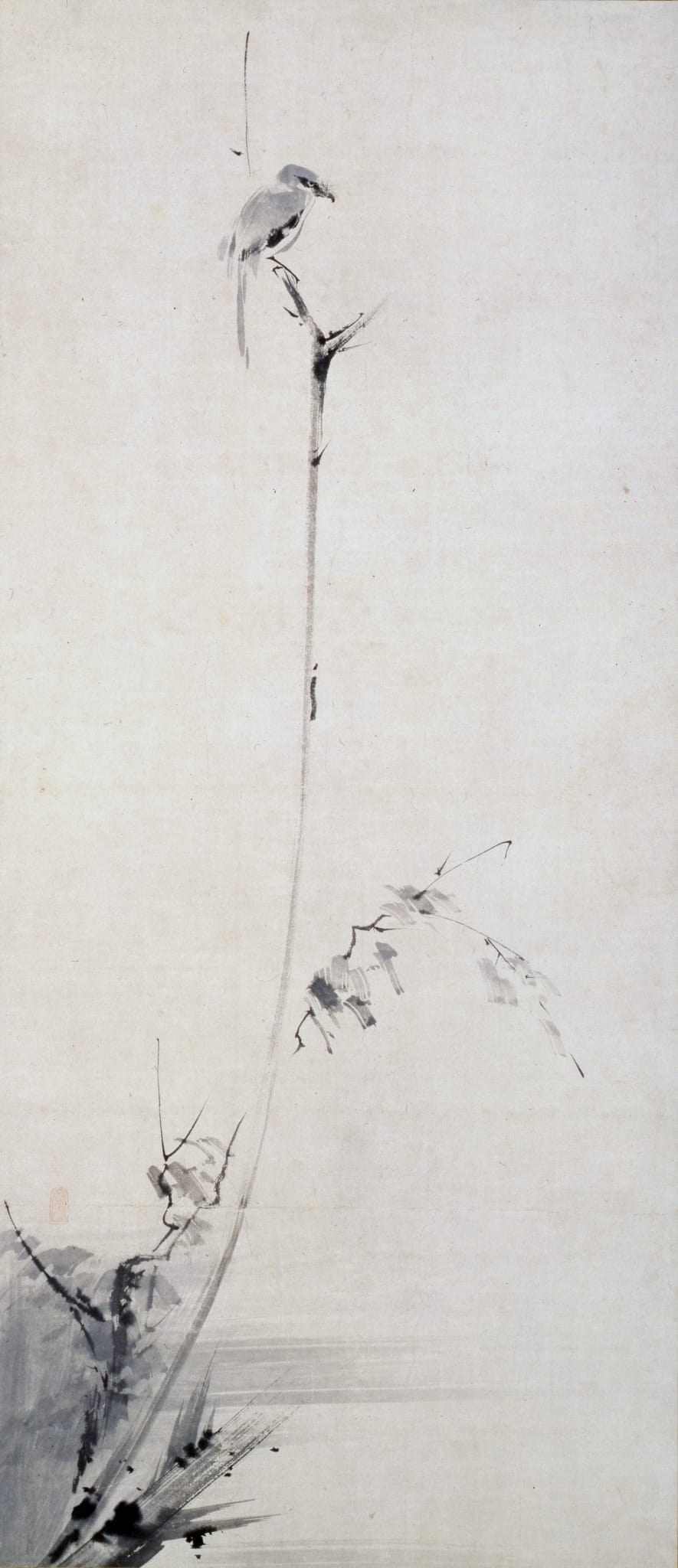
Name and Philosophy
The name Hyoho Niten Ichi-ryu carries layered meaning. Hyoho refers not only to sword technique but to strategy, martial method, and the larger art of conflict and perception. Niten Ichi-ryu is often translated as "Two Heavens as One School," a phrase pointing toward the integration of two forces, two weapons, and two lines of action into a single strategic body. Musashi also used the names Niten Ichi-ryu and Musashi-ryu, names that over time became tied not only to technique but to inheritance and legitimacy.
The philosophical shape of the school is frequently connected to the idea of Jisso Enman, the acceptance of reality as it is, without decoration or comforting illusion. This emphasis on clear perception underlies the technical teaching, where the central concern is described as what the practitioner actually sees rather than merely which technique is performed.
Techniques and Characteristics
While the school is best known for its two-sword methods, its curriculum is broader. It includes long sword forms, short sword forms, and paired forms, and in some lines also staff and jutte methods. The kata are treated as compressed lessons in timing, distance, pressure, angle, and intent rather than as decorative sequences.
A recurring concept in the teachings is Kizen no Uchitachi, striking before the opponent's movement fully manifests. This principle requires the practitioner to perceive intention before it becomes visible and to act without hesitation. The technical core remains anchored in kata training using wooden swords, with partner practice developing timing, pressure, and distance, and a progression that moves through long sword, short sword, and two-sword methods. The advanced level of transmission, referred to as menkyo kaiden, represents completion of the formal curriculum rather than a guarantee of mastery.
Lineage and Transmission
The art did not end with Musashi's death in 1645. It passed to his students, most notably Terao Magonojo and Terao Kyumanosuke, who form the first links in its chain of transmission. By the eighteenth century, efforts were made to stabilise the tradition through written records, such as the Hyoho Niten Ichi-ryu Sodenki, compiled in 1742 by Shikata Hanbei Yukitsune, nearly a century after Musashi's death. With this, the school moved from lived experience into documented tradition, a process that both preserved and shaped the material according to what each compiler understood and chose to include. Modern Japanese scholarship examines these sources carefully rather than repeating them uncritically.
Kumamoto became central to the school's preservation. Musashi spent his later years under the Hosokawa domain, and the regional context of domain-based martial culture, local archives, and institutional frameworks helped anchor and sustain the tradition. Beyond Kumamoto the line also took root in other regions; a transmission carried to Echigo, in present-day Niigata, has been documented in local historical scholarship, an example of how a koryū could persist as several regional branches rather than as a single central school.
Survival Through Historical Change
The Meiji Restoration dissolved the samurai class and the social structure that had supported martial traditions, and sword culture ceased to be central to identity. The school nonetheless survived, not through popularity but through quiet maintenance, becoming more private and reliant on smaller groups. The twentieth century brought further disruption through war, with materials and teachers lost and continuity strained. In postwar Japan, budo was reorganised into more regulated and public forms, and koryu traditions such as Hyoho Niten Ichi-ryu remained somewhat outside that structure.
Modern Practice
In the modern era the school exists through multiple branches; among the principal continuing lines are the main Santō-ha and the Gosho-ha, each maintaining its own curriculum and transmission. Figures such as Kajiya Takanori and Yoshimochi Kiyoshi appear in discussions of leadership, and organisations such as the Nihon Kobudo Kyokai, various kenshukai groups, and independent dojo maintain their own lines of transmission. There are recognised teachers and established groups, but no single universally accepted authority. This branching is generally regarded as the normal outcome of a four-hundred-year-old tradition passing through many hands.
Sources and the Gorin no Sho
A frequently noted detail is that no original manuscripts survive in Musashi's own hand; the text known as Gorin no Sho exists only through copies, versions, and transmissions. Japanese scholars have debated authorship details, textual variations, and historical context, generally concluding that the core is Musashi's while the surviving form has passed through other hands. The text has also been read as philosophy rather than only as a fencing manual: modern scholarship has examined the thought of the Gorin no Sho (its treatment of perception, emptiness, and the relationship between sword and mind) as a serious intellectual work in its own right. The tradition's continuity is often regarded as more significant than the legend attached to its founder, having crossed centuries of change while remaining recognisable.