Jigen-ryū is a Japanese sword tradition (ryūha) from Satsuma, founded in late sixteenth-century Satsuma by Tōgō Shigekata (1561–1646). It is a historical combat system centred on ending an encounter with a decisive first committed attack, emphasising speed, force, distance and impact rather than elaborate exchanges. Its core principle is the absolute priority of the opening strike: to hit first and decisively, leaving the opponent no room to recover.
Founding and Origins
Tōgō Shigekata was shaped by earlier training in Taisha-ryū before encountering the tradition known as Tenshinshō Jigen-Ryū through the monk Zenkichi in Kyōto around 1587 or 1588. He received full instruction in that tradition, then returned to Satsuma and developed a distinct system. Rather than inventing from nothing, he formed Jigen-ryū through selection and refinement, absorbing and reducing earlier material into a harsher, narrower and more uncompromising method built around explosive commitment.
The first strike is everything, hesitation is defeat before the sword is drawn.
Training and Characteristics
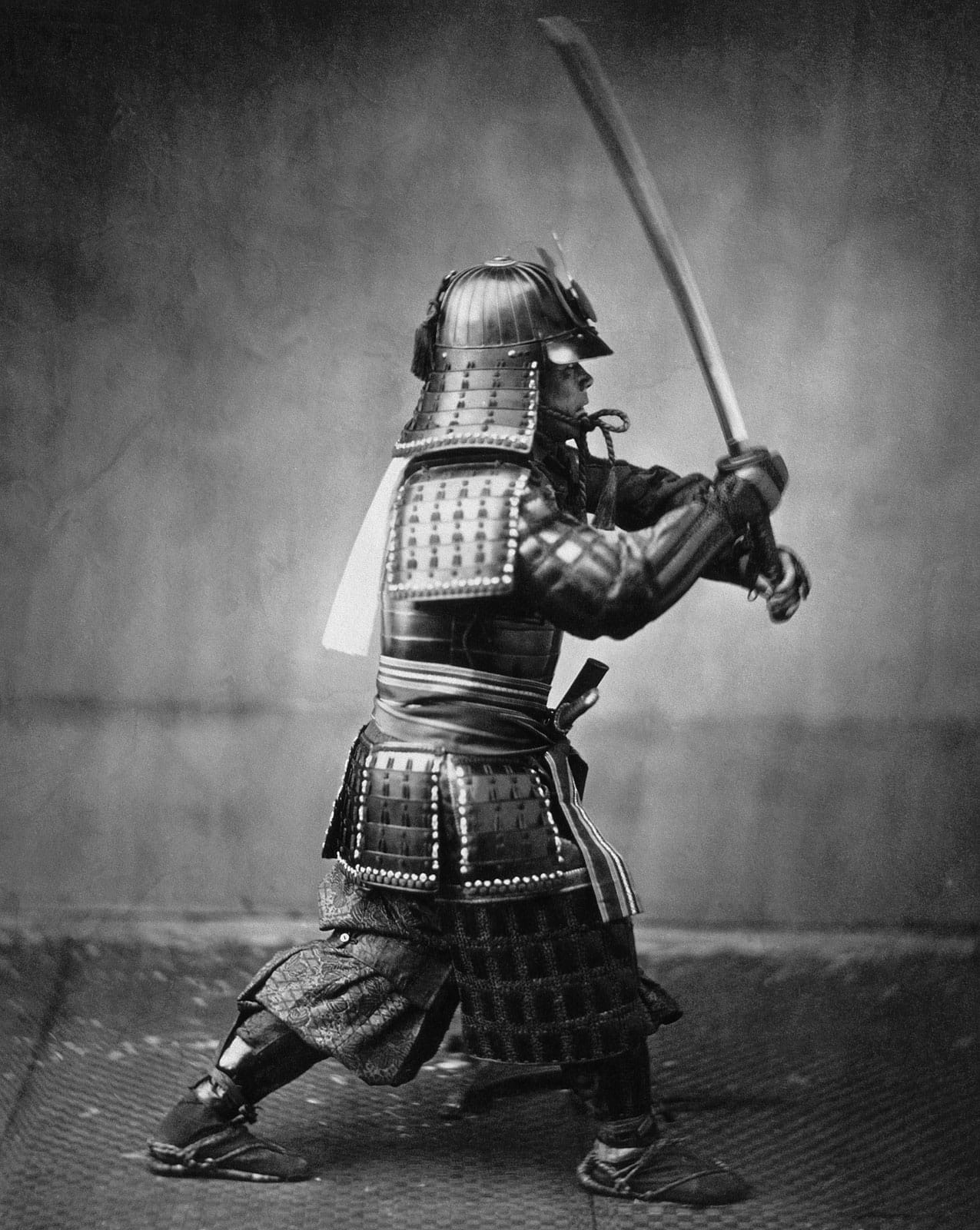
The tradition is associated with repetition, impact, and aggressive forward commitment. One of its most famous practices is the striking of standing wooden posts or tree trunks, used as conditioning for explosive power, committed mechanics, and an attack delivered with full force. The documented tradition emphasises speed, kiai, the management of distance (maai), and a decisive first strike, producing a system oriented toward overwhelming initiative rather than prolonged dueling. This represents controlled aggression and disciplined initiative rather than mere wildness.
The founder's own development reflects this hardness: roots in Taisha-ryū, full instruction in Tenshinshō Jigen-Ryū, and the subsequent shaping of a distinct system through reduction and selection. The first-strike principle functions not only as tactics but as a worldview compressed into action, in which the opening move is treated as decisive and hesitation as potentially fatal.
Institutional Status in Satsuma
After Tōgō Shigekata demonstrated his system to Shimazu Iehisa and secured official recognition, Jigen-ryū became bound to the domain itself rather than remaining a private pursuit. For roughly a century, Satsuma is said to have restricted the study of other sword schools and elevated Jigen-ryū into a dominant position, embedding it in domain identity so that the sword method and the political order reinforced one another. Such close ties between a martial school and a domain connected the tradition to mentality, discipline, loyalty and identity, not technique alone.
Transmission and Sources
The surviving record includes family densho, preserved teachings, internal manuscripts, question-and-answer texts, curriculum records, and later compilations produced through prefectural archival work and academic study. This material allows the line and its principles to be traced with reasonable confidence, though not with perfect clarity. There are variations in dating, inconsistencies in internal narratives, heroic stories that may be exaggerated, and domain chronicles inclined to praise their own men. The record contains claims of Shigekata winning numerous duels and stories that serve the internal memory of the school; these form part of the tradition's self-image but cannot always be independently verified.
The tradition remained hereditary in lineal succession, with large bodies of manuscript material kept within the Tōgō family tradition, and access to the living tradition has remained controlled into modern times.
Later Development and Legacy
As the school developed in Satsuma it became connected to figures beyond the founder, including the later Yakumaru line and practitioners active into the late Edo period. By that time Jigen-ryū was part of the martial culture of a domain whose political role in Japan was significant. The mentality fostered by Jigen-ryū is often said to have contributed to the energy of Satsuma men during the upheavals that culminated in the Meiji Restoration; while large political events cannot be reduced to a single sword school, martial culture shapes mentality, and a domain that raised generations under a tradition built around aggression, initiative, discipline and the importance of the first committed move carried that influence into its broader character.
The context of Satsuma is integral to the school: its domain structure, military tradition and self-understanding distinguish it from a generic image of classical swordsmanship. The founder is documented, the transmission is traceable, the curriculum survives, the densho are preserved, the domain-level importance is real, later branches existed, and preservation continued into modern times, with manuscripts recognised as cultural property and the line remaining associated with Kagoshima. Beneath the embellishment and pride, the school's enduring core principle remains the same: the first strike must be absolute.