Matsubayashi-ryū (松林流) is an Okinawan karate style founded by Nagamine Shōshin (長嶺将真). It was named in 1947, in post-war Okinawa, a date stated clearly in the 長嶺将真顕彰碑, the memorial inscription for Nagamine. Placed within the Shōrin lineage and tied to Shuri-te (首里手) and Tomari-te (泊手), the style is best understood not as an unchanged ancient tradition but as a deliberate post-war reconstruction shaped and positioned by its founder.
The Founder
Nagamine Shōshin was born in 1907 in Tomari. He lived through illness, became a police officer, and survived the Battle of Okinawa before establishing Matsubayashi-ryū. The biography 『空手は沖縄の魂なり 長嶺将真伝』 by 柳原滋雄 presents this as a real and interrupted life shaped by events far larger than any lineage chart, rather than as a mythologised account.
Deliberate preservation, not because the past is superior, but because losing it would be a choice too.
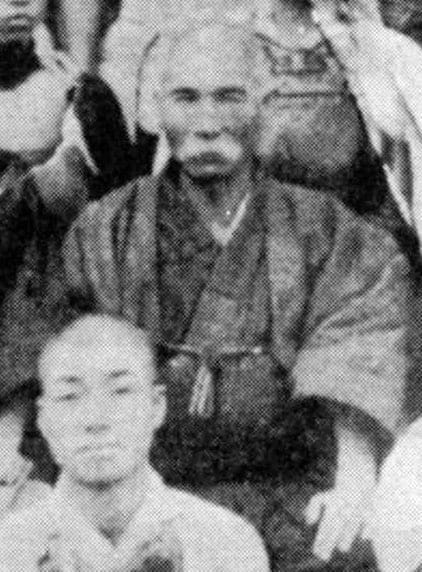
The Name and Its Meaning
The name 松林流 is explicitly tied to two figures: Matsumura Sōkon (松村宗棍) and Matsumora Kōsaku (松茂良興作). According to the memorial inscription, the name was chosen to honour these figures and preserve their legacy. This indicates that Nagamine was not merely inheriting a tradition passively but actively positioning it, acknowledging specific predecessors and shaping how the style would be remembered.
Lineage and Transmission
Japanese sources such as those from the 沖縄伝統空手道振興会 place Matsubayashi-ryū firmly within the Shōrin lineage, tied to Shuri-te and Tomari-te. Nagamine's teachers were Kyan Chōtoku (喜屋武朝徳) and Motobu Chōki (本部朝基), one rooted in Shuri-te and the other often associated with Tomari-te influences. While these categories blur on close examination, the core alignment is consistent across the Japanese material.
Standardisation and Writing
Nagamine did not only preserve what he learned; he shaped it. He created Fukyū-gata I (普及形一), which according to the 顕彰碑 inscription was approved in 1941 by the 沖縄県空手道専門委員会. This pre-war, institutional act reflects standardisation and an intention to teach widely, as the term "Fukyū" implies dissemination. He later expressed his views on history in his 1975 book 『史実と伝統を守る沖縄の空手道』, whose title concerns protecting historical fact and tradition. Through such writing he took an active role in defining what counts as the history of the art, illustrating that karate history has been written, rewritten, and interpreted rather than simply discovered in a pure form.
Techniques and Characteristics
Physically, Matsubayashi-ryū has a clear identity centred on lightness, understood not as weakness but as freedom from unnecessary tension. Its stances are higher than those of heavier systems, valued for being mobile and transitional, designed to move through space rather than to settle into a fixed position; technique is delivered while passing through a stance rather than from a static one. This produces clean speed, achieved because the body does not get in its own way. In the kata the body rarely locks unnecessarily, with tension arriving momentarily and then releasing. The style avoids exaggeration and the impulse to "sell" technique, which makes it deceptively difficult, since it removes the ability to hide behind performance and instead demands genuine understanding of distance, timing, and control. Power is generated through coordination and sequencing, with the body working as a unit rather than through visible strain, reflecting the Shuri-te and Tomari-te emphasis on efficiency over display and function over appearance.
Summary
Matsubayashi-ryū is a post-war reconstruction rooted in Shuri-te and Tomari-te, deliberately named and positioned by Nagamine Shōshin in 1947. It is a body of movement that values efficiency, speed, and control over visible force, and a system defined above all by the clarity and intent with which its founder consciously chose to bring it into being.