Ryūei-ryū is an Okinawan martial tradition centred on Nakaima Norisato (仲井間憲里), whose name is also read as Kenri depending on the language and interpretation used. For most of its history the system was transmitted privately within the Nakaima family rather than taught publicly, and its early record is fragmentary, with dates and some details contested. Much of what is known derives from Japanese-language family material and the accounts of later lineage heads.
Origins
Nakaima is said to have been born in 1819 in Kumemura, a Chinese-influenced enclave in Okinawa where cultural, linguistic, and bureaucratic exchange with China was routine. According to family tradition he travelled to China in 1839, a journey consistent with the political and cultural environment of the Ryūkyū Kingdom at the time. There he is said to have studied under Liu Long Gong (劉龍公), a name that carries weight within the Ryūei-ryū narrative but which is difficult to anchor in Chinese historical records; no military register confirming his role as an imperial guard officer has been identified. As a result, the figure remains disputed, with the historical record neither confirming nor disproving his existence.
Preservation through privacy, some lineages survive by refusing to perform for the crowd.
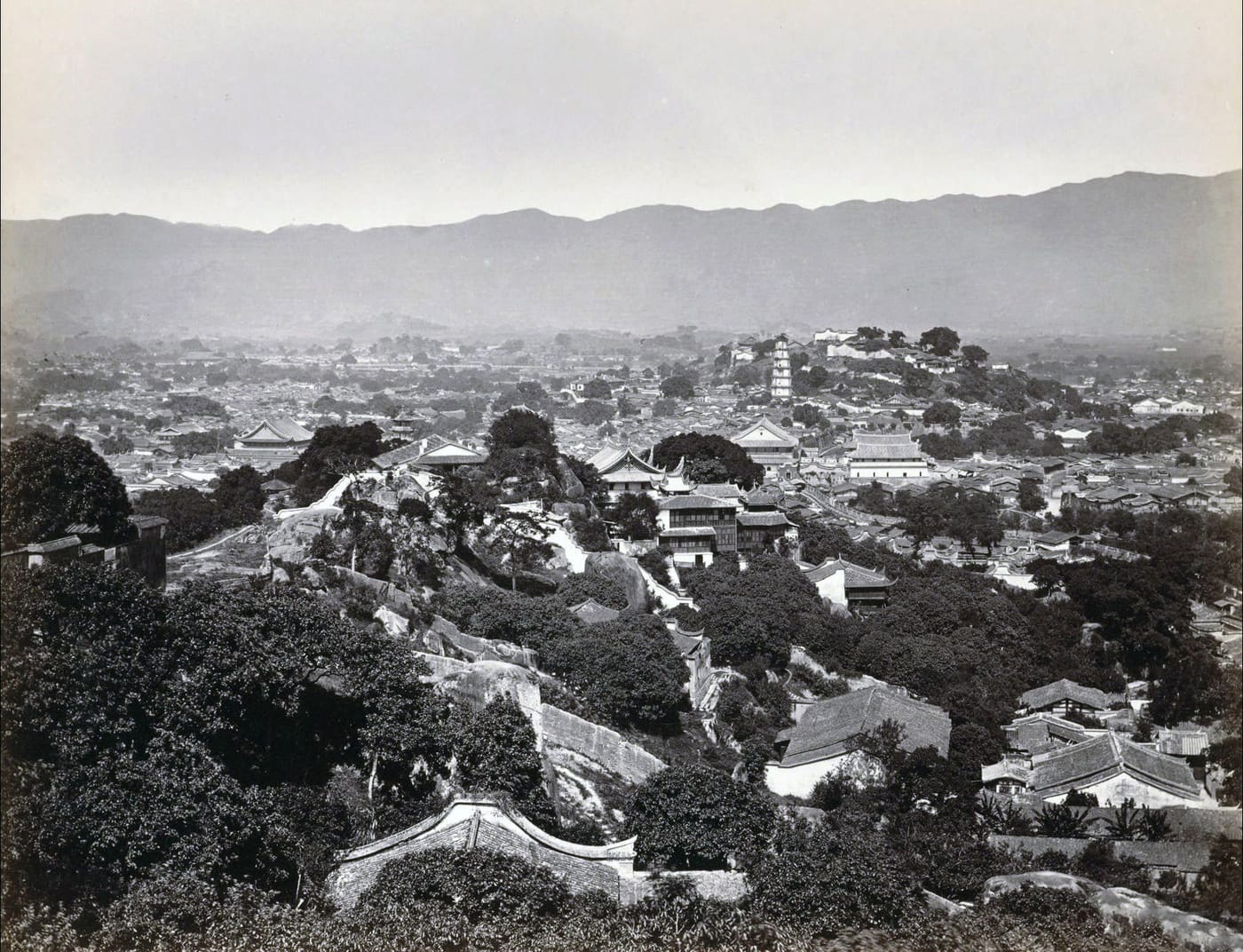
According to Nakaima Kenji (仲井間憲児), the current head of the lineage, Nakaima spent years in China rather than a brief period. The date of his return is itself contested, given variously as around 1846 or later depending on the source.
Private Transmission
Ryūei-ryū did not emerge as a public system. Unlike other forms of te, it did not spread through teaching networks, public demonstrations, or community integration. Instead it remained within the family for generations, passing to Nakaima Kenchū (仲井間憲忠) and then to Nakaima Kenkō (仲井間憲孝), each inheriting it as a responsibility to be transmitted largely unchanged rather than as a public school. Because the system stayed hidden, it also stayed undocumented in standardised or accessible forms. The air raids of 1944 destroyed family archives and written materials, further reducing the surviving record. What remains is a mixture of written tradition, oral transmission, and later reconstruction.
Opening of the System
After generations of secrecy, the system gradually became public through Nakaima Kenji, who began teaching outside the family around the 1970s. It subsequently entered competition through Sakumoto Tsuguo (佐久本嗣男), who carried the system into international tournaments where it was performed, judged, and scored. Rather than reducing it to a hollow performance, Sakumoto is credited with presenting it in a way that made it legible to a modern audience while retaining its character.
Techniques and Characteristics
Technically, Ryūei-ryū places strong emphasis on the hips, both for movement and for power generation, producing a rootedness described as heavy without being slow. Its kata include Anan, Paiku, Pachu, and Heiku, which appear functional in their original intention even as modern interpretation has shaped how they are displayed. Kobudō, the use of weapons, is integrated into the system rather than treated as an optional addition, forming part of the system's underlying logic.
Historical Reliability
There is no perfect, continuous, documented chain proving that every technique exists today exactly as it did in the nineteenth century. Parts of the tradition are blurred, reshaped, or lost, and the system survives through continuity despite disruption rather than through perfect preservation. Within these gaps and inconsistencies, Ryūei-ryū has nonetheless persisted from the time of Nakaima Norisato into the present.