Shōrin-ryū Seibukan is an Okinawan karate lineage derived from the teachings of Chōtoku Kyan and generally placed within the broader Shuri-Tomari sphere. It was formalised by Zenryō Shimabukuro in Chatan, Okinawa, and is characterised by a kata-centred, movement-oriented and application-conscious approach rather than a sport- or point-oriented method. The strongest documentation for the lineage comes from Japanese-language material, including official Seibukan sources, a JKA biography, and Okinawan governmental and municipal publications.
Founding and Chronology
The official Seibukan history distinguishes several distinct moments rather than collapsing the school's beginnings into a single date. Zenryō Shimabukuro entered Chōtoku Kyan's school in 1935, began teaching in Chatan in 1952, and in 1962 built a new dōjō and hung the sign reading "Seibukan." These mark different historical layers: the start of his own teaching activity, and the later formal manifestation of the dōjō as Seibukan. The official Japanese Seibukan material, the JKA biography, and the 2024 celebration of the 62nd anniversary all support this two-layer chronology. The development reflects a tradition that grew and organised itself over time rather than appearing fully formed.
A line that knows what it carries, and carries it without needing the world to applaud.
Zenryō Shimabukuro
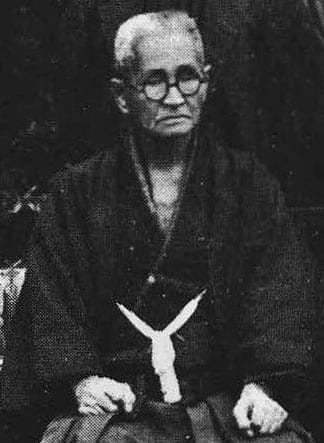
Zenryō Shimabukuro was born in 1909 in Shuri-Kubagawa in Naha, according to the official Seibukan history. In 1926 he went to Osaka for work, and in 1933 he moved to Chatan, where he ran a sweets business. He entered Kyan's school in 1935. By 1952 he had begun teaching in Chatan, and by 1960 he had taken on a leading role in a new Okinawan karate organisation, adopting bogu-tsuki kumite for safety reasons within a broader Okinawa-mainland exchange context. This demonstrates that a clearly traditional line could still adopt protective gear-based kumite for practical reasons.
In 1962 he established the new dōjō and the Seibukan name. Around the same period he created Wanchin, a kata of his own built on the inherited core of the Kyan transmission. In 1967 he received the rank title Hanshi 10-dan from the reorganised All Okinawa Karate-dō Federation, and in 1969 he died at the age of sixty-one after a demonstration trip.
Chōtoku Kyan and the Lineage
In the meaningful historical sense, the line begins with Chōtoku Kyan. Official Okinawan materials describe him as a master born in Shuri who studied not only under his father but also under figures such as Matsumura Sōkon, Oyadomari Kōkan and Matsumora Kōsaku, absorbing both Shuri-te and Tomari-te elements. The Japanese Cabinet Office page on Okinawan karate places Kyan in the Shuri-te tradition connected to Sakugawa and Matsumura, while also explicitly noting that he inherited Tomari-te and that Shōrin-ryū and Shōrinji-ryū emerged from his line. Modern Okinawan seminar documentation classifies Seibukan under the broader Shuri-Tomari grouping. Accordingly, the most responsible description is that Seibukan is a Kyan-derived Okinawan line situated within the wider Shōrin-ryū and Shuri-Tomari sphere rather than "pure Shuri-te."
Kyan is associated with a "non-revisionist" approach to kata, a principle of not freely modifying the original forms. This reflects a conscious will to preserve rather than to invent for its own sake, though it does not imply that the tradition remained static.
Succession and Organisation
After Zenryō's death the line passed to Zenpō Shimabukuro. He was born in Chatan in 1943, began karate in 1952 under his father, undertook additional Kobayashi-ryū study in 1958, carried out teaching and dissemination work in the United States from 1963 to 1966, was appointed shihandai in 1966, became second head of Seibukan in 1969, founded the international Seibukan organisation in 1976, and oversaw the organisation taking on its current formal name in 1999. The teaching line therefore existed before the global structure, which Zenpō was central in building.
The official Seibukan materials identify the headquarters in Chatan, along with Okinawan dōjō in places such as Ōzato and Urasoe, as well as mainland Japanese and overseas branches. One source gives figures of three dōjō in Okinawa, five branches on the Japanese mainland, and around 200 branches in 14 countries, while a Chatan municipal publication speaks more broadly of dissemination work in about twenty countries. These differences reflect varied counting methods and definitions rather than genuine contradiction; the broader point is that Seibukan is a Chatan-centred Okinawan line with real international reach.
Curriculum and Kata
The historically secure core inherited through Kyan consists of seven empty-hand kata plus Tokumine no Kon, to which Zenryō added Wanchin. The core kata are documented as Seisan, Ananku, Wansu, Passai, Gojūshiho, Chintō and Kūsankū. Modern Seibukan curricula additionally include Fukyugata, Pinan, Naihanchi, Jion and Passai Gwa. These later additions are historically intelligible because Zenpō Shimabukuro also studied Kobayashi-ryū under Nakama Chōzō's line through Asato Nakama, so the present curriculum reflects a Kyan core together with later Kobayashi-influenced additions.
Seisan appears to hold a special place, being described in some material as particularly important in training. Related Japanese material on the broader Kyan-family traditions records movement ideas associated with particular kata: Wansu is linked in sister-line material to distinctive receiving motions and a shoulder-wheel-like throwing idea; Passai is associated with invitation, a palm-strike to the face, stealthy stepping and side-blade attacks to joints, suggesting close-range disruption; Chintō carries ideas of balance, difficult standing structure and advanced kicking transitions; and Kūsankū's opening is linked in related official material to the principle "there is no first attack in karate," while also containing substantial side-blade kicking work. These are documented motifs rather than rigid interpretations.
Techniques and Characteristics
Japanese material does not present Seibukan as a sport-oriented point karate system. The emphasis falls on mobility, agility, body operation, kata, bunkai, yakusoku kumite, and the principle of immediate counterattack. One Japanese source carrying statements from Zenpō describes Shōrin-ryū in terms of mobility and quickness, kidōsei and shunbinsei, coupled with the principle uke soku kōgeki, the idea that the receiving action is itself the entry into attack.
Stance and movement are treated as essential method built into the kata. One branch explanation states that Seibukan kata includes the optimal way of standing and walking, tachikata and arukikata. The practical training structure reflects this: Urasoe branch material lists basics, moving drills, kata practice and kumite practice, and a JKA account notes the difficulty of certain body mechanics trained under Zenpō and his son, such as heel-release movement and shiko-dachi usage.
Regarding timing and kime, the official and semi-official Seibukan materials speak plainly about accuracy, speed, strength, posture and the immediate relationship between receiving and countering rather than mystical doctrine. Any characterisation of Seibukan as valuing an impact-oriented kime is best framed as interpretation rather than as something the sources present in a formal doctrinal package.
The primary Seibukan material examined did not highlight an explicitly codified special breathing method in the way Naha-te-derived traditions emphasise Sanchin breathing; its emphasis lies instead on basics, kata, bunkai and partner work. A related official Shōrinji-ryū source discusses abdominal breathing in the first half of Seisan as a point of comparison within the broader Kyan-related world, but this is not sufficient to characterise Seibukan as a breathing-centred style.
Kumite is present but is not the centre of training. Zenryō's introduction of bogu-tsuki kumite in 1960 appears linked to safety within an Okinawa-mainland exchange context, and in current branch explanations kumite is given less space than in full-contact or competition-centred systems. Ippon kumite is emphasised because it tests distance, timing and the practical use of techniques formed through kata, functioning as verification of the method rather than as a replacement for it. Branch explanations state clearly that kata is not used "as is" in fighting; rather, it prepares the body for technique, with more advanced bunkai emerging as freer application built on a body and mind trained through form.
Weapons
Okinawan karate generally is closely associated with kobudō. For Seibukan specifically, the official Japanese primary materials securely support Tokumine no Kon as the canonical weapons form in the core transmission. Equally strong official support for treating sai or tonfa kata as part of the fixed Seibukan core was not found in the sources examined.
Philosophy and Legacy
Seibukan is ethically framed in a recognisably Okinawan way. Official Okinawan karate materials discuss self-discipline, cultural inheritance, bodily and spiritual development, and a peace-oriented martial spirit, and this framework is built into how Okinawa publicly presents its karate heritage. Within this context Seibukan is presented as a lineage that expects practitioners to be shaped by practice rather than merely armed by it.
Overall, Shōrin-ryū Seibukan can be understood as a Kyan-derived Okinawan lineage rooted in the Shuri-Tomari world, formalised under Zenryō Shimabukuro in Chatan and internationally expanded under Zenpō Shimabukuro. It is technically defined by mobility, agility, immediate counterattack, kata-centred training and body mechanics, and its documented curriculum reflects both preservation of a Kyan core and later historical layering rather than an unbroken claim of purity.