Takenouchi-ryū (竹内流) is a classical Japanese martial tradition, often described as one of the oldest jūjutsu schools. Its fuller designation, recorded in densho and in historical compilations such as Nihon Budō Taikei (日本武道大系), is Takenouchi-ryū kogusoku koshi no mawari (竹内流小具足腰之廻). This longer name points to the school's character: kogusoku (小具足) refers to close-quarters methods, and koshi no mawari (腰之廻) to techniques around the body, centre, and waist. Rather than emphasising distance and space, the system addresses the confined, restricted situations that arise when armour is involved and the space between combatants disappears.
Founding
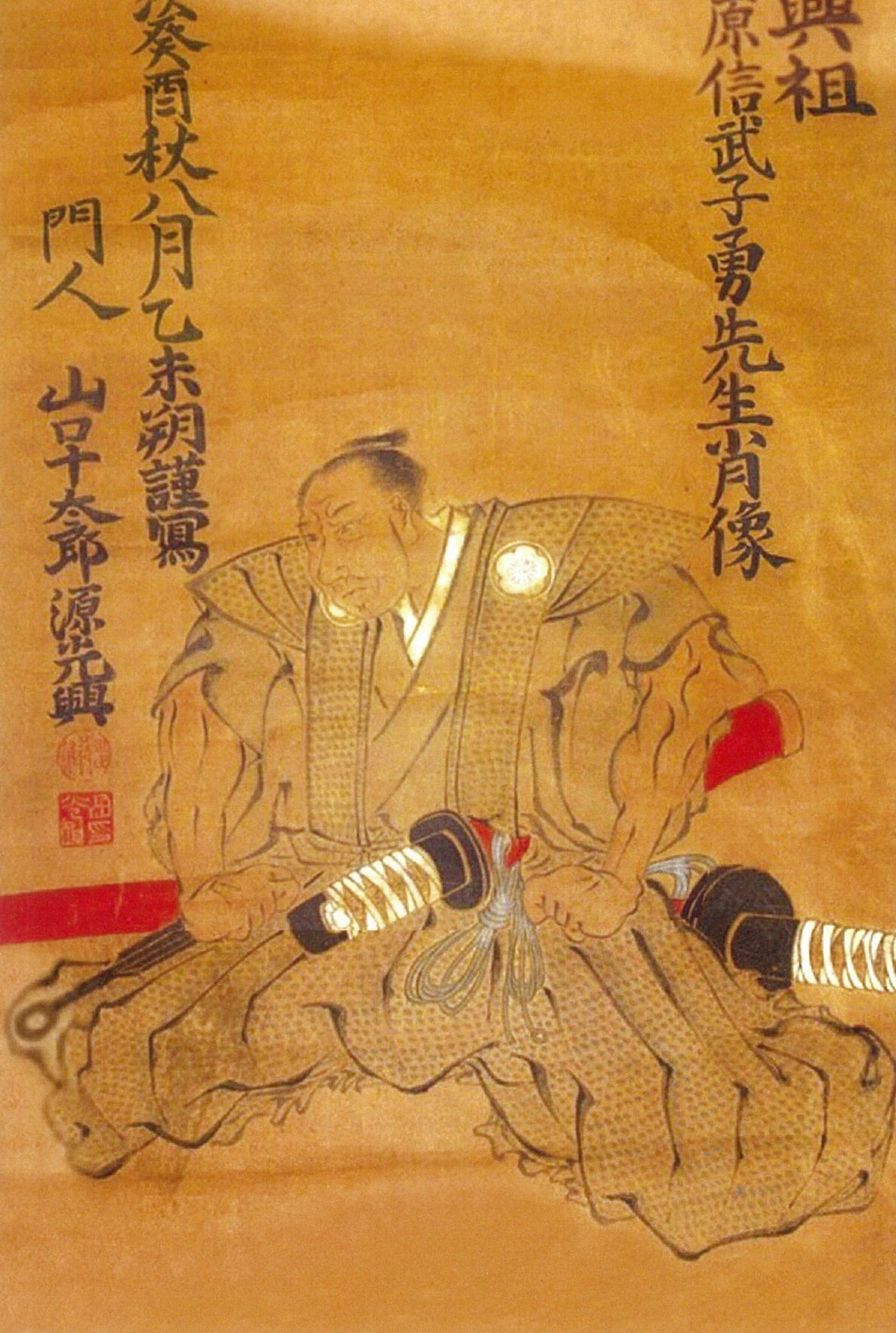
The founder recorded in Japanese sources is Takenouchi Hisamori (竹内久盛), and the founding date consistently appears as Tenbun gannen (天文元年), corresponding to 1532, during the Sengoku period. This was a time of conflict, fragmentation, and instability, in which techniques were preserved because they were believed to work in actual combat rather than for their appearance.
When swords cross and distance collapses, the question is no longer technique but structure.
According to the tradition's densho, Hisamori withdrew to Mount Sannomiya (三宮山), where he undertook ascetic training, and there encountered a yamabushi (山伏) who taught him five core techniques. Such origin narratives are part of how knowledge was framed and legitimised in pre-modern Japan, and sources like Nihon Budō Taikei and records referenced by the Nihon Kobudō Kyōkai (日本古武道協会) preserve these accounts as reflections of how transmission was understood within the culture. Whether a yamabushi literally handed over five techniques on a mountain as described cannot be known; the narrative is better understood for what it represents than accepted or dismissed outright.
Techniques and Characteristics
Takenouchi-ryū is broader than the modern casual use of the term "jūjutsu," which is itself a later umbrella term. Within the system are kumiuchi (組討), grappling in armour; torite (捕手), methods of restraint and arrest; and kogusoku (小具足) techniques designed for tight, unforgiving spaces where weapons become awkward. The system also incorporates weapons, including short blades and auxiliary tools, in situations where the distinction between armed and unarmed becomes nearly irrelevant. The modern division of striking, grappling, and weapons into separate disciplines is largely an organisational convenience; Takenouchi-ryū instead reflects a period in which combat was treated as one continuous problem with multiple solutions, adapting to distance, position, and circumstance.
As referenced in sources such as Nihon Budō Taikei and supported by organisations such as the Nihon Kobudō Kyōkai, the techniques are built around efficiency: breaking posture quickly, controlling balance under constraint, applying joint manipulation as a direct solution rather than a display, and using a blade when necessary without overcomplicating the situation. The system contains little unnecessary flourish or extended choreography, and is direct in its intent.
Lineage and Transmission
Takenouchi-ryū maintained its transmission through densho, scrolls documenting techniques, principles, and in some cases philosophical framing. Knowledge was controlled, structured, and passed on in stages, with students learning only what they were permitted to learn rather than receiving everything at once or on demand. This deliberate pacing helped the system remain coherent, as it was not constantly reshaped to suit external expectations.
Modern Practice
The school's documented foundations, its anchoring in 1532, the figure of Takenouchi Hisamori, its Sengoku context, and its structured systems of kumiuchi, kogusoku, torite, and weapon integration, all referenced in Japanese compilations like Nihon Budō Taikei and recognised within organisations such as the Nihon Kobudō Kyōkai, are solid and traceable. What is practised today, however, is inevitably shaped by modern bodies, expectations, environments, and the need to make material accessible and teachable, which alters the tradition over time even where it is not lost. This raises the question of whether contemporary practice preserves, interprets, reconstructs, or performs the original, a distinction that calls for humility about how much of the past can be known with certainty.