Yagyū Shingan-ryū (柳生心眼流) is a classical Japanese martial tradition built around taijutsu, the close-quarters grappling and striking of a warrior fighting in or against armour. Despite its name, it is not a branch of the famous Yagyū Shinkage-ryū school of swordsmanship: the "Yagyū" was attached through an endorsement, not through descent. It is remembered today for its punishing body conditioning and for a curriculum rooted in the brutal, close fighting of the battlefield.
The founder and the name
The school is attributed to Takenaga Hayato, an Ōshū (northern Honshū) warrior of the early Edo period whose exact dates are not securely recorded. Tradition holds that he had already trained in an older Shingan-ryū (心眼流, "mind's eye school"), and that on travelling to Edo he demonstrated his art to, and was recognised by, Yagyū Tajima-no-kami Munenori, the sword instructor to the Tokugawa shōguns. Out of that recognition, the story goes, Takenaga was permitted to attach the Yagyū name to his system. This is the honest meaning of the "Yagyū" in Yagyū Shingan-ryū: an endorsement from a celebrated house, not a line of technical descent from Yagyū Shinkage-ryū kenjutsu. The two arts differ in weapon, method and lineage, and treating one as the other is a common mistake.
An armour-era grappling system that kept its rough, military character: technique to control and finish an opponent who cannot simply be cut down.
What the school teaches
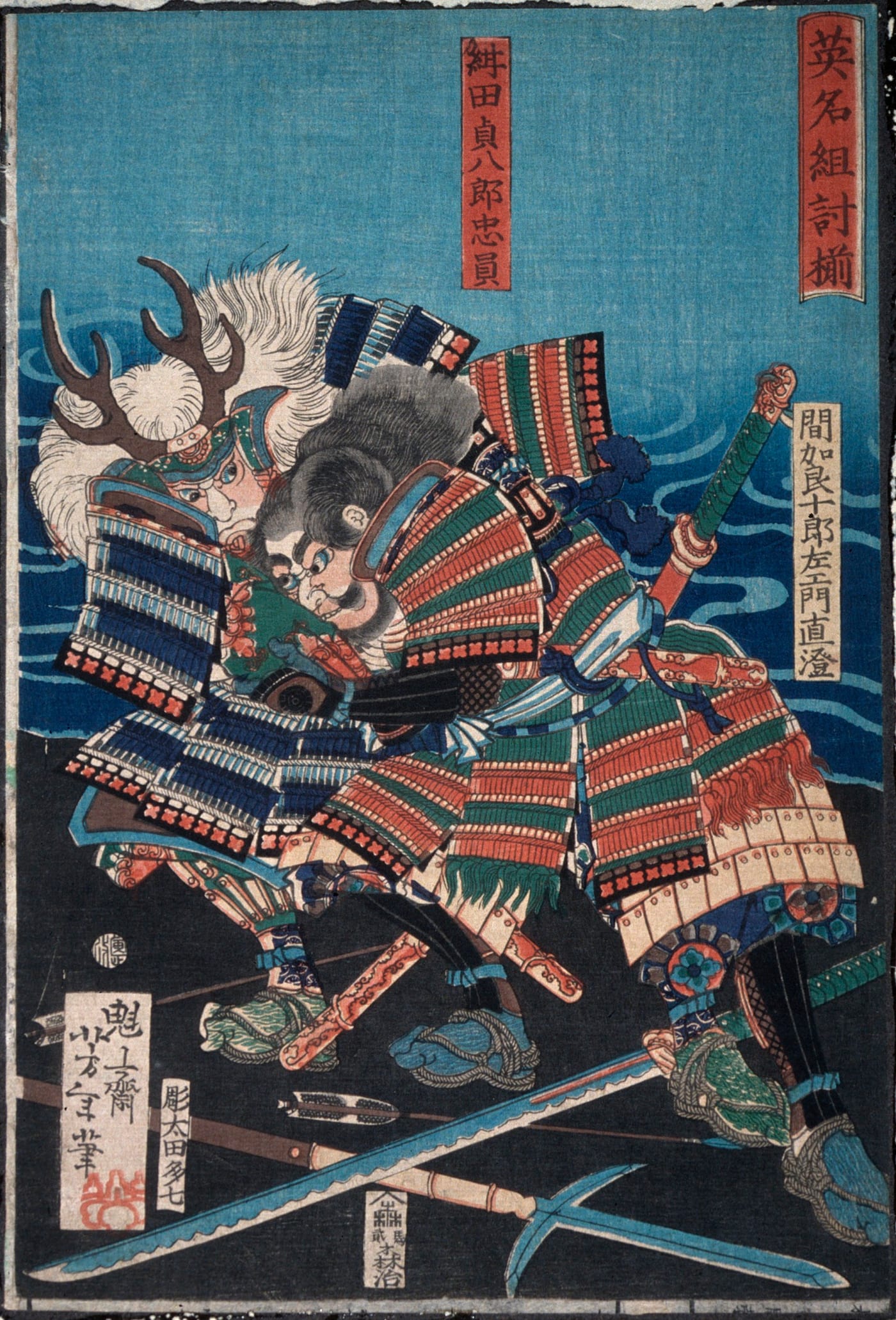
Yagyū Shingan-ryū is at heart a grappling art for a man wearing armour, kacchū bujutsu, broadened over the Edo period into a wider taijutsu curriculum. Its forms assume an opponent who cannot simply be cut down, and so they work through throws, joint locks, chokes and atemi (strikes) aimed at the gaps in the plates, often finishing on the ground with a small blade. Alongside the empty-handed core sit weapon sections, and the school is known above all for its conditioning: heavy striking and receiving drills, body-hardening routines, and distinctive solo forms meant to forge the trunk and limbs into something that can both deliver and absorb punishment. Where many later jūjutsu schools drifted towards sport or health, Yagyū Shingan-ryū kept the rough, military character of its origins.
The Sendai and Edo lines
The tradition did not remain a single line. Its best-known transmissions are the Sendai line, preserved within the former Sendai domain in the north (modern Miyagi prefecture), and an Edo line carried in the old capital. The two diverged over generations and differ in emphasis and in the exact shape of their curricula; the Sendai line is often given a name stressing heihō (兵法), its broad combative method, while Edo-derived groups commonly use taijutsu in their titles. Both regard Takenaga Hayato as the founder and share the same armoured-grappling core, but anyone studying the school should expect to meet more than one Yagyū Shingan-ryū, each with its own headmasters and its own account of the succession.
Honesty about the history
As with most koryū of this age, the documented record is thinner than the tradition. The founder's life is sketched mainly in the school's own transmission rather than in independent contemporary documents, and the celebrated meeting with Yagyū Munenori belongs to that internal story; it is best read as the school's account of its own name rather than as an externally proven event. The standard koryū reference, Bugei Ryūha Daijiten, lists the school and its branches, and Serge Mol's study of Japanese grappling arts treats it among the koryū jūjutsu, but the earliest generations remain difficult to pin down precisely. What is clear is the shape of the thing: an armour-era grappling system, named for a great sword house that lent it prestige, that survived into the modern age in more than one regional line.
The school today
Yagyū Shingan-ryū is still practised. Both the Sendai-derived and Edo-derived lines have active teachers and groups in Japan and, through them, a small following abroad, and the school's hard conditioning continues to draw students who want a martial art that still feels like one. It is not a large or famous tradition in the way that judo or the surviving sword schools are, and its public profile rests heavily on demonstrations and on a handful of senior instructors. But it remains a genuine link to the close fighting of the armoured warrior, and a useful reminder that a celebrated name, in this case "Yagyū", can travel by endorsement as readily as by blood.