Kyūdō (弓道), "the way of the bow", is the modern Japanese discipline of shooting the long asymmetric bow, the yumi (弓). It is not a single old school but a modern way (dō) codified in the twentieth century out of the older fighting and ceremonial archery traditions, collectively kyūjutsu (弓術), and it is governed today by a national federation rather than by a headmaster line. Where the older archery served war, hunting and court ritual, kyūdō places form, etiquette and self-cultivation at least on a level with hitting the target.
From kyūjutsu to kyūdō
Japanese archery is very old. The asymmetric bamboo-and-wood bow, shot from a point below its centre, was a primary weapon of war and the hunt for many centuries, and mounted archery (yabusame, 流鏑馬) was a prized accomplishment of the warrior class. As firearms displaced the bow on the battlefield from the sixteenth century onward, and as the samurai class itself was dismantled in the Meiji era after 1868, the practical art of war archery lost its purpose. What survived was reshaped, across the late nineteenth and twentieth centuries, into a way (dō) concerned with discipline, etiquette and character as much as with marksmanship. This shift from jutsu to dō is the honest heart of the matter: kyūdō is a modern reframing of an ancient skill, not an unbroken combat tradition.
Seisha hicchū, correct shooting is sure hitting: when the form is truly right, the hit follows, so the target tests the form rather than replacing it.
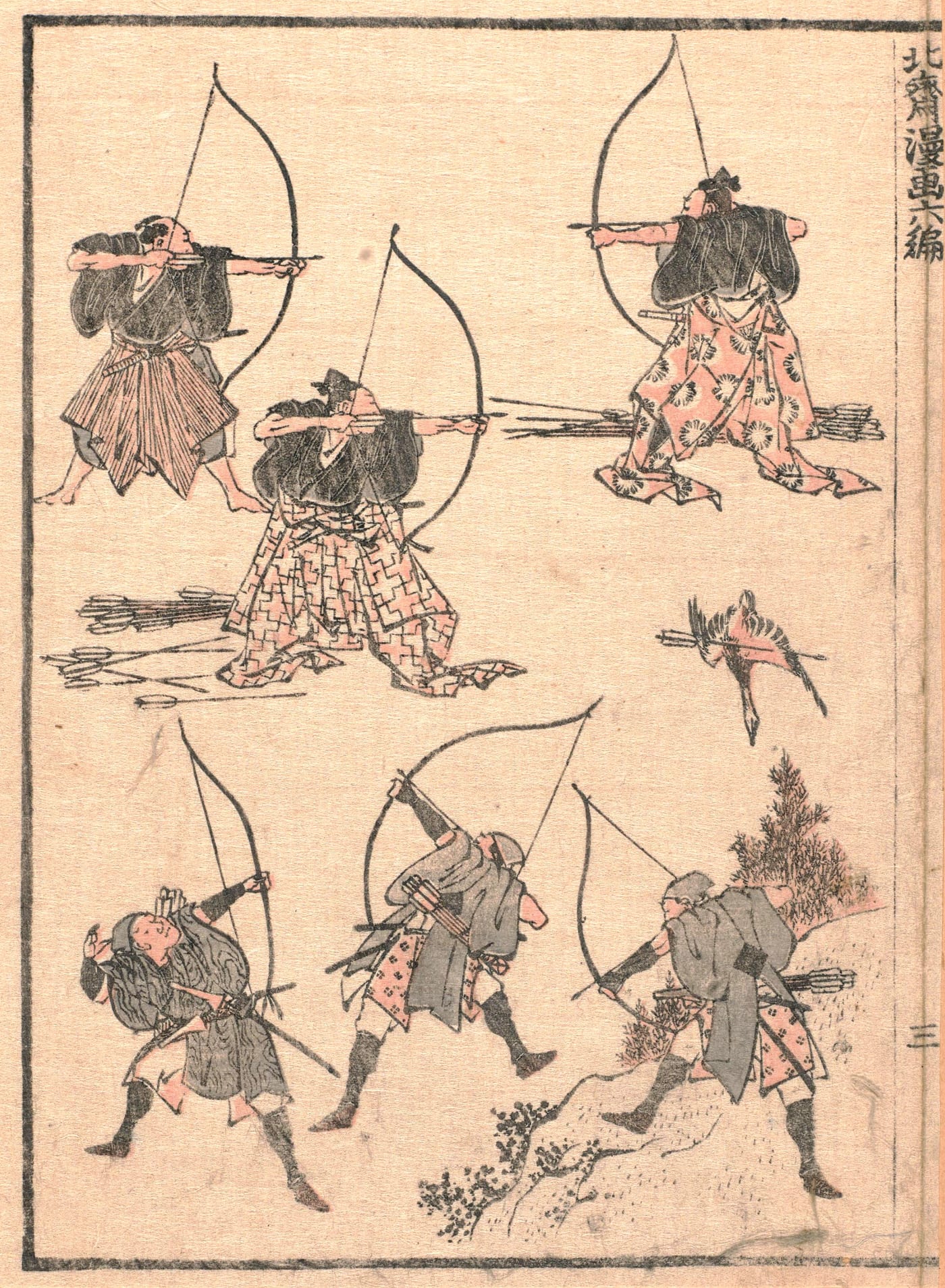
The classical schools behind it
Modern kyūdō draws on several older traditions rather than descending from one parent, and honest practice keeps them distinct. The Ogasawara-ryū (小笠原流) is associated above all with ceremonial and mounted archery, including yabusame, and with the etiquette (reihō) of the warrior houses; by its own tradition it reaches back to the Kamakura period, though such early genealogies are best read as the school's account of itself rather than as documented fact. The Heki-ryū (日置流), traced by tradition to Heki Danjō Masatsugu in the fifteenth or sixteenth century, is the great line of foot-soldier target shooting and branched into many sub-schools. Other lines fed modern practice directly, notably the Honda-ryū (本多流) formed by Honda Toshizane (1836–1917), who taught archery at the Tokyo Imperial University. Kyūdō took technique and ritual from these schools without being identical to any single one of them.
A national way
The institutional history of kyūdō is well documented. The Dai Nippon Butokukai, founded in 1895 to organise the martial arts after the Restoration, gathered archery teachers and pressed towards a common standard, though agreement was slow because the schools shot in genuinely different ways. After the Second World War the Occupation authorities suspended organised martial arts, and archery returned in civilian, educational form; in 1949 the All Nippon Kyudo Federation (Zen Nihon Kyūdō Renmei, 全日本弓道連盟) was founded to govern it. In 1953 the federation published the first volume of the Kyūdō Kyōhon (弓道教本), the manual that set out a standard shooting procedure assembled chiefly from the surviving Heki and Honda lines together with Ogasawara etiquette. International practice is now coordinated by the International Kyudo Federation, established in 2006.
The shooting itself
At the centre of kyūdō is the shahō hassetsu (射法八節), the eight stages of shooting: an unbroken sequence running from the placing of the feet and the setting of the body, through raising and drawing the bow, to the full draw, the moment of release and the composed follow-through. The yumi is tall, well over two metres, and is gripped about a third of the way up, so that it is drawn and loosed from below its centre, an asymmetry that shapes the whole technique. A special glove (yugake) protects the drawing hand, and the arrow rests on the right side of the bow, against the thumb of the bow hand. Against the standard hall target (the mato), and the straw butt used for close practice (the makiwara), posture, breathing and composure are judged as carefully as the hit itself. Many teachers express the ideal as seisha hicchū (正射必中), "correct shooting is sure hitting": if the form is truly right, the hit follows, so form is never treated as a mere means to the target.
Kyūdō today
Kyūdō is practised throughout Japan and internationally as a graded discipline, with ranks (kyū and dan) and teaching titles awarded by the federation rather than inherited within a school. It is taught in secondary schools, universities and civic dōjō, and is shown in ceremonial demonstration as well as in target competition. The older ryūha have not vanished: the Ogasawara-ryū still performs yabusame at shrine festivals, and Heki-ryū and other lines maintain their own transmissions, so a serious archer may train both the federation's standard form and a classical school. The honest description of kyūdō is therefore a double one: a modern, federation-governed way of self-cultivation through the bow, resting on a much older and still-living body of archery traditions.