The sword of no-sword
Ittō Shōden Mutō-ryū (一刀正伝無刀流) is a Japanese swordsmanship tradition founded by Yamaoka Tesshū (1836–1888), one of the most famous swordsmen of the Meiji period and also a noted calligrapher, Zen practitioner and government official. Having mastered the Ittō-ryū line of swordsmanship, Tesshū gave his own transmission a name that presents it as the true transmission (shōden) of Ittō-ryū, joined to his central idea of mutō, the "no-sword".
Yamaoka Tesshū and mutō
Tesshū is said to have struggled for years against a single teacher he could not defeat, until a breakthrough in his Zen practice changed his understanding of combat. From this came the principle of mutō: that the decisive factor is not the physical blade but the state of mind, so that a swordsman who has truly resolved the problem of fear and self meets an opponent as though holding no sword at all. The tradition thus binds swordsmanship tightly to Zen self-cultivation.
Mutō: when fear and self are resolved, one faces an opponent as though holding no sword at all.
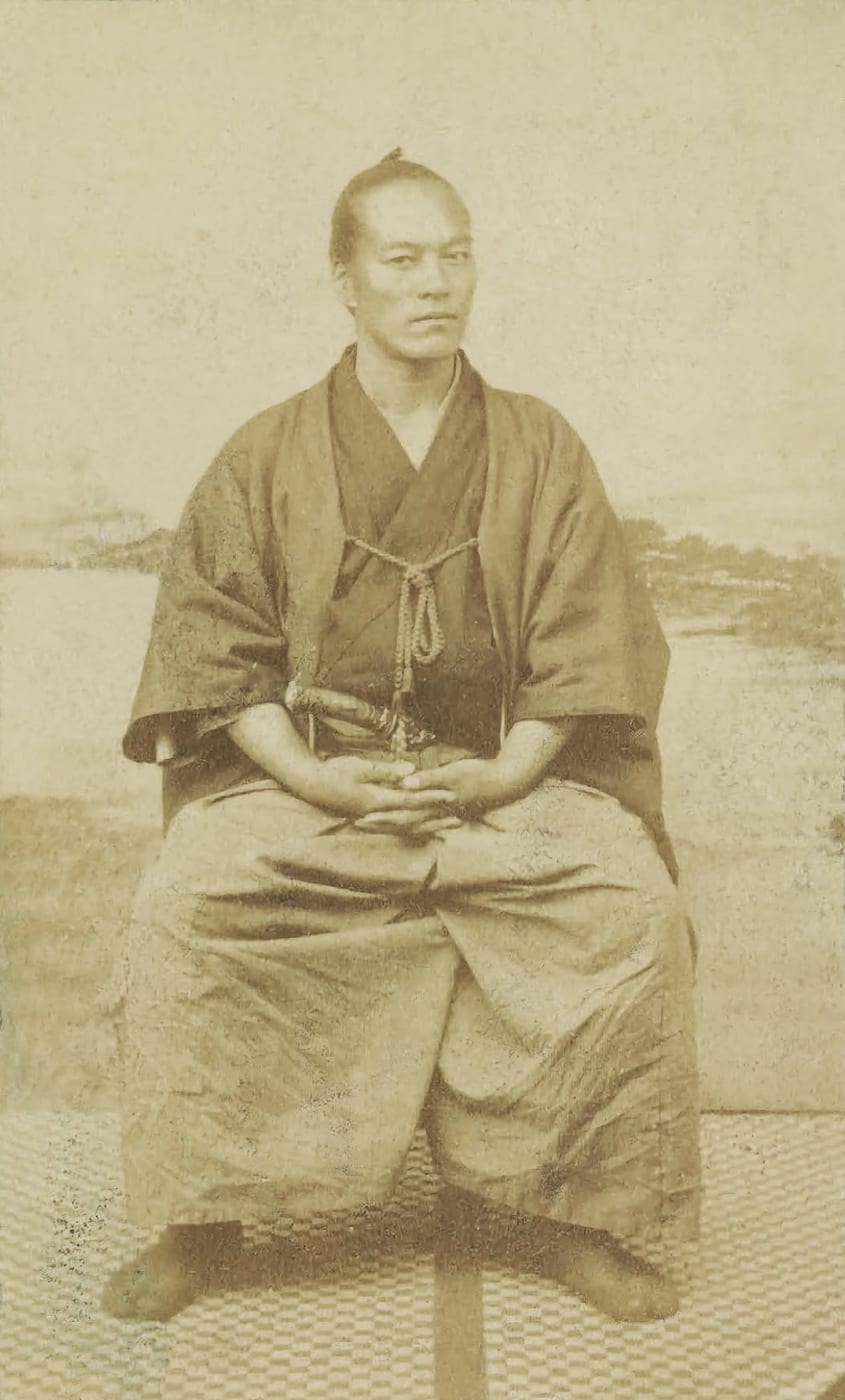
A documented modern founder
Because Tesshū lived into the modern era and was a prominent public figure, his life and teaching are far better recorded than those of the legendary founders of the older sword schools. His role in the peaceful surrender of Edo Castle and his work as a calligrapher and Zen layman are all part of the historical record, which places the origins of his school on firm ground.
Continuity
The tradition Tesshū established was carried on by his students in Japan and survives today as a classical sword line, taught with the same close link between swordsmanship and Zen training that its founder intended. As with many koryū, it is transmitted through more than one line rather than a single unbroken headship.