Tendō-ryū (天道流) is one of the classical Japanese traditions of the naginata, the long polearm with a curved single-edged blade. By tradition it was founded in the late sixteenth century, and although its older curriculum once reached across several weapons, the art that survives is centred on the naginata. It is carried today above all by the Mitamura family of Tōkyō, and, together with Jikishinkage-ryū, it is one of the two old schools whose technique shaped the modern, standardised practice of the naginata.
The founder in tradition
The school's foundation is attributed to Saitō Hangan Denki-bō (斎藤判官伝鬼坊), a figure said to have been active in the Tenshō era, at the close of Japan's long age of war in the late sixteenth century. His story belongs far more to tradition than to documented history. He is remembered as a warrior and ascetic linked to the Kashima region of Hitachi, where the old sword traditions of the Kashima Shrine were nurtured, and the very name Denki-bō, with its suggestion of a demon-priest, marks him out as the kind of founder whose legend has grown well beyond anything that can now be checked. The earliest generations of the line are similarly thin in the record. What can be said with more confidence is that a tradition under this name was being handed on by the Edo period, and that its securely documented history belongs to that later setting rather than to the founder's own age. The honest position is to treat Denki-bō as a figure of tradition, and to keep the school's verifiable history clearly apart from the legend of its origin.
Reach and timing, used well, can settle a contest before strength is ever tested.
A broad curriculum narrowed
In its fuller historical form Tendō-ryū was not a naginata school alone. The older curriculum is described as a comprehensive one, taking in the spear (sōjutsu), the sword (kenjutsu) and other weapons alongside the glaive, in the manner of many Sengoku-era traditions that prepared a warrior for whatever a campaign might demand. Across the long peace of the Edo period and the upheavals that ended it, much of that breadth fell away, and the part that endured, the part that now defines the school in the public eye, is the naginata. This narrowing is a familiar pattern among the old weapon schools: a wide battlefield system contracting, over the centuries, to the one art its teachers kept most fully alive.
The Mitamura line
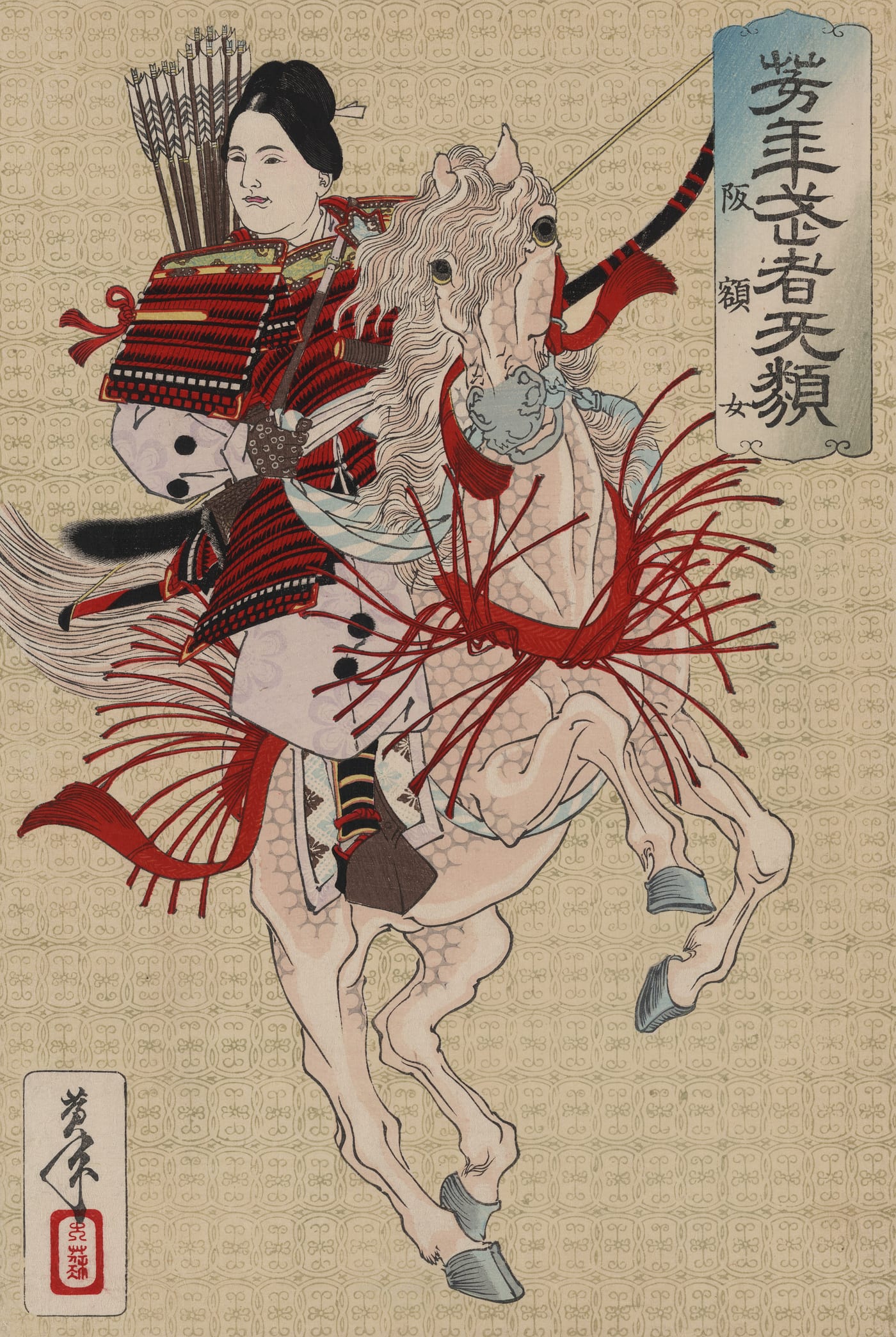
The modern history of Tendō-ryū is bound up above all with the Mitamura family of Tōkyō. The central figure is Mitamura Chiyo, who carried and taught the school through much of the twentieth century and did a great deal to secure its survival into the modern era; the headship has continued in the Mitamura family through her successors. As with several of the surviving naginata traditions, the people who kept Tendō-ryū alive across the modern period were largely women, and it is chiefly women who practise and teach it today, although not exclusively so. This is itself a notable feature of the naginata's modern history: a weapon once carried on the battlefield, and later associated with the women of the warrior households, became in the twentieth century an art transmitted in good part by women teachers.
The naginata of the school
The naginata is a polearm with a long shaft and a curved single-edged blade, and Tendō-ryū works it as a weapon of sweeping cuts, thrusts and circular, flowing movement that turns its reach and the momentum of the blade to advantage. The school is practised through paired kata, set forms in which two people take fixed roles, often one handling the naginata against a partner armed with a sword or with another naginata. The emphasis falls on distance, timing and the control of an opponent's line rather than on brute strength, qualities that let a lighter person govern an engagement against a heavier one. Beneath the techniques lies the lesson the weapon teaches best: that reach and timing, used well, can settle a contest before strength is ever tested.
Tendō-ryū and the modern naginata
Tendō-ryū holds a particular place in the story of how the naginata entered the modern era. When the naginata was reshaped in the twentieth century into a standardised discipline, organised nationally under the All Japan Naginata Federation (Zen Nihon Naginata Renmei) and practised as both a budō and a competitive sport, the technical material drew on the two classical schools that had kept a living naginata tradition: Tendō-ryū and Jikishinkage-ryū. The modern atarashii naginata is therefore not one old school in modern dress but a synthesis, and Tendō-ryū is one of its principal ancestors. The relationship runs in both directions, for many who first meet the weapon through the federation go on to study a classical school, Tendō-ryū among them, as the older root behind the standardised forms.
The school today
Tendō-ryū is an actively transmitted koryū rather than a museum piece. It is taught in Japan and, as the naginata has spread internationally, in a number of branches abroad, where its forms are studied alongside the modern federation's practice. Like most classical traditions it is carried by relatively small numbers, and its survival rests on the patient handing-on of forms, etiquette and old teachings within a recognised line. That it remains one of the named sources of modern naginata, while continuing to be practised as a classical school in its own right, gives Tendō-ryū a double life: a living link between the battlefield glaive of the past and the disciplined, widely practised naginata of the present.