Yagyū Shinkage-ryū (柳生新陰流) is one of the oldest and most influential schools of Japanese swordsmanship still practised today. It grew out of the Shinkage-ryū of Kamiizumi Nobutsuna in the sixteenth century and was carried into the Edo period by the Yagyū family of Yamato, who became sword instructors to the Tokugawa shōguns. More than a set of cutting techniques, it is a school of heihō, the art of strategy, and it is remembered above all for the idea of the katsujinken, the sword that gives life rather than takes it.
Kamiizumi Nobutsuna and the birth of Shinkage-ryū
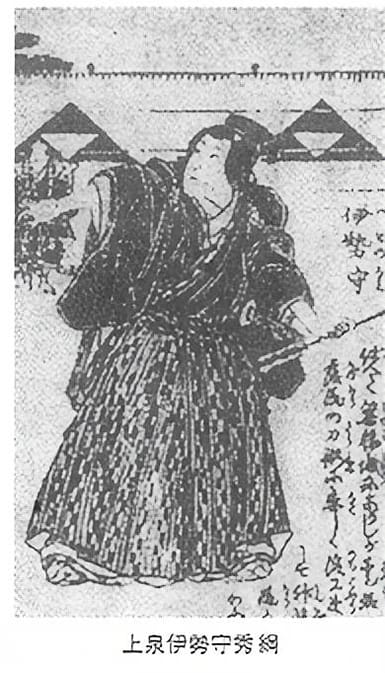
The line begins with Kamiizumi Ise-no-Kami Nobutsuna (c. 1508–c. 1577), a warrior from Kōzuke province in what is now Gunma Prefecture. He trained in the older Kage-ryū, a sword tradition associated with Aisu Ikōsai, and in the methods of the Katori tradition, and from them he shaped a new system he called Shinkage-ryū, the "new shadow school". Two of his innovations proved lasting. He is credited with developing the fukuro-shinai, a practice sword of split bamboo bound in leather, which allowed students to strike one another at full speed without the injuries that wooden swords inflicted. And he placed the reading of an opponent, the timing of an attack and the control of openings at the centre of training, so that the school became as much a study of the mind as of the blade.
Katsujinken, the life-giving sword: the highest mastery of the blade is to resolve conflict and preserve life rather than to kill.
Yagyū Munetoshi and the no-sword
In 1563 Kamiizumi met Yagyū Munetoshi (1529–1606), a landed warrior of Yagyū village near Nara, and after a period of instruction granted him the school's full transmission in 1565. Munetoshi, later known by his retirement name Sekishūsai, is regarded as the founder of the Yagyū line of Shinkage-ryū. He is most famous for developing mutōdori, the "no-sword", a body of methods for facing an armed opponent empty-handed and taking the weapon away. The tradition holds that in 1594 he demonstrated this art before Tokugawa Ieyasu, who tried to strike him and found himself disarmed; impressed, Ieyasu sought to take him into service. Munetoshi, by then an old man, declined and recommended his fifth son in his place.
The split into Edo and Owari
That son was Yagyū Munenori (1571–1646), who entered Tokugawa service and became sword instructor to the second and third shōguns, Hidetada and Iemitsu. He rose far above the usual station of a fencing teacher, becoming a daimyō with a domain at Yagyū and serving as ōmetsuke, one of the shogunate's senior inspectors. His line, based in the capital, is known as the Edo Yagyū.
The headship of the school itself, however, passed not to Munenori but to Munetoshi's grandson, Yagyū Hyōgonosuke Toshiyoshi (1579–1650). Toshiyoshi entered the service of the Owari branch of the Tokugawa at Nagoya, and his line, the Owari Yagyū, is generally regarded as the keeper of the school's orthodox transmission. The two lines shared a common root but developed distinct emphases over the generations that followed.
The life-giving sword
Yagyū Shinkage-ryū is inseparable from a body of writing about the purpose of the sword. In 1632 Munenori completed the Heihō Kadensho (兵法家伝書), the "family-transmitted book of strategy", in which he set the satsujintō, the sword that kills, against the katsujinken, the sword that gives life: the highest skill, in this reading, is to end a conflict and preserve life rather than to win by killing. The school's thought was also shaped by Zen. The priest Takuan Sōhō addressed his Fudōchi Shinmyōroku (不動智神妙録), a treatise on the "immovable wisdom" of a mind that fixes on nothing, to Munenori, and its idea of mushin, mind without attachment, runs through the way the school understands timing and freedom in combat.
How the school is taught
Properly speaking, Yagyū Shinkage-ryū is a school of heihō and kenjutsu rather than of iaijutsu; its training is built on paired kata practised with the fukuro-shinai, not on solo drawing forms. The curriculum is organised through a sequence of transmissions and scrolls, among them the well-known Sangaku no maki, and progresses from outward technique toward the inner principles named in the densho. Central to it are suki, the openings in an opponent's guard and intention, and marobashi, a quality of fluid and unbroken response. The aim is not a catalogue of winning moves but the capacity to meet whatever an opponent does, drawing them into committing first and answering without hesitation.
The school today
The Owari Yagyū line continues as a living tradition. Its present head, Yagyū Kōichi Toshinobu (born 1952), succeeded the twenty-first head, Yagyū Nobuharu Toshimichi, in 2006 and teaches from Nagoya, and the school is represented within the bodies that preserve Japan's classical martial arts. The Edo Yagyū family did not maintain the same unbroken family headship, though methods descended from it are still studied. After more than four centuries, Yagyū Shinkage-ryū remains both a practised art and a touchstone for the idea that the purpose of mastering the sword might be to avoid having to use it.