Jikishinkage-ryū Naginatajutsu (直心影流薙刀術) é uma das duas escolas clássicas de naginata, a longa gládio japonesa, que estão na base da forma padronizada moderna desta arte. Leva o nome da antiga tradição de espada Jikishinkage-ryū, mas a sua história sobrevivente é principalmente a de uma linhagem de professores, muitos deles mulheres, que mantiveram a gládio viva durante o final do período Edo, a convulsão Meiji e até ao século XX. A sua figura mais importante é Sonobe Hideo (園部秀雄, 1870–1963), através de quem a escola alcançou a era moderna.
Um nome partilhado com a escola de espada
O nome da escola anuncia uma descendência da Jikishinkage-ryū, uma das mais importantes tradições clássicas de espada e um antepassado reconhecido do kendō moderno. A linhagem de naginata apresenta-se como um ramo dessa tradição, partilhando o mesmo nome e uma reivindicação de descendência comum. O que é mais difícil de estabelecer é uma cadeia ininterrupta e documentada que ligue a escola de espada à linhagem de gládio em todas as gerações. As duas são transmitidas separadamente, cada uma com os seus próprios professores e o seu próprio currículo, e a parte mais antiga da linhagem de naginata está registada de forma escassa. A posição honesta é que o nome partilhado reflete uma tradição genuína de origem comum, enquanto a linhagem detalhada que provaria uma ligação contínua entre os espadachins e os professores de naginata é, nas suas partes mais antigas, uma questão de tradição e não de registo independente.
A principal vantagem do gládio é o seu alcance, e o timing recompensa a mobilidade em detrimento da força.
Segundo a própria escola, a transmissão original remonta a aproximadamente quinhentos anos, ao final do período Muromachi e a um fundador lembrado como Matsumoto Bizen-no-kami Ki no Masamoto (松本備前守紀政元) em Kashima, que se diz ter-se baseado nos métodos de espada de Kashima e na Kurama-ryū (鞍馬流); o próprio nome Jikishinkage-ryū é tradicionalmente atribuído a um chefe posterior, o sétimo transmissor Yamada Heizaemon Fujiwara no Mitsunori (山田平左衛門藤原光徳). Essa é a linhagem tal como a escola a recorda, e o registo independente é muito mais escasso. A erudição japonesa moderna trata esta genealogia inicial com cautela: o trabalho de Karukome Katsutaka, por exemplo, examinou uma longa disputa sobre o próprio nome do fundador, que aparece em diferentes registos como Matsumoto Bizen-no-kami (松本備前守) e Sugimoto Bizen-no-kami (杉本備前守). O resumo honesto é que o fundador não pode ser nomeado com confiança, a transmissão original sobrevive como tradição da escola e não como história documentada, e o que pode ser seguido firmemente começa apenas com a linhagem moderna de professores. Nada disto perturba a tradição viva. Simplesmente marca o ponto onde a própria memória da escola e o registo documental independente deixam de coincidir exatamente.
Uma tradição levada por mulheres
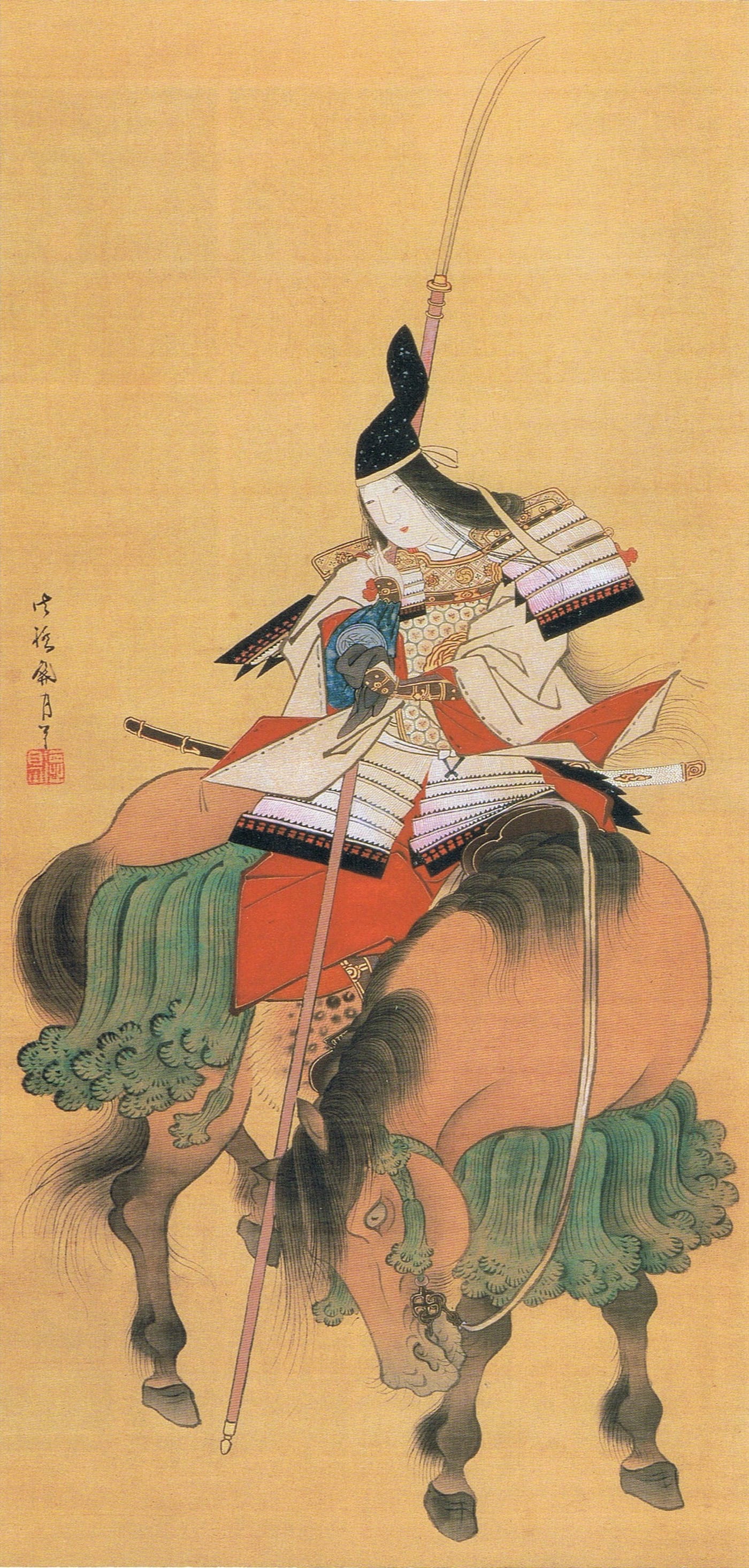
No final do período Edo, a naginata tinha-se tornado, mais do que qualquer outra arma, a disciplina marcial das mulheres da classe samurai. A longa gládio permitia que uma pessoa mais pequena mantivesse um espadachim à distância, e adquiriu um lugar estabelecido na educação e defesa doméstica das famílias guerreiras. A linhagem de naginata Jikishinkage-ryū pertence a este mundo: foi ensinada e transmitida em grande parte por professoras dos períodos Edo tardio e Meiji, numa época em que a gládio estava a passar de uma arma de campo de batalha para uma disciplina de caráter e treino físico. Esta é uma das razões pelas quais a história anterior da escola é menos completamente documentada do que a das grandes escolas de espada, cujos chefes eram frequentemente instrutores de domínio com registos oficiais por trás deles. Uma tradição mantida em grande parte por mulheres, fora das estruturas formais dos domínios, deixa um rasto documental mais ténue, e um relato cuidadoso tem de admitir o quanto da linhagem inicial é recuperado da tradição em vez de um registo firme.
Sonobe Hideo
A figura que leva a escola para a história firme é Sonobe Hideo (園部秀雄, 1870–1963). É lembrada como a principal transmissora de Jikishinkage-ryū naginatajutsu na era moderna, uma professora de grande influência que treinou gerações de estudantes ao longo de uma vida longa. A sua carreira coincidiu com a disseminação da naginata como uma disciplina ensinada a raparigas nas escolas japonesas durante a primeira metade do século XX, e ela estava entre os professores que levaram a arte clássica para esse movimento mais amplo. Através dela, a escola passou de uma tradição clássica mantida por um punhado de famílias para as instituições da educação japonesa moderna, e a linhagem de professores que aprenderam com ela continuou após a sua morte.
A naginata e o seu método
A arte é construída em torno do alcance e da versatilidade da gládio. Uma lâmina curva é montada num cabo longo, e o método utiliza todas as suas partes: cortes e estocadas com a extremidade da lâmina, golpes e bloqueios com a extremidade reforçada (ishizuki), e a constante troca da extremidade principal que permite que uma única arma ataque alto e baixo, esquerda e direita, em rápida sucessão. O trabalho de pés e a distância são centrais, porque toda a vantagem da naginata é o seu alcance, e grande parte do treino reside em formas emparelhadas (kata) em que um lado usa a gládio e o outro uma espada ou uma segunda gládio. O resultado é um método de arma completo e exigente, muito diferente na sensação das escolas de espada, que recompensa a mobilidade e o tempo em vez da força bruta.
Nos seus detalhes, a escola é conhecida pela ênfase na ko-naginata (小薙刀), uma gládio mais curta e móvel do que a imagem de arma pesada de campo de batalha que a arma frequentemente sugere, e por ações de corte chamadas nagi-age (薙ぎ上げ) e nagi-harai (薙ぎ払い), os cortes ascendentes e varredores. Uma guarda característica é a kowaki no kamae (小脇の構え), mantida compactamente ao lado para que a arma possa ser usada sem aviso. Entre os seus princípios nomeados estão os métodos de rotação chamados suisha (水車), a roda d'água, e fūsha (風車), o moinho de vento, ligados à ideia de kuruma-gaeshi (車返し), uma redireção circular que procura controlar um oponente através da estrutura e do tempo em vez da força bruta. O currículo mais amplo vai além da gládio: preserva o trabalho com o tantō (短刀), um conjunto de formas chamado Gogyō no Kata (五行の形, as Formas dos Cinco Elementos), e uma tradição co-transmitida da corrente e foice, a kusarigama, levada sob o nome Jikiyūshin-ryū (直猶心流鎖鎌).
Pergaminhos e transmissão interna
A transmissão da escola está registada numa série de pergaminhos (makimono), dos quais as listas públicas da Nihon Kobudō Kyōkai (Associação Japonesa de Kobudō) nomeiam vários, incluindo o Reiken no Maki (霊剣ノ巻), o Ryū no Maki (龍ノ巻), o Jun Menkyo Tora no Maki (順免許虎ノ巻) e o Okuden Seishin no Maki (奥伝精神ノ巻). Os títulos são registados abertamente; os seus conteúdos não o são. Tal como acontece com a maioria dos koryū sobreviventes, a substância destes documentos é tratada como algo transmitido pessoalmente, de professor para aluno, em vez de ser publicada. Uma enciclopédia pode notar que os pergaminhos existem e como são chamados, respeitando que o ensinamento interior que contêm não faz parte do registo público.
Por trás da naginata moderna
No século XX, o mundo japonês da naginata dedicou-se a criar uma forma padronizada única da arte que pudesse ser ensinada e praticada competitivamente em todo o país, tal como o kendō tinha sido derivado das antigas escolas de espada. O resultado, estabelecido em meados da década de 1950 sob o que se tornou a Federação de Naginata de Todo o Japão (Zen Nihon Naginata Renmei), é a disciplina moderna geralmente chamada *atarashii naginata*, "nova naginata". Baseou-se sobretudo em duas escolas clássicas: Tendō-ryū e Jikishinkage-ryū. As formas padronizadas e grande parte do método de ensino moderno descendem destas duas koryū, e o lugar de Jikishinkage-ryū como uma das duas fundações da arte moderna é a sua mais clara reivindicação na história mais vasta das artes marciais japonesas. Ambas as escolas clássicas continuam a ser praticadas por direito próprio, juntamente com a forma moderna que ajudaram a moldar. No ensino moderno da própria escola, o sucessor de Sonobe Hideo, Sonobe Shigehachi (園部繁八), está associado ao desenvolvimento, a partir da década de 1960, de um método de ensino graduado conhecido como Rhythm Naginata (rizumu naginata), parte do esforço mais amplo para levar a arte clássica à educação física contemporânea.
A escola hoje
Jikishinkage-ryū naginatajutsu sobrevive como uma tradição clássica viva, transmitida através da linhagem descendente de Sonobe Hideo. Depois dela, a sucessão é registada como passando por Sonobe Shigehachi e Sonobe Asano, depois Toya Akiko, depois Sonobe Masami, depois Ogihara Haruko, e para Taniguchi Katsumi, nomeada nas fontes atuais como a vigésima geração de chefe (sōke) da escola. O seu atual corpo custodial é o Shūtoku-kai (秀徳会), cujo próprio material publicado descreve uma membresia de cerca de seiscentos, cerca de vinte e uma filiais em todo o Japão e grupos no estrangeiro no Havai, Finlândia e Bélgica. É estudada hoje por si mesma, como um dos poucos métodos clássicos completos da glaive, e como parte da comunidade mais ampla da naginata que dela surgiu. A sua história é um corretivo útil para a imagem usual do koryū: uma antiga tradição de armas mantida viva menos por espadachins famosos e academias de domínio do que por uma longa linha de professores dedicados, muitas delas mulheres, cujos nomes só agora estão a ser devidamente reconhecidos.