The Bubishi is a handwritten martial arts manuscript tradition preserved within Okinawan karate. It is studied through sources including dissertation work from the Okinawa Prefectural University of Arts, records held by the National Diet Library in Japan, Fujian and Fuzhou archival material in China, and classical medical references preserved in Japanese institutional collections. Rather than a single mystical text of secret killing techniques, the research describes it as a compact, transmitted working document that combines Chinese martial material with extensive medical and pharmacological knowledge.
Nature of the Text
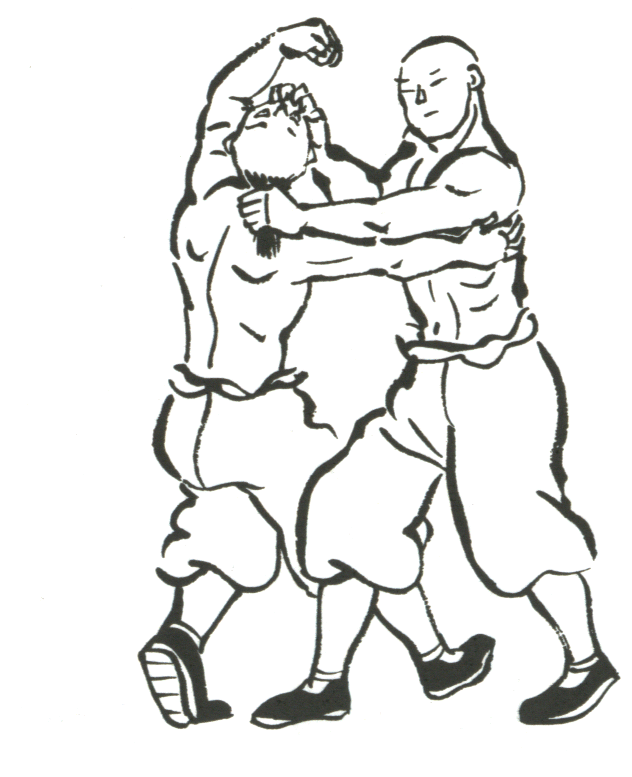
The Bubishi preserved in Okinawan karate is not the same work as Mao Yuanyi's large Ming military encyclopedia, the Wubeizhi, despite the shared title element that has misled many people. The Okinawan research describes a distinct, much shorter, handwritten compendium of around ten thousand characters, arranged in twenty-nine units, with seventy-two illustrations. Its scale identifies it as a private transmitted manuscript rather than a monumental printed military compendium. The Okinawan material describes its transmission as shishi sōden, master-to-disciple transmission, a mode of survival in which texts travel through memory, copying, error, omission, rearrangement, and emphasis.
A living archive of martial knowledge, not a manual but a body of thinking passed between serious practitioners.
Manuscript Lineages
The research does not present a single definitive Bubishi but identifies four major manuscript lines: the Tensonbyō line, the Matsumura Sōkon line, the Itosu Ankō line, and the Go Kenki line. These represent families of texts with copying differences, omissions, and structural changes in later printed forms, reflecting manuscript culture rather than a single fixed scripture.
Medical and Pharmacological Content
A large portion of the Bubishi is not concerned with combat. The Okinawan research is clear that the text combines Chinese martial material, especially from Fujian White Crane contexts, with extensive medical, therapeutic, and pharmacological passages. Open research material indicates that more than half of the content falls into healing and pharmacological territory, and that knowledge was transmitted through both text and diagrams. References used to frame this analysis, including classical material such as the Huangdi Neijing Suwen and illustrated acupuncture compilations, place the Bubishi within a broader East Asian knowledge world of bodily mapping, medical theory, points, channels, and therapeutic traditions, suggesting that its vital-point logic intersects with established anatomical and medical mapping systems.
Religious and Cultural Connections
A religious and cultural thread runs through the text in the figure of 九天風火院三田都元帥. The Okinawan research identifies this figure as Daoist or folk-religious, revered particularly in Fujian and Taiwan. The Fuzhou archival material adds that in Fuzhou this figure functioned as a theatre and ritual protection deity, a xishen or stage god, honoured with the title 会楽宗師. The Fuzhou contribution further notes that the cult of Tian Yuanshuai had spread to Nagasaki and Southeast Asia by at least the eighteenth century, placing the Bubishi within a wider network of transregional cultural traffic across Fujian, Fuzhou, Taiwan, Nagasaki, Ryukyu, and Southeast Asia, in which combat culture overlapped with performance, religion, ritual, and medicine.
White Crane Connection
The link to White Crane is supported by evidence while remaining nuanced. Chinese official heritage sources from Yongchun recognise Yongchun White Crane within protected cultural frameworks, and local government material preserves the origin narrative associated with Fang Qiniang. While heritage narratives are not the same as definitive historical proof, they locate White Crane within the relevant regional tradition. The Okinawan dissertation notes that within Fujian White Crane contexts there are form names corresponding to Okinawan karate forms, which indicates overlapping vocabularies and shared conceptual terrain rather than a wholesale copying of every kata from a single Chinese source.
Circulation and Bibliographic Evidence
The Bubishi appears to have become more visibly circulated in Okinawa around 1930, during the period when karate was undergoing institutional consolidation and modernisation through schools, associations, naming systems, public demonstrations, and formalisation. Mabuni Kenwa's 1934 publication, which includes an appendix marked as the secret book "Bubishi," is bibliographically confirmed through the National Diet Library, though digital access is restricted. A 1986 Japanese edition by Otsuka Tadao, supervised by Yang Ming-shi, is also catalogued. These provide firm anchors in Japanese print culture, even as access to some primary materials remains restricted.
Unresolved Questions
The research is explicit about its limits. The pre-1930 route by which the material moved from South China to Okinawa is not fully documented in a clean archival chain, the exact authorship is not settled, and the precise identity of every manuscript ancestor is not fixed. Terminology varies, and even the name of the text shifts by context, appearing as Bubishi, Okinawa-den Bubishi, and in Fuzhou-related material as Youhe Quanlun or "the Ryukyuan Bubishi." Such variation is characteristic of texts moving across languages, regions, and lineages. Overall, the Bubishi emerges as a handwritten Okinawan martial manuscript tradition, drawing heavily from Fujian combat knowledge, layered with medical and pharmacological material, carried through master-disciple transmission, visible in multiple textual lineages, anchored in Japanese bibliographic evidence by 1934, and entangled with a wider ritual and cultural world.