Ittō-ryū (一刀流), the "one-sword school", is one of the most influential traditions of Japanese swordsmanship. A great many later schools descend from it, and through its sparring methods it became the single most important ancestor of modern kendō. At its heart lie one technique, kiriotoshi, and one idea: that the whole of swordsmanship can be reduced to a single decisive cut.
The founder and his teacher
The school is attributed to Itō Ittōsai Kagehisa, a swordsman active in the late sixteenth century. His life is poorly documented and heavily wrapped in legend. The traditional accounts, which have him born on the island of Izu Ōshima, surviving dramatic ordeals as a youth and winning dozens of duels without defeat, read more as heroic biography than as record, and his exact dates are uncertain. What can be said with more confidence is that he trained in the older Chūjō-ryū under Kanemaki Jisai, a line that ran back through Toda Seigen, and that out of it he shaped the system he called Ittō-ryū.
Ittō sunawachi bantō, one sword is ten thousand swords: the whole of swordsmanship reduced to a single decisive cut.
The succession and the Ono line
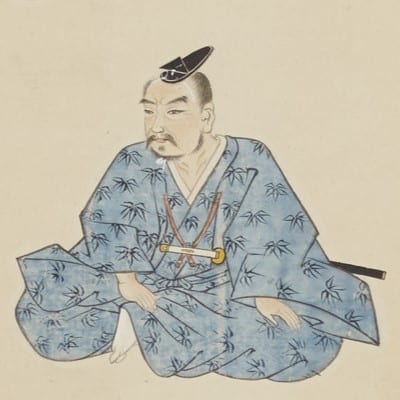
The better-documented history of the school begins with its second generation. Tradition holds that Ittōsai settled the succession by having his two senior students, Ono Zenki and Mikogami Tenzen, fight a duel; Tenzen won, and afterwards took the name Ono Jirōemon Tadaaki (c. 1565–1628). Tadaaki entered the service of the Tokugawa and became a sword instructor to the second shōgun, Hidetada, so that Ittō-ryū stood beside Yagyū Shinkage-ryū as one of the two schools closest to the shogunate. His line, Ono-ha Ittō-ryū, is regarded as the orthodox mainline of the tradition.
Kiriotoshi and the one sword
What sets Ittō-ryū apart is the principle of kiriotoshi, the "cutting drop". Rather than parrying an attack and then countering, the swordsman meets the opponent's cut with a single descending cut of his own that beats it aside and strikes in the same motion, so that defence and offence become one action. From this grows the school's central teaching, often expressed as ittō sunawachi bantō, "one sword is ten thousand swords": every technique in the curriculum is understood as a variation on this one stroke. The school is therefore unusually analytical, building from a single principle rather than from a large catalogue of separate forms.
The branches and the road to kendō
Ittō-ryū did not remain a single line. Over the Edo period it divided into many branches, and two of them changed the history of Japanese swordsmanship. In the eighteenth century the Nakanishi branch adopted the bamboo shinai and padded bōgu armour for practice, which allowed students to strike one another at full force without serious injury; this kind of free sparring spread widely and became the direct basis of modern kendō. In the early nineteenth century Chiba Shūsaku Narimasa (1792/4–1855) founded Hokushin Ittō-ryū, whose Genbukan dōjō in Edo became one of the largest and most famous schools of the late Tokugawa years. The statesman and swordsman Yamaoka Tesshū (1836–1888) later founded the Ittō Shōden Mutō-ryū from the same root. More than any other tradition, Ittō-ryū is the ancestor of the sword discipline practised today.
The school today
Ono-ha Ittō-ryū survives as a living koryū. Its modern transmission runs through Sasamori Junzō (1886–1976), who became the sixteenth head of a reunified line and was also a leading figure in twentieth-century kendō, and then through his successors. Hokushin Ittō-ryū and other branches are also still practised. For all the legend that surrounds its founder, Ittō-ryū remains a school defined less by its origin story than by the clarity of a single idea carried down four centuries.