Kōka Yamabushi-ryū (甲賀山伏流), sometimes extended to Kōka Yamabushi-ryū Ninjutsu (甲賀山伏流忍術), is a name attached to a martial tradition said to descend from the shinobi and mountain ascetics of the historical Kōka district, in what is now Shiga Prefecture. The component words are concrete: 甲賀 (Kōka, the district; the older English spelling is Kōga), 山伏 (yamabushi, a mountain ascetic of the Shugendō religious tradition), and 流 (ryū, a transmitted school). The history behind those words is real and well documented. The specific claim that a single, formally named school called Kōka Yamabushi-ryū existed in the medieval period and continued unbroken into the present is not. This article keeps the two apart.
What the name claims
As usually presented by modern organisations, Kōka Yamabushi-ryū is offered as a complete classical curriculum, combining swordsmanship (kenjutsu), spear (sōjutsu), archery (kyūjutsu), unarmed methods and traditional weapons (kobujutsu) with Shugendō-derived mountain discipline, all framed as the inherited art of the Kōka ninja. The difficulty is not the content of that training, which can be coherent and serious, but the historical packaging: the implication that Japanese sources document the entire system as one ancient Kōka lineage.
An honest mystery is more honourable than a dishonest certainty; a reconstruction has nothing to fear from calling itself one.
Documented Kōka: bands, not a school
Japanese scholarship describes historical Kōka not as a single secret academy but as a society of local warrior bands. The terms that appear in the sources are 甲賀衆 (Kōka-shū, the Kōka groups) and 甲賀者 (Kōka-mono, Kōka operatives), referring to households, retainers, rural magnates and foot soldiers organised through family alliances. The historian Fujita Tatsuo characterises the Kōka and neighbouring Iga groups in exactly these terms: a regional military society whose members were valued for scouting and intelligence work, and who later entered service under larger powers. There is no contemporaneous record in this material of one titled ninjutsu school standing above the rest.
The yamabushi connection: Mount Handō
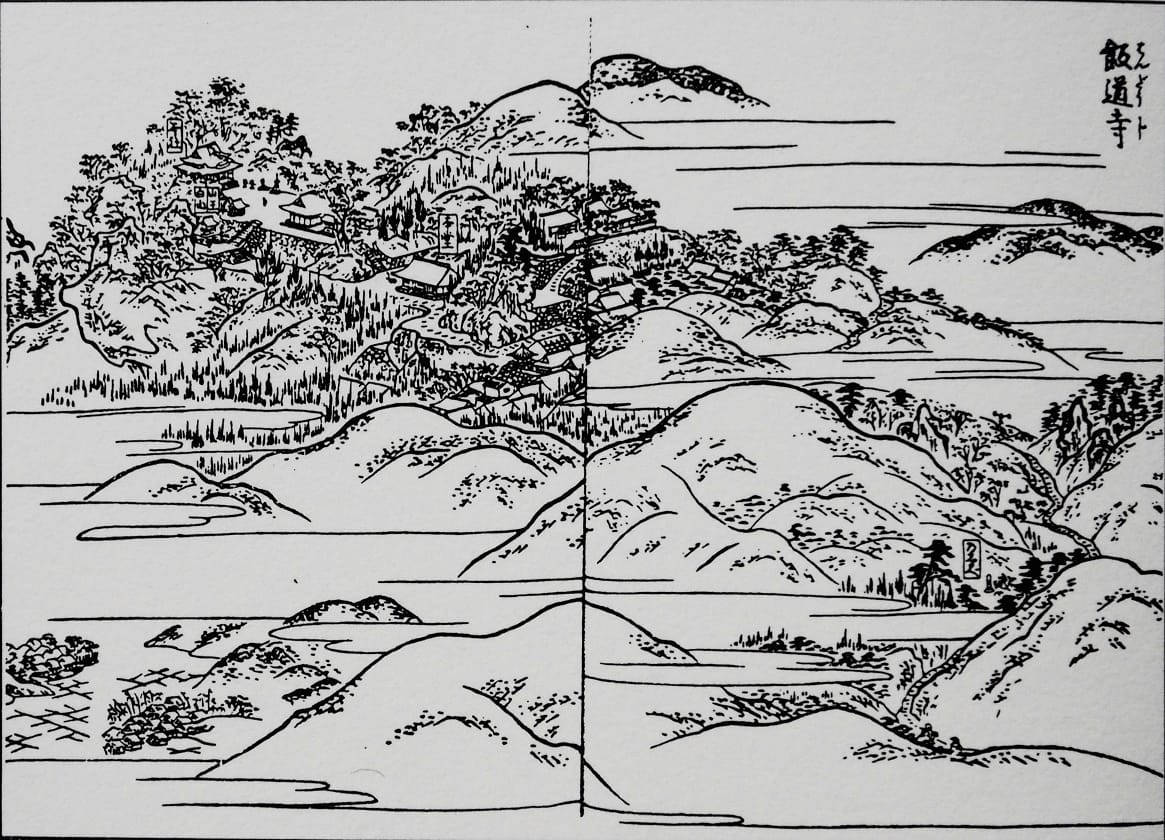
The religious side of the name is the best-anchored part of the story. Mount Handō (飯道山) and its temple complex Handō-ji (飯道寺) were an important centre of Shugendō, the Japanese mountain-ascetic tradition that combined Buddhist, local and mountain practice. Religious houses such as Umemoto-in (梅本院) and Iwamoto-in (岩本院) were influential, with networks reaching towards Kumano and the Tōzan-ha branch of Shugendō. Their yamabushi travelled widely, carrying ritual authority, medicinal knowledge and a close familiarity with terrain. This placed Kōka inside a world of religious movement whose practical skills, travel, medicine and local knowledge, plausibly overlapped with intelligence gathering, without the two being identical. Yamabushi were religious ascetics; shinobi were operatives; some individuals and families could move between both roles.
What the manuscripts show
The surviving ninjutsu writings describe a practical field culture rather than a tidy modern syllabus. The Kōka-associated manuscript Kanrin Seiyō (間林清陽), a copy of which bearing the date 1748 was reported by Kōka City, gives grounded instructions: studying a region's roads and customs, keeping a group together in darkness by cords and agreed passwords, fighting clear as a coordinated unit, and obstructing pursuers with caltrops (菱, hishi). The better-known Bansenshūkai (万川集海, 1676) is a compendium whose manuscript tradition, as Fukushima's textual study shows, varies between surviving copies rather than representing one pure, timeless system. Ueda Tetsuya's analysis of the Shinobi no Maki (忍之巻) similarly shows ninjutsu knowledge sitting beside broader jūjutsu and tool-craft. What these texts share is an emphasis on preparation, logistics and escape over any single decisive technique.
Kōka operatives in early-modern service
Concrete evidence for Kōka personnel survives in administrative records. Isoda Michifumi's study of Kōka shinobi officials in the Owari domain, drawing on newly examined family documents, describes the domain once employing seventeen Kōka personnel, a later group known as the Kōka Gonin (甲賀五人, the Five Kōka Men) forming after Kimura Okunosuke entered service in 1672, and the contracts, succession ceremonies and travel expenses that maintained these relationships. This is intelligence work absorbed into ordinary domain administration, not a hidden brotherhood preserved in secret.
Assessment
The honest position is layered. A strong Shugendō culture on the sacred mountains of Kōka, yamabushi institutions and travel networks, and Kōka warrior families with documented intelligence functions are all well supported, and some overlap between these worlds is socially plausible. What is not currently demonstrated is a formal school named Kōka Yamabushi-ryū existing in the medieval period and continuing unbroken to the present: no reliable medieval or early-modern Japanese source in the examined corpus names such an institution, and it does not appear among the classical traditions listed by the Nihon Kobudō Kyōkai. The absence is not proof of impossibility, since records burn and Shugendō institutions were damaged by the Meiji-period separation of Buddhism and Shinto, but a gap in the record is not a licence to assert an ancient lineage. A modern reconstruction built honestly from Kōka history and Shugendō discipline can carry real value; presented as unbroken ancient transmission, it remains unproven. The accompanying essay argues this case at length.