Shōrin-ryū Matsumura Seito Karate is an Okinawan martial tradition belonging to the wider Shuri-te lineage of Okinawa. Its ancestral roots lead back to Matsumura Sōkon (1809–1899), one of the towering figures connected with the old martial culture of Shuri, the political and cultural heart of the Ryūkyū Kingdom. The system as it is known today was later shaped and formalized by Hōhan Sōken (born 1891), who carried family-taught methods, emigrated and returned to Okinawa, and chose to preserve an older form of the art at a time when karate was moving toward sport and standardization.
Origins and Shuri-te Roots
Matsumura Seito belongs to the Shuri-te tradition rather than standing apart as an isolated style. Shuri-te was tied to the environment of Shuri, the capital of the Ryūkyū Kingdom, a place shaped by China, Japan, local aristocratic culture, royal service, diplomacy, and the pressures of survival. The art cannot be separated from this cultural soil without losing the sense of its roots.
The answer lies in the kata, but only for those willing to stop performing and start understanding.
Matsumura Sōkon is often described as one of the great figures of Shuri-te, a man whose art carried speed, mobility, and sharp tactical intelligence. He is also linked with Chinese influence, including Fuzhou, and with Japanese martial influence through Satsuma and Jigen-ryū. Okinawan karate of this period absorbed, selected, and reshaped outside influences, transforming them into something local rather than remaining an untouched island tradition.
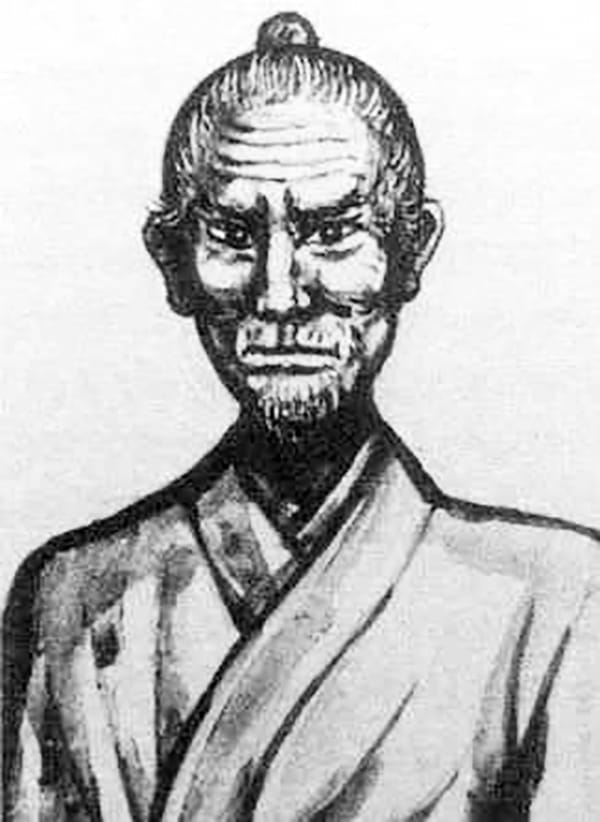
Hōhan Sōken and the Founding
From Matsumura Sōkon the line moves to Hōhan Sōken, who was connected to the Matsumura family line and trained from childhood under Nabe Matsumura, often referred to as Nabi-Tanmee. According to the tradition, Sōken began training around the age of twelve and was taught the old Shuri-te methods within the family environment, an example of transmission that was personal and informal rather than institutional. He later also studied Okinawan kobudō, including weapons traditions.
In 1924, after demonstrating in Okinawa, Sōken emigrated to Argentina and remained abroad for decades. He returned in 1952, after World War II, after Okinawa had been devastated, and after karate had already begun changing toward competition, standardization, and public performance. Observing these changes, he chose to preserve an older form of the art.
Sōken first referred to his method as Matsumura Shuri-te, and in the 1950s the name Shōrin-ryū Matsumura Seito Karate-dō became attached to the system. The word "Seito" means orthodox or legitimate line, and its use was a declaration of preservation: a statement that this was the continuation of the Matsumura tradition as Sōken understood it, rather than the newer sport version or the mainland-polished version.
Curriculum and Techniques
Matsumura Seito's curriculum, as described in research on the art, preserves an older structure through kihon, kata, bunkai, yakusoku kumite, kakete, and kobudō. The kata list is extensive, including Naihanchi, Pinan, Passai, Chintō, Kūsankū, Gojūshiho, Sanchin, Rōhai, Hakutsuru, and others connected through the wider Okinawan and Chinese-influenced streams of tradition. The system is not reduced to a single emphasis; it integrates striking, forms, self-defense, and weapons.
The style is often characterized by attention to features that became quieter in karate adapted for schools, universities, and competition: close range, practical angles, body conditioning, and subtle mechanics. Kata is treated less as performance and more as compressed information, a body archive preserving movement patterns, defensive principles, angles, entries, strikes, locks, footwork, balance methods, breathing habits, and tactical ideas, understood through training and pressure-testing rather than display.
Naihanchi is frequently noted within the tradition. Though it appears simple, lateral, compact, and repetitive, it is associated with close range, structure, balance, and hip control rather than dramatic travelling movement.
Philosophy
A teaching philosophy attributed to Sōken holds that the answer lies in the kata. Within the tradition this is treated as a practical rather than mystical idea: kata preserves knowledge that is not revealed automatically through performance but must be drawn out through training, testing, and correction.
Sōken is also reported to have believed in teaching fairly and fully, giving students what he had while making their progress dependent on their own attitude, effort, and persistence. In this view the teacher may open the door, but the student must walk through it, earning the depth of the art through character. This emphasis on discipline, patience, and repetition is described as characteristically Okinawan.
Succession and Disputed Lineage
The organizational history after Sōken became complicated. Following his death in 1982, different lines carried the art forward. Kina Seijun, who began training with Sōken in 1953, became an important figure and later led the Renseikan tradition. Nishihira Kōsei, who began training as a teenager, was considered one of Sōken's very few close students and also became central to preservation of the art. Akamine Yoshimatsu, who trained with Sōken from 1959 until Sōken's death, later led the Matsumura Seito Karate Hozonkai, the preservation society founded in 2004.
Succession disputes followed, and accounts differ. Some Okinawan representatives emphasize that Sōken officially appointed only a very small number of shihan, often named as Kina, Nishihira, and Briscoe. Other accounts, especially in international contexts such as American organizations, indicate that many Dan grades and certifications were issued, sometimes controversially, and not always connected with deep direct training under Sōken. Sources disagree, and questions of who was authorized, ranked, or appointed remain contested. Lineage in this tradition functions less as a simple family tree than as a contested record of memory and authority.
Modern Practice and Legacy
Matsumura Seito today exists through several groups, especially in Okinawa, including the Renseikan and the Hozonkai. The Renseikan, now associated with Shimoji Kiyotaka after Kina Seijun's leadership, maintains a structured curriculum rooted in Sōken's teachings. The Hozonkai under Akamine Yoshimatsu has worked to preserve Sōken's lessons and present them publicly. These groups are not identical, and their claims and emphases differ.
The art also spread internationally, particularly through American branches such as SMOKA and other organizations connected with students including Roy Suenaka and Gene Briscoe. International spread has helped the tradition survive while also raising questions about how transmission changes once an art crosses cultures and adopts new interpretations and structures.
Modern developments show the tradition remains active, with websites, e-books, Okinawan dojo profiles, demonstrations, tournaments, preservation efforts, and self-defense programs for women and children. Documentation is regarded within the tradition as increasingly important for recording older knowledge before it is lost, though it is understood as a supplement to direct teaching rather than a replacement for it.
Stripped of embellishment, the history of Matsumura Seito is one of Shuri-te roots, a founding figure in Matsumura Sōkon, a later formalizer in Hōhan Sōken, a curriculum of kata, bunkai, kumite, kobudō, etiquette, and discipline, a philosophy that locates the answer in the kata while requiring the student to become worthy of finding it, and a postwar succession landscape marked by sincere preservation, competing claims, and international spread.