Mugei-Mumei no Jitsu, usually translated as "No Name, No Art," is a modern ninjutsu-derived martial art and self-defence philosophy presented by the American author and instructor known by the pen name Ashida Kim. Its own materials describe it as a twenty-first-century martial art built around evasion, concealment, misdirection, mental cultivation, and escape rather than direct confrontation. Because it is a modern, largely self-published system associated with a disputed public identity, it is best understood as a contemporary martial expression rather than a classical Japanese tradition, and its historical claims are regarded with caution.
Name and Concept
The name Mugei-Mumei no Jitsu is glossed in Ashida Kim's writing as "No Name, No Art," and the same name is used by Dojo Press, which presents the system as "the 21st-century martial art." Within the system the name is treated as half of the philosophy itself: a deliberate refusal to be fixed by a brand, a category, or a lineage document. The "no name" idea is read both as a rejection of rigid classification and as an argument for strategic privacy, the less an opponent knows of a person's intentions, rhythm, habits, and weaknesses, the less they have to exploit.
'No Name, No Art', freedom from the vanity of identity, peace without naivety, and refusing to stand where harm expects you.
Historical and Cultural Background
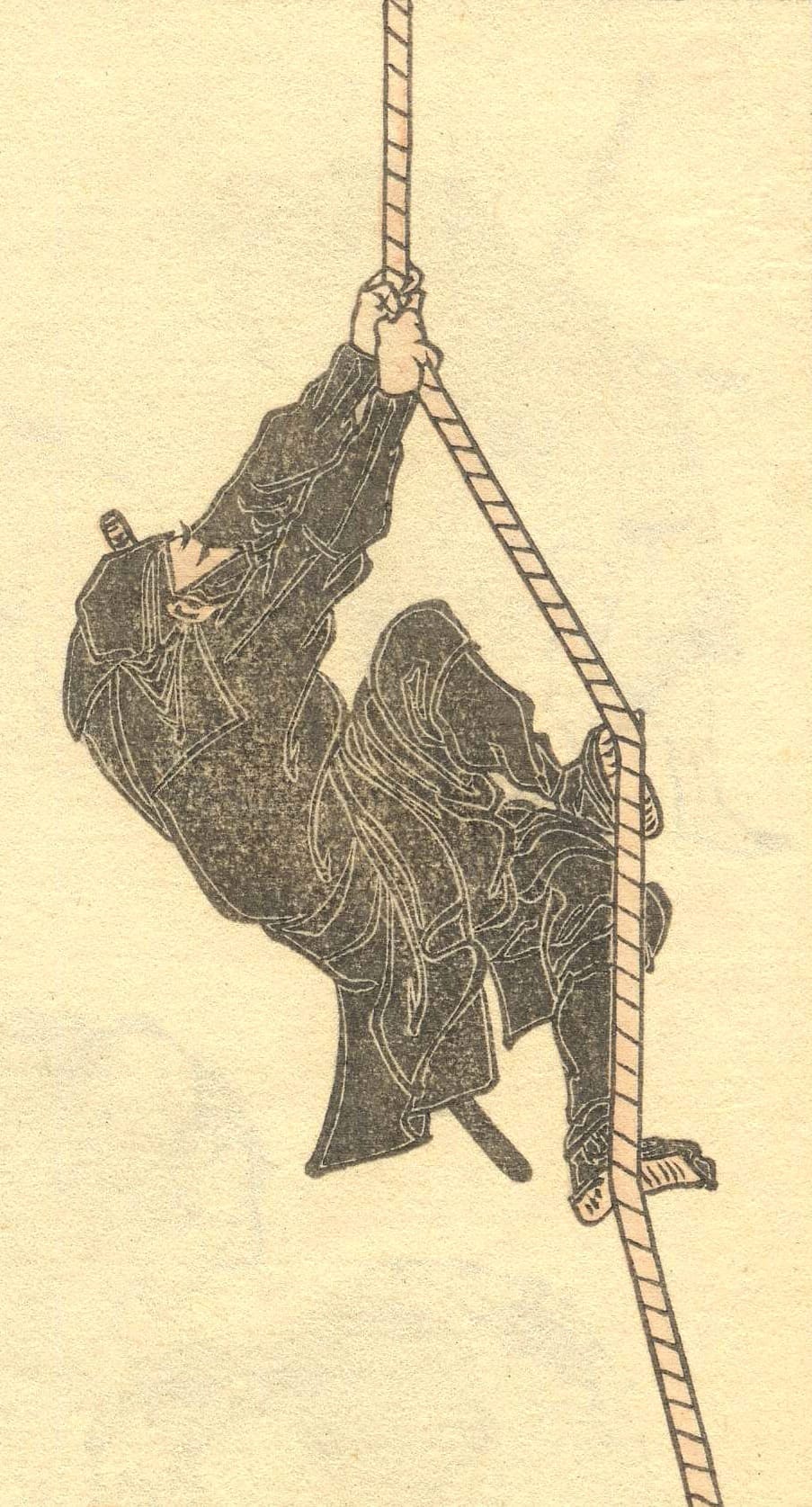
The system frames itself against historical ninjutsu understood not as costumed combat but as intelligence work, survival, deception, timing, and indirect action. The Iga-ryū Ninja Museum, for example, describes ninjutsu in terms of psychology, strategy, knowledge for living, and espionage, and notes that the popular image of the sword-wielding ninja owes more to comics and film than to the historical record. It also frames "invisibility" as the practical use of human perception and gaps in attention rather than literal disappearance.
Ashida Kim's published work belongs to the late twentieth-century Western martial arts boom. Titles such as Secrets of the Ninja (1981) and Forbidden Fighting Techniques of the Ninja (1984) were issued through Paladin Press during an era of mail-order manuals, survival culture, and a strong Western appetite for ninja mystery. The surrounding milieu also included the American Black Dragon Fighting Society, which Ashida Kim associates with Count Dante (John Keehan) and the rough, competitive Chicago martial arts scene of the period. The system thus carries a distinctly American flavour of self-invention alongside its Japanese language and ninja imagery.
Technical Principles
The central technical principle is summarised in the maxim, attributed to Ashida Kim, that "the enemy can't hit you if you're not there." Training is oriented toward not being where harm lands, controlling distance, attention, and timing so that a clean target, rhythm, or exchange is never offered.
The curriculum described in Secrets of the Ninja reflects this emphasis. Its contents include espionage, basic ninjitsu, meditation for inner strength, kuji kiri, Inpo (the art of hiding), the Nine Steps (Kuji Ashi), covert entry, Tonpo (the art of escaping), "clouding the mind," and leaving no trace. The Nine Steps place movement inside the logic of concealment, using shadow, breath control, and posture to break silhouette and become difficult to perceive. "Clouding the mind" is presented in practical terms as misdirection: shaping what an opponent believes is happening through silence, pauses, unexpected angles, and rhythm-breaking.
Meditation and mental conditioning are treated as central rather than decorative. Secrets of the Ninja presents meditation as a means of sharpening perception, calming the mind, and building inner strength, while Ninja Mind Control covers breathing exercises, kuji-kiri, internal strength, and related esoteric material. Whether read literally or as training psychology, the consistent thread is that confrontations are often decided in the mind before the body moves.
Philosophy
Ashida Kim characterises the art as concerned with keeping the peace rather than fighting, framing the warrior disposition around waiting, self-control, yielding to superior force, the use of intelligence, and a "first, do no harm" principle. On this reading the system is anti-ego rather than anti-martial: it values restraint, decisiveness, and the discipline to leave a needless confrontation over the pride of standing one's ground. It does not deny that danger exists; instead it argues for intelligence, timing, and the ability to remove oneself from the line of harm. Dojo Press presents the practical core as a simple distraction-and-escape principle (survive, create space, avoid needless damage, and leave) rather than a long, formal curriculum.
Classification
Whether Mugei-Mumei no Jitsu qualifies as a classical Japanese koryū is, by the system's own framing, the wrong question. Ashida Kim explicitly names it a twenty-first-century martial art. Sources such as Koryū.com define koryū as a pre-modern classical tradition with documented lineage, social structure, and teacher-to-student transmission, and explicitly place modern ninjutsu and ninjutsu-derived arts outside that definition. Mugei-Mumei no Jitsu is therefore best read as a modern, personal martial philosophy that draws on older ninjutsu themes of intelligence, psychology, strategy, and disappearance, rather than as a classical school. Its surrounding history, including the identity of Ashida Kim himself, remains contested, which is reflected in its low historical certainty.