I have been thinking about the comparison between the Hashashin and the shinobi, and I have to admit, it is one of those questions that looks simple for about three seconds before it opens a trapdoor beneath your feet and drops you into a basement full of medieval politics, religious polemic, burned archives, mountain fortresses, Japanese warlords, intelligence work, bad translations, theatrical costumes, and a frankly heroic amount of nonsense written by people who saw the word “assassin” and immediately lost all scholarly self-control. So yes, I understand why people see similarities. I see them too. I would have to be blind, stubborn, or employed by a committee not to notice them. Both traditions are surrounded by shadow. Both have been romanticised to death, resurrected, dressed in black, handed a dagger, and forced to perform for popular imagination like exhausted historical circus animals. Both operated in worlds where direct power was not always available, where information mattered, where fear could be cultivated, where deception had strategic value, and where a single person in the right place at the right time could shift the temperature of an entire political situation. That is the seductive part. That is where people lean forward and say, “Ah, so they must be connected.” And that is where I ruin the party, naturally, because history is often at its most interesting when it refuses to behave like a Netflix pitch.
I am going to say this plainly first, because I do not want to bury the answer under silk, smoke and academic incense: the Nizari Ismailis of Alamut, commonly but problematically called the Hashashin or Assassins, came earlier in the historical record than the clearly documented Japanese shinobi. Hasan-i Sabbah captured Alamut in 1090. The Nizari-Mustaʿli split followed in 1094-1095, and from there the Nizari Ismaili state developed its own political, religious and military structure across parts of Iran and later Syria. The Alamut state was destroyed by Hülegü and the Mongols in 1256, and the Syrian Nizari strongholds were eventually brought under Mamluk control, with the last major outpost falling in 1273. The shinobi, by contrast, appear clearly in Japanese documentary history later, with the earliest firm reference usually placed in the Taiheiki in the late fourteenth century, while the major ninjutsu manuals - the Bansenshūkai of 1676, the Shōninki of 1681, and the Ninpiden or Shinobihiden tradition - are Edo-period codifications of practices and ideas that were already older. So if the question is simply, “Who came first?” then my answer is: the Nizari Ismailis of Alamut came first as a securely dated organised formation. There. History has briefly behaved itself. Enjoy the moment. It will not last.
Now for the more tempting question: were they connected? Did one influence the other? Was there some secret chain of transmission from the fortresses of Alamut to the mountain communities of Iga and Kōka? Was there, as people love to imagine, a hidden corridor of shadow running from medieval Persia and Syria all the way to Japan, carrying daggers, doctrines and dramatic entrances? I would love to tell you yes, purely because it would make a gorgeous story and probably sell very well to men who own too many replica swords. But I cannot. I have found no documentary evidence of direct contact, transmission, collaboration, shared lineage, or meaningful influence between the Nizari Ismailis and the Japanese shinobi. None. And I do not mean “none” in the theatrical sense. I mean none in the dry, irritating, archive-bound sense. The chronology is awkward, the geography is awkward, the source record is silent, and silence in history can sometimes be meaningful, especially when people are desperate to fill it with a flute and a conspiracy board.
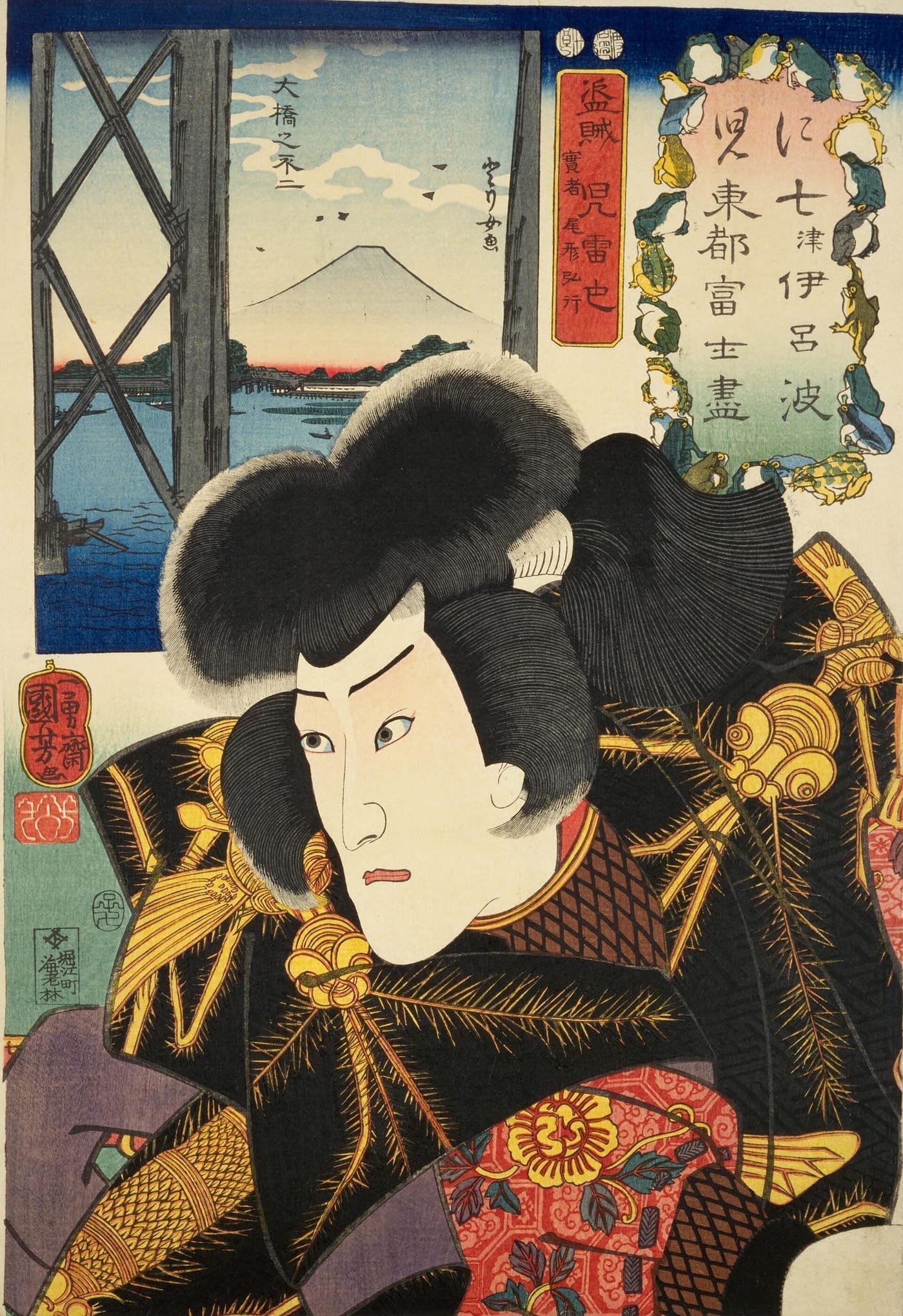
What I see instead is something more subtle and, to me, more intelligent: convergent development. Different societies, facing different but structurally similar problems, produced similar kinds of answers. This happens all the time. Human beings are not as original as we flatter ourselves to be. Give one group fractured sovereignty, political violence, stronger enemies, fortified landscapes, religious or local loyalties, and the need to survive without always winning open battles, and they will start valuing intelligence, concealment, signalling, infiltration, disguise, patient observation and selective violence. Give another group, thousands of miles away, a fractured military landscape, castle warfare, weak central control in certain regions, mountain terrain, rival lords and the need to know what the enemy is doing before the enemy politely announces it on headed paper, and they will also develop intelligence-gathering, reconnaissance, hidden movement, deception, arson, disguise and psychological pressure. Is that mysterious? Not really. Is it fascinating? Completely. Similar problems often produce similar tools. Strategy rhymes. It does not always need to borrow the tune.
I also think we need to be careful with the word “Hashashin,” because it arrives with a lot of baggage, most of it packed by enemies and later storytellers with a taste for melodrama. The more historically careful term is Nizari Ismailis. They were not simply an “order of assassins,” though that phrase has clung to them like a bad smell in a velvet cloak. They were an imam-led Shiʿi religio-political community with a missionary organisation, the daʿwa, fortress networks in Iran and Syria, doctrinal structures built around the imamate, taʿlim, taqiyya, and later the proclamation of qiyama at Alamut. The famous fidaʾi, the devoted operative willing to carry out high-risk missions, was real enough as part of the picture, but he was not the whole picture. Reducing the Nizaris to dagger-men is a bit like reducing medieval Japan to a bloke in black pyjamas hiding behind a screen. Convenient, theatrical, and historically underfed.
This is one of the strongest differences between them and the shinobi. The Nizaris were a community-state, or at least a fortress-based religio-political formation, with doctrine, leadership, mission, fortifications, diplomacy, internal hierarchy and survival as a minority under extreme pressure. The shinobi were not that. They were not a single transregional religious order. They were not united by one creed, one imam, one doctrine or one fortress-state stretching across regions. They were covert specialists embedded in Japanese military society, especially associated with places such as Iga and Kōka, and later with domain and shogunal service. Some were local warriors, some were attached to military households, some became hereditary Iga-mono or Kōka-mono, some functioned as guards, scouts, informants, infiltrators, messengers or intelligence workers. The older terms themselves were varied: shinobi, kusa, suppa, rappa, kamari, and others. Even the now-universal word “ninja” is comparatively late as the familiar modern label. Naturally, modern popular culture heard all of this complexity and decided black masks were easier. I cannot even say I am shocked. Popular culture has never met nuance it did not try to suffocate with a poster.
When I read about the Nizaris through historians such as Farhad Daftary, Marshall Hodgson, Shafique Virani, and the entries in Encyclopaedia Iranica, I see a community that has been buried under hostile legend for centuries. Their own archives at Alamut were largely destroyed after the Mongol conquest, and that matters enormously. We often meet them through enemies: Persian historians such as ʿAta-Malik Juvayni, who had access to materials at Alamut but wrote from a hostile position, and Latin witnesses such as William of Tyre, whose accounts shaped Crusader and European perceptions. Some hostile sources are still valuable; history is annoying like that. A biased source is not automatically useless, but it must be handled with gloves, not swallowed whole like a pub rumour. Juvayni, Rashid al-Din and Kashani preserve elements of now-lost material, but they also write from worlds deeply opposed to the Nizaris. So when later European imagination turns them into drugged fanatics wandering through paradise gardens before being sent out to murder people, I raise an eyebrow. Actually, both eyebrows. It is quite the workout.
The drugged-paradise-garden story is one of those legends that refuses to die because it is too colourful. People love it. The supposed “Old Man of the Mountain,” the young men intoxicated with hashish, the artificial paradise, the promise of heavenly reward, the hypnotic obedience - it is cinematic, sinister and extremely convenient for enemies who wanted to portray the Nizaris as irrational monsters rather than strategic political actors. Modern scholarship has treated much of this legend very sceptically, and rightly so. That does not mean Nizari violence did not happen. It did. It means we should stop confusing polemical fantasy with evidence. The Nizaris used selective, targeted killing as one strategy among many, especially against powerful enemies whom they could not defeat through conventional war. They also used diplomacy, alliance-building, fortification, missionary networks and political survival tactics. It is less cartoonish. It is also more disturbing, because it is more rational.
The shinobi suffer from a different kind of distortion. Their problem is not only hostile sources but theatrical afterlife. In the Japanese case, we have valuable Edo-period manuals such as the Bansenshūkai, Shōninki, and Ninpiden, alongside broader military texts such as the Gunpō jiyōshū, and modern institutional work from places like Mie University’s International Ninja Research Center and the National Diet Library. But we also have kabuki, fiction, manga, films, games, tourism, fancy dress, and that particular modern disease where every hidden tradition must be either mystical or marketable, preferably both. The historical shinobi were not simply assassins. Their work centred far more on intelligence gathering, reconnaissance, infiltration, arson, signalling, roadblocks, castle entry, information mapping, disguise, deception and local knowledge. Assassination was possible, yes, but it was not the defining core in the way the lazy imagination likes to assume. The lazy imagination, bless it, sees a shadow and immediately hands it a knife.
This is where the comparison becomes useful, as long as we do not force it too far. The Nizari fidaʾi is often associated with the patient, close-range killing of high-value political or military enemies. William of Tyre describes followers who would wait for the right moment, dagger in hand, ready to act when ordered. Again, hostile source, but still important. The shinobi sources, on the other hand, show a broader tradecraft: disguising oneself as a merchant or beggar, carrying writing tools, memorising roads and houses, sketching enemy banners and faces, using coloured rice or ordinary-looking signs as route markers, carrying fire secretly, entering households through social manipulation, bringing gifts later to lower suspicion, using medicines, straw hats, towels, fire-starting implements, grappling hooks, and all the small ugly practicalities that make intelligence work less glamorous and more effective. I find this deeply satisfying, because real history is always more practical than fantasy. Fantasy says, “Be mysterious.” History says, “Bring a pencil, remember the road, and do not get drunk.” Frankly, history is the stricter parent.
The Shōninki especially fascinates me because it does not merely say, “Sneak about and look meaningful.” It formalises tools, disguises and social methods. Its seven disguises and six essential tools show that the shinobi had to become socially mobile, psychologically aware and logistically prepared. The Gunpō jiyōshū makes the point even more plainly: a commander cannot plan properly without knowing the enemy and the terrain. So a good shinobi needed intelligence, memory, eloquence, the ability to record information, and the discipline to return with useful knowledge. Useful knowledge. Not vibes. Not heroic posing. Not “I felt a powerful energy from the enemy castle.” Imagine returning to a warlord with that and expecting not to be launched into a moat.
The Bansenshūkai adds another layer, because it is not just about tricks and tools. It contains ethical framing, especially the idea of seishin, the righteous or properly ordered heart. I have written about this before because I think it is one of the most misunderstood aspects of ninjutsu. The shinobi tradition, at least as codified in that source, recognised that covert methods are morally dangerous. Deception, infiltration and hidden violence can easily become theft, cruelty, vanity or private corruption unless they are governed by something. So the text insists on self-control, loyalty, justice, humanity and restraint. It even warns against indulgence in drink, lust and greed. Which is terribly inconsiderate of it, really, because many modern “warrior mindset” types would prefer an ancient tradition that endorses their worst habits while giving them a dramatic aesthetic. The old manuals are less accommodating. They tend to say, in their own severe way, “Train your heart before you trust your hand.” Annoying. Necessary. Usually the same thing.
The Nizari ideological framework is completely different. It is not seishin. It is not Japanese warrior ethics. It is rooted in Ismaili Shiʿi doctrine, the authority of the imam, the concept of taʿlim, the practice of taqiyya under hostile conditions, and the esoteric reconfiguration of religious life seen in the proclamation of qiyama at Alamut. This matters because it means Nizari covert activity was not just a toolbox. It sat inside a religious-political worldview. The fidaʾi did not belong to a loose professional category like “covert specialist for hire.” He belonged to a community structured by allegiance, doctrine, mission and survival. The shinobi, by contrast, operated within military households, local networks, village-warrior communities, daimyo service, shogunal offices and practical martial culture. Their ethics could be serious, but they were not organised around a single transregional imamate. That distinction is not a small footnote. It is the spine of the comparison.
I also want to push back against the modern habit of calling the Nizaris “early terrorists” without care. I understand why the comparison appears. Targeted killing, symbolic violence, fear, high-profile victims - the temptation is there. But scholars such as David Cook have argued for caution, and I agree with that caution. The Nizari attacks were targeted, usually aimed at specific political, military or religious enemies, and there is no solid evidence that the assailants sought death for its own sake in the way people often project backward from modern suicide terrorism. Many missions were nearly suicidal because the attacker had little chance of escape, but that is not the same thing as making death the central purpose. Precision matters. I know precision is less exciting than shouting “terrorism” across eight centuries, but we must all make sacrifices.
The same caution applies to shinobi. Calling them “Japanese assassins” is lazy. They were intelligence operatives, scouts, infiltrators, saboteurs, arsonists, messengers, spies, guides, guards, informants and sometimes agents of psychological disruption. Their world was one of castles, mountain passes, shifting alliances, warlord competition, local autonomy and practical survival. In Iga and Kōka, geography and weak central lordship helped produce communities where local warrior groups developed specialised methods. During the Sengoku period, those skills became valuable to larger military powers. Later, in the Edo period, some of these roles were domesticated into more bureaucratic forms: Iga-mono, Kōka-mono, Oniwaban and other intelligence or guard functions. That is much less dramatic than a man vanishing in smoke, but then most real work is less dramatic than its costume.
This is the part I find most interesting: both the Nizaris and the shinobi were shaped by terrain. Alamut was not a mood. It was a fortress. The Nizari world depended on mountain strongholds, difficult access, fortified communities, networks of loyalty and communication, and the ability to resist stronger powers through geography as much as through ideology. Iga and Kōka were also shaped by terrain: mountainous, fragmented, locally defended, difficult to control from the outside. Mountains teach politics. They teach patience. They teach people how to vanish without needing magic, mostly by making outsiders tired, confused and miserable. I have always suspected mountains have a dark sense of humour.
But again, similarity is not proof of influence. Mountain societies often develop defensive autonomy. Minority communities often develop secrecy. Weaker actors often develop intelligence methods. Political fragmentation often produces covert specialists. None of that requires a hidden historical bridge between Alamut and Iga. It requires only human beings under pressure, which history provides in excessive quantities. Quite generous of it, really. A little too generous.
I also think we need to understand the role of reputation. Both groups became larger in imagination than they probably were in operational reality. That does not mean they were unimportant. It means reputation itself became part of the weapon. The Nizaris terrified enemies not because they could kill everyone, but because they seemed able to reach specific people who believed themselves protected. A dagger on a pillow, a killing in a sacred or public space, a high-value target suddenly exposed - these things create psychological shock far beyond the physical act. The shinobi too benefited from reputation. If an enemy believes unseen agents can enter a castle, set fires, gather secrets or turn servants into informants, fear does half the work before anyone climbs a wall. Fear is a marvellous little collaborator. Unreliable, dramatic, but useful.
Of course, later myth inflated both reputations. The Nizaris became the Assassins of European fantasy: drugged fanatics, secret gardens, absolute obedience, a sinister Eastern cult conveniently designed to terrify and fascinate Western readers. The shinobi became the ninja of popular entertainment: masked, acrobatic, magical, morally ambiguous, either superhuman or absurd depending on the budget. In both cases, the myth reveals as much about the people telling it as about the people being described. Enemies called the Nizaris monstrous because it was easier than admitting they were politically intelligent. Modern entertainment made ninja magical because patient intelligence work is hard to film unless someone very clever is behind the camera. A man taking notes on road gradients does not sell as well as a backflip through a cloud of smoke. Tragic, but here we are.
If I had to reduce the comparison to its bones, I would say this: the Nizaris were earlier, more centralised in a doctrinal-religious sense, fortress-based, imam-oriented, and famous for targeted political killing as one instrument of survival. The shinobi were later in clear documentation, decentralised, embedded in Japanese military society, and more broadly associated with reconnaissance, infiltration, sabotage, intelligence gathering, disguise and practical fieldcraft. Both used secrecy. Both understood fear. Both moved in fractured political landscapes. Both attracted legends because ordinary people become terribly excitable when they realise history contains professionals of concealment. But they were not the same thing. They were cousins in function, not siblings in origin.
I know some people will find that disappointing. We like neat connections. We like the idea that one shadow taught another shadow how to move. We like secret histories, hidden lines, lost transmissions, mysterious travellers crossing continents with forbidden techniques tucked into their sleeves. It feels satisfying. It makes the world seem more designed than it is. But the real answer is more adult and therefore slightly less popular: there is no evidence of direct connection, and the similarities are best explained by the repeated logic of asymmetrical conflict. I actually prefer that. It means human strategy has patterns. It means pressure reveals the same dark intelligence in different places. It means history does not need to plagiarise itself in order to rhyme.
The source problem itself is almost poetic. With the Nizaris, we are dealing with a world whose internal records were partly destroyed, forcing us to reconstruct through hostile witnesses, later historians and modern scholarship. With the shinobi, we have manuals and Japanese archival descriptions, but many of the major texts were written after the height of the warfare that produced the practices they codified. One tradition is half-buried under enemy writing. The other is half-buried under theatre and later popular fantasy. In both cases, the historian has to clear away rubbish before finding the bones. It is not glamorous work. It is more like cleaning a battlefield with tweezers while someone nearby insists they saw a dragon.
So when I name sources, I do it deliberately. For the Nizari side, I look to ʿAta-Malik Juvayni’s History of the World-Conqueror, William of Tyre’s History of Deeds Done Beyond the Sea, Marshall Hodgson’s The Order of Assassins, Farhad Daftary’s The Ismaʿilis and The Assassin Legends, Shafique Virani’s work on the persistence of Assassin myths, David Cook’s careful discussion of whether the Nizaris can be compared to early terrorism, and the relevant Encyclopaedia Iranica entries on Ismaili history, Rashid al-Din Sinan and the lost Sargozasht-e Sayyednā. For the shinobi side, I look to the Bansenshūkai, the Shōninki, the Ninpiden, the Gunpō jiyōshū, the National Diet Library’s material on ninja in history and fiction, and the work of Mie University’s International Ninja Research Center. I am not interested in pretending sources are all equal. They are not. Some are primary but hostile. Some are later but technically rich. Some are modern and corrective. Some are useful precisely because they show how myths were built. History is less a single window than a room full of cracked mirrors. One learns to angle the light.
There is also the moral question, and I think it matters. Both traditions were entangled with violence and deception, and I refuse to polish that away. The Nizaris killed. The shinobi deceived, infiltrated, sabotaged and, when necessary, used dangerous methods. But neither tradition should be flattened into villainy for the convenience of simple minds. The Nizaris were a minority religious-political community surviving among stronger hostile powers. The shinobi were covert specialists in a Japanese world where warlords, castles and shifting loyalties made information a matter of life and death. If we judge them only by modern comfort, we learn nothing except how cosy our chairs are. If we romanticise them completely, we learn nothing except how easily shadows flatter us. The better position is harder: I can acknowledge the violence without reducing the people to monsters, and I can admire the intelligence without pretending the methods were innocent.
That is where the comparison becomes genuinely useful for me. Not because I think the Hashashin and the shinobi were connected, but because comparing them forces me to ask what happens when societies create disciplined forms of hidden power. What ethical language forms around secrecy? What kind of person is trusted with deception? What does loyalty mean when action must remain unseen? How does fear become strategy? How do myths grow when outsiders cannot understand what they are looking at? These questions are more interesting than asking whether a Persian fidaʾi somehow sent a memo to Iga. No offence to the imaginary memo. I am sure it would have had excellent handwriting.
I also find it rather funny that modern people act as if covert strategy belongs to the past, as though technology has made the old principles irrelevant. Tools change. Of course they do. A satellite is not a hilltop scout. A drone is not a disguised messenger. Encrypted communications are not coloured rice scattered along a route. But the underlying questions remain stubbornly alive. How do I learn what the enemy hides? How do I move without drawing attention? How do I influence perception? How do I make a stronger power waste its strength? How do I survive when open confrontation would be suicide? How do I turn timing, terrain and psychology into force? These questions are ancient because people are ancient in all the worst and most fascinating ways. We upgrade the toys. We do not upgrade the human condition quite so efficiently.
The Nizaris understood symbolic precision. The shinobi understood practical intelligence. Both understood that power is not always loud. That may be the deepest shared lesson, though not a shared origin. Power can sit in a fortress. Power can move through a rumour. Power can hide inside patience. Power can wear a merchant’s clothes, enter a household politely, remember the layout, and leave everyone thinking nothing happened. Power can place fear in the mind of a ruler who suddenly realises walls do not protect the imagination. This is why these traditions still disturb people. They expose the vanity of obvious power. They remind us that the throne is never as safe as it looks. A cheerful thought for breakfast.
And perhaps that is why both the Hashashin and the shinobi became legends. They embarrass conventional power. They suggest that the person outside the spotlight may matter more than the person posing beneath it. They suggest that intelligence can defeat strength, that patience can humiliate arrogance, that the unseen can shape the seen. Of course people turned them into monsters and magicians. That is what societies often do with forms of power they cannot comfortably explain. If they cannot control it, they mythologise it. If they cannot understand it, they moralise it. If they cannot sell it, give them a minute.
So, to answer the original question properly: yes, I see the similarities between the Nizari Ismailis often called the Hashashin and the Japanese shinobi. I see the shared logic of concealment, intelligence, deception, patience, selective pressure and asymmetrical survival. I see why the comparison tempts people. But I also see the hard difference. The Nizaris came first in the secure historical record. They belonged to an imam-led Ismaili religio-political community with fortress networks and doctrine. The shinobi appear later as Japanese covert specialists tied to local warrior cultures, military service, Iga and Kōka traditions, and later Edo-period codification. I find no evidence that the two traditions met, borrowed from one another, or belonged to a common lineage. What I find is more interesting than secret transmission: I find two worlds, very far apart, independently discovering that when survival becomes difficult, intelligence becomes a weapon, concealment becomes armour, and reputation becomes a blade.
And I will be honest, I rather like that conclusion. It is less glamorous than the fantasy of a hidden global brotherhood of medieval shadow-workers, but it is sturdier. It does not need incense. It does not need a red string conspiracy board. It only needs us to respect the sources, tolerate complexity, and stop expecting history to behave like a trailer with dramatic drums. The truth is sharper than that. The Nizaris and the shinobi were not the same. They were not twins. They were not secret collaborators across continents. They were different answers to an old human problem: how does the vulnerable survive the powerful, how does the quiet unsettle the loud, and how does strategy endure when tools, empires and costumes all change around it?
That, to me, is the real comparison. Not “who copied whom?” but “why do certain methods keep returning wherever power fractures and survival becomes an art?” The answer is uncomfortable. Because the world has always rewarded those who see clearly before they move. Because open strength is not the only strength. Because a blade is not always the most dangerous thing in the room. Sometimes the most dangerous thing is information. Sometimes it is patience. Sometimes it is a person everyone underestimated because they were looking for a monster and failed to notice the human being taking notes.
Very careless of them, really.