However in this post we talk about titles.
Because once you move beyond coloured fabric, you step into something far more revealing. Words. Authority. Labels people attach to themselves, or have attached to them.
And historically, those words were not random.
They began as social markers inside very specific cultural systems.
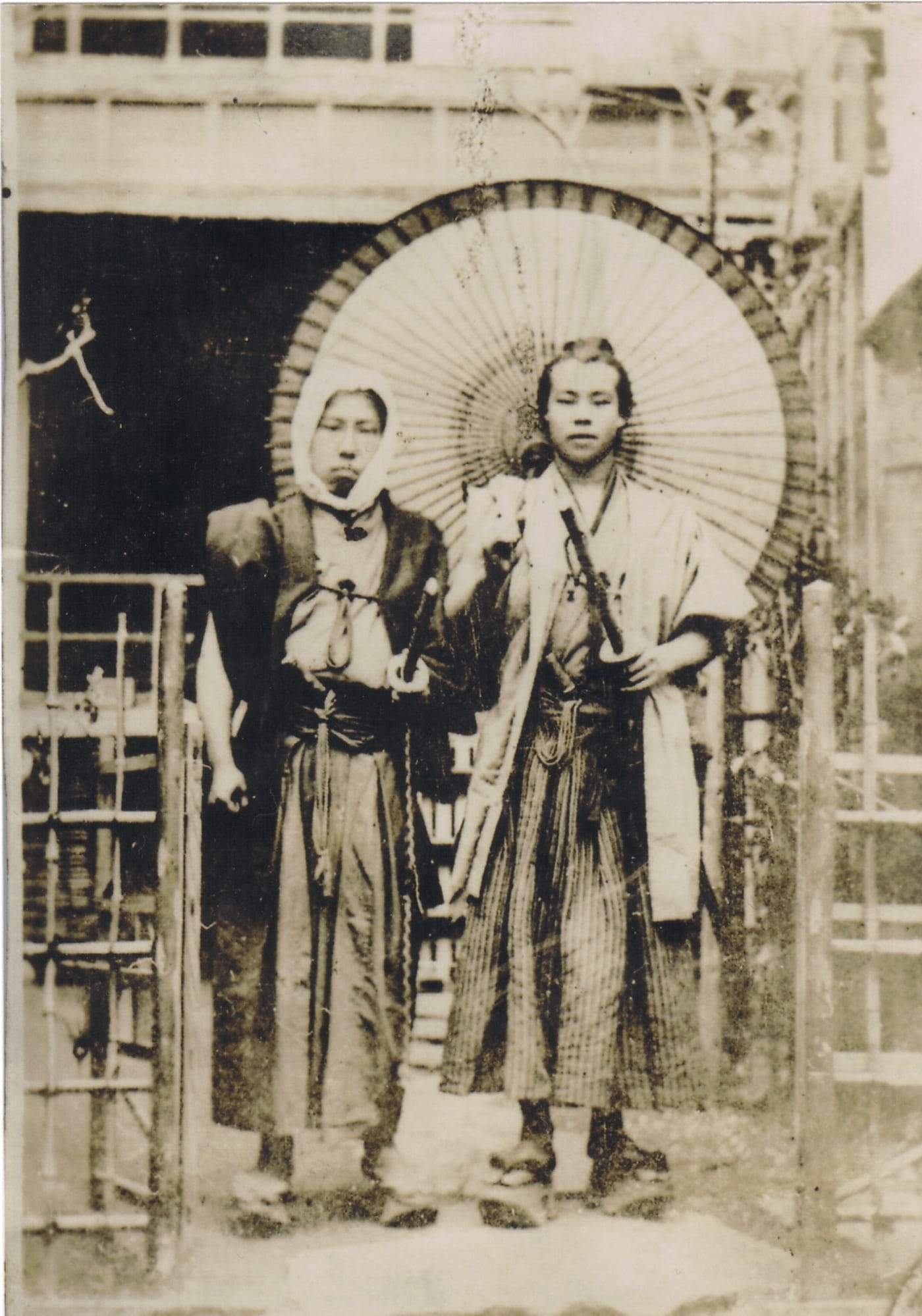
In Japan, for example, menkyo existed long before modern belts. A menkyo was not a motivational sticker. It was a license. Permission to teach. A recognition that knowledge had been transmitted. And menkyo kaiden meant full transmission, not “I feel spiritually evolved,” but “you now carry the curriculum.”
Then there is sōke. Today people throw that word around as if it means “supreme founder of everything.” Historically, it meant head of a lineage household. Family head. Custodian of tradition. It did not automatically mean founder. That word is kaiso. Two different things. One is inheritance. The other is creation.
And then we have sensei. My favourite abused word. It literally means “one who came before.” It is a polite form of address. It is not a rank. It is not a mystical promotion. It simply acknowledges experience. In Japan you call your schoolteacher sensei. Your doctor is sensei. It is contextual respect, not a throne.
Shihan historically meant senior instructor. In early 20th century Japan it was awarded by organisations like the Butokukai. There were criteria. Structure. Documentation. The same with Renshi, Kyōshi, and Hanshi. Those were qualification titles attached to dan grades, usually from national federations. They were not self-typed on a website because someone bought a new gi.
Move to China and we see shifu or sifu. Again (not a rank. It means master or teacher, often with a familial nuance. It carries respect, not a numerical ladder. The term zōngshī) often translated as grandmaster, historically existed but was rare and contextual. Cinema made it glamorous. Tradition did not mass-produce it.
In Korea, sabom-nim refers to an instructor, usually of a certain dan level within Taekwondo or Hapkido structures. It is embedded in organisational systems. Seonsaeng-nim is a respectful teacher address. Again, context matters. Titles there are often linked to federation recognition, not self-appointment.
In Thailand, kru means teacher. Ajahn or Ajarn indicates a higher, respected instructor. These are cultural terms rooted in education and Buddhism. They are not interchangeable with “Supreme Grandmaster of Ultimate Combat.”
Notice a pattern? Historically, titles were either:
1. Familial/lineage based
2. Institutionally awarded
3. Polite forms of address
They were not marketing strategies.
Then the dan system appears. First in Go, later in Kodokan Judo. Structured, modern, rational. Kano Jigorō introduced dan grades in the late 19th century. Ten dan became the recognised ceiling in mainstream Japanese budō. Ten. Not fifteen. Not seventeen. Not twenty-two “dragon ascension degrees.”
Now here is where it gets uncomfortable.
Once martial arts globalised in the 20th century, titles travelled. Translation happened. And inflation followed.
“Grandmaster” becomes a standard English rendering for high-level teachers. Fair enough. But then comes “Supreme Grandmaster.” Then “Founder and Supreme Grandmaster.” Then “Grand Supreme World Headmaster.” I am not inventing these. They exist. Real websites. Real patches. Real self-declared authorities.
There are people today calling themselves 15th, 17th, even 20th dan in systems that historically capped at ten. That is not continuity. That is expansion. Sometimes organisational. Sometimes ego-driven. Sometimes simply commercial.
You also see combinations that would make any historian wince: “Hanshi 15th Dan Supreme Sōke.” Historically, Hanshi was tied to certain dan thresholds in recognised organisations. Sōke was lineage head. Dan was numerical rank. These were separate categories. Today they are stacked like badges on a scout uniform.
And then there are academic-sounding additions. “Professor of Martial Arts.” “Doctor of Combat Sciences.” In most countries, those are not protected academic titles in this context. They sound impressive. They are rarely tied to accredited institutions.
I am not saying all modern titles are fake. That would be lazy. Many federations legitimately award dan grades. Many organisations have internal criteria. If a Taekwondo federation awards 9th dan after decades of contribution, that is organisationally coherent.
But coherence is not the same as historical depth.
When someone claims to be “Sōke” of a style created in 1998 with no documented lineage structure, that is not historical continuity. That is self-designation. When someone promotes themselves to “Grandmaster 17th Dan,” that does not align with established Japanese dan frameworks. It is organisational invention at best.
And here is where my sarcasm gently taps the shoulder.
If everyone in the room is a grandmaster, who is left to actually teach?
The older systems were hierarchical, yes. But they were also restrained. Titles were rare. Sometimes intentionally withheld. Some founders refused grandiose labels altogether. Funakoshi did not parade himself as supreme anything. Kano did not invent mystical degrees for marketing brochures.
The irony is delicious. The more ancient a system truly is, the simpler the titles often are. Teacher. Headmaster. License holder.
The newer and more commercially competitive the environment, the longer the business card becomes.
I care about history because it protects clarity. A title like menkyo kaiden meant something precise in its context. A 10th dan in Kodokan Judo has documented recipients, only a few dozen in history. That scarcity is the point.
When titles multiply beyond structure, they lose weight.
So when I see “Supreme Grandmaster Founder President and World Chief Sōke,” I do not feel intimidated. I feel curious. Curious about documentation. About lineage. About who recognised that title and on what basis.
Because historically, titles were anchored in either lineage or institution.
Everything else?
It may be real within a club.
It may be sincere.
But it is not ancient authority.
And that distinction matters.
Not because I am obsessed with hierarchy.
But because if we are going to speak about tradition, we should at least know which part is tradition, and which part is embroidery.