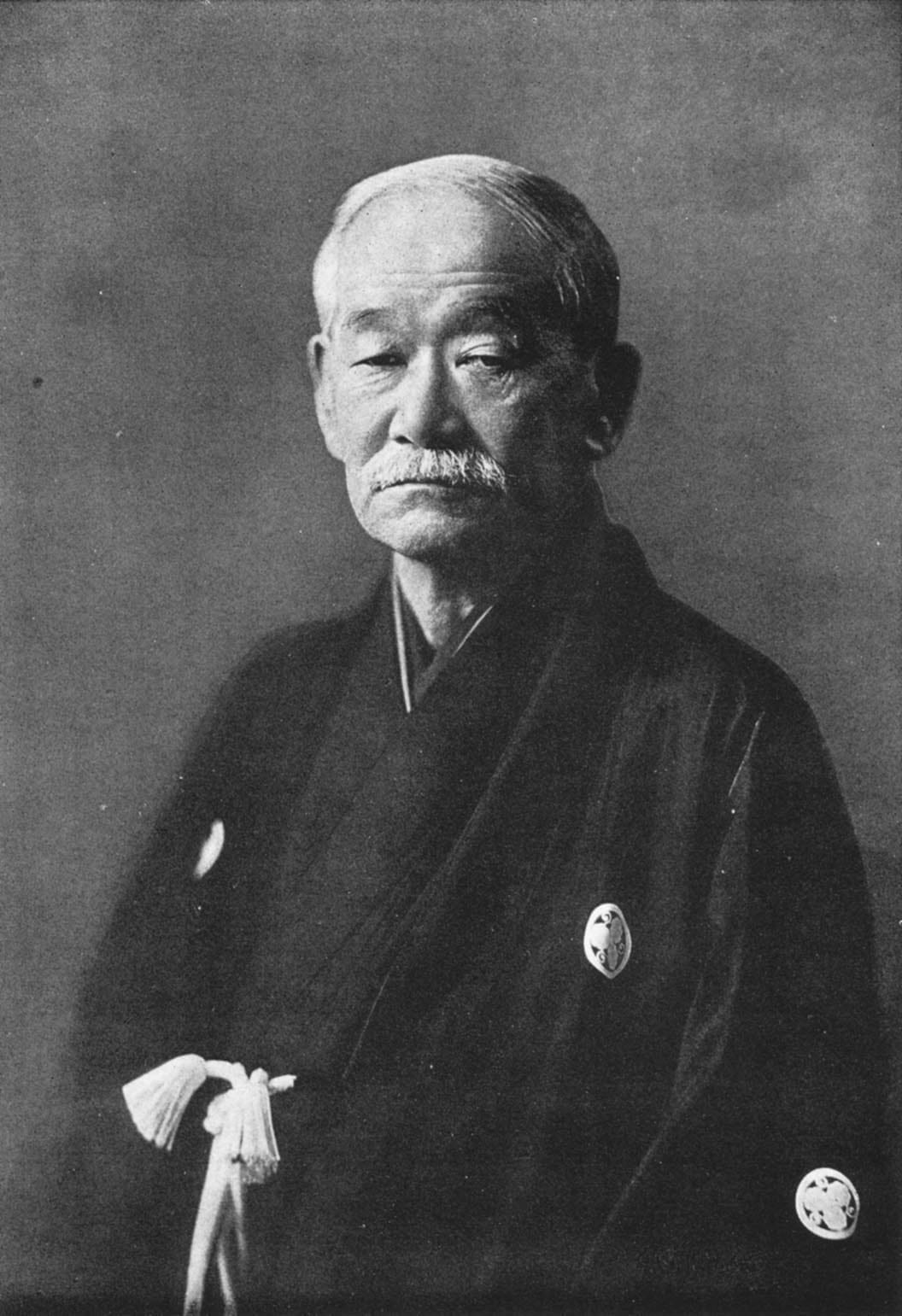
Kodokan Judo is a Japanese martial discipline founded by Kanō Jigorō, born in 1860, who established the Kodokan in Tokyo in May 1882. Kanō did not present his system as another jujutsu school but as a method of education through fighting. He called it judo (the gentle, yielding, or flexible way) rather than jujutsu, intending "gentle" to mean intelligent and adaptive rather than weak. The name Kōdōkan can be understood as "the place for studying the way."
Origins
Japan in the late nineteenth century was modernising rapidly. The samurai class had been dismantled, and old jujutsu schools once linked to warrior culture struggled to prove their place in a society that increasingly regarded them as outdated. Kanō studied older jujutsu traditions, especially Tenjin Shin'yō-ryū and Kitō-ryū, recognising the value in their throws, locks, pins, balance-breaking, timing, and body control. He also saw their problems: some techniques were too dangerous for regular practice, some methods were bound up in secrecy, and some schools lacked a broader educational structure or neglected to test function. In the older schools Kanō trained directly: he studied Tenjin Shin'yō-ryū first under Fukuda Hachinosuke and then Iso Masatomo, absorbing its atemi (striking) and close grappling, and Kitō-ryū under Iikubo Tsunetoshi, whose emphasis on throwing and the breaking of balance he would later place at the centre of judo.
Maximum efficiency with minimum effort, Judo is a laboratory for testing the self under real pressure.
In 1882, in a small space at the Eishōji temple in Tokyo, with only a handful of students and roughly twelve mats, Kanō opened the Kodokan. By 1883 it had begun to grow, and in 1887 it moved again as more space was needed. Early students such as Tomita Tsunejirō, Saigō Shirō, Yokoyama Sakujirō, and Yamashita Yoshitsugu are remembered as foundational figures who helped demonstrate that the new judo could be trained safely enough to repeat under pressure yet seriously enough to hold its own. The Kōdōkan's early reputation is traditionally tied to a celebrated 1886 contest connected with the Tokyo Metropolitan Police, in which its judoka are said to have prevailed over an established jūjutsu school; the episode is retold across the histories, though scholars caution that its details have been polished over time.
Technique
At the heart of judo technique are three concepts: kuzushi (breaking the balance), tsukuri (fitting the body into position), and kake (execution). Kuzushi begins the throw before any visible movement, disturbing the opponent's balance through a push, pull, step, or reaction. Tsukuri requires the feet, hips, shoulders, grip, angle, and timing to align. Kake is the throw itself, which depends entirely on the first two being correct.
Kodokan Judo organises its throwing techniques, nage-waza, into categories. Te-waza (hand techniques) include seoi-nage and tai-otoshi; koshi-waza (hip techniques) include o-goshi and harai-goshi; ashi-waza (foot and leg techniques) include de-ashi-barai, o-soto-gari, sasae-tsurikomi-ashi, and uchi-mata; and sutemi-waza (sacrifice techniques) divide into rear and side sacrifice methods, in which the thrower gives up their own standing position to take the opponent down.
The system also includes katame-waza, the grappling and control techniques. Osaekomi-waza (holding techniques) teach pressure, positioning, and weight distribution; shime-waza (strangling techniques) teach precision; and kansetsu-waza (joint locks), especially arm locks in modern judo, teach leverage and restraint.
Curriculum and Kata
The classical Gokyō no Waza, formalised in 1895, arranged forty throws into five teaching groups as a structured curriculum. The list was revised in 1920, and in 1982 additional techniques were recognised, bringing the official Kodokan throwing curriculum to what is often described today as sixty-seven nage-waza.
Randori (free practice) and kata (formal practice) are considered complementary. Randori is alive, unpredictable, and resistant, while kata preserves principles and refines movement. The Kodokan kata include Nage-no-Kata (throwing principles), Katame-no-Kata (control, pins, chokes, and locks), Kime-no-Kata (decisive self-defence from kneeling and standing positions), Ju-no-Kata (flexibility and yielding), and Koshiki-no-Kata, which carries older Kitō-ryū influence. Kodokan Goshin-Jutsu, developed in the twentieth century, reflects more modern self-defence concerns.
Philosophy
Kanō expressed the principle of Seiryoku Zen'yō, the best use of energy, usually translated as maximum efficiency with minimum effort. The complementary principle, Jita Kyōei (mutual welfare and benefit), holds that progress in judo is relational: a practitioner needs partners, uke and tori, to attack, receive, fall, test, and resist, improving together while protecting one another.
Ukemi, the art of falling, is taught before throwing. It conditions the practitioner to relax, land safely, breathe, and rise, treating a fall as information rather than failure.
Institutional History
By 1909 the Kodokan was officially incorporated as a foundation. By 1911 Kanō was involved in broader physical education movements in Japan. In 1922 the Kodokan Cultural Association more explicitly promoted Seiryoku Zen'yō and Jita Kyōei, emphasising that judo was not meant to remain confined to competition. In 1934 a new Kodokan building opened in Kasuga. In 1938 Kanō died aboard the Hikawa Maru while returning from an International Olympic Committee meeting.
After World War II, martial arts in Japan faced restrictions under the Allied occupation, and budō was viewed with suspicion because of its association with militarism and nationalism. Training resumed in the post-war years, and by 1950 judo was again moving back into public life.
Olympic Era and Modern Practice
Judo entered the Olympic Games in Tokyo in 1964, transforming its global identity from a Japanese educational martial art into an international sport. This brought visibility, legitimacy, and expansion, along with rules, weight classes, refereeing systems, and national training programmes. Competition sharpened timing, gripping strategy, and conditioning, but some older techniques and self-defence elements became less visible. Certain leg grabs were later restricted under international rules, and dangerous techniques such as kani-basami were banned for safety.
The Kodokan opened women's training in the early twentieth century, with a women's section established in 1926. Women's judo appeared as a demonstration event in 1988 and became an official Olympic medal event in 1992 in Barcelona.
Across this history, Kanō's birth in 1860, the founding in 1882, the Gokyō formalised in 1895, incorporation in 1909, philosophical emphasis in 1922, expansion in 1934, Kanō's death in 1938, post-war restrictions and revival, the 1964 Olympic debut, and women's Olympic inclusion in 1992, Kodokan Judo continued as a living system that changed while retaining its core.