Legacy.
That word gets abused in martial arts more than the term “warrior spirit.”
Everyone claims it.
Few understand what it actually required in Japan.
Real legacy in Japanese martial traditions was not poetic. It was administrative, documented, structured, and often brutally strict. It was less romantic than people imagine and far more rigid.
In classical schools, the genuine pre-modern traditions, transmission was not democratic. It was not collective. It was not “all senior instructors share authority.”
It was vertical.
One designated successor.
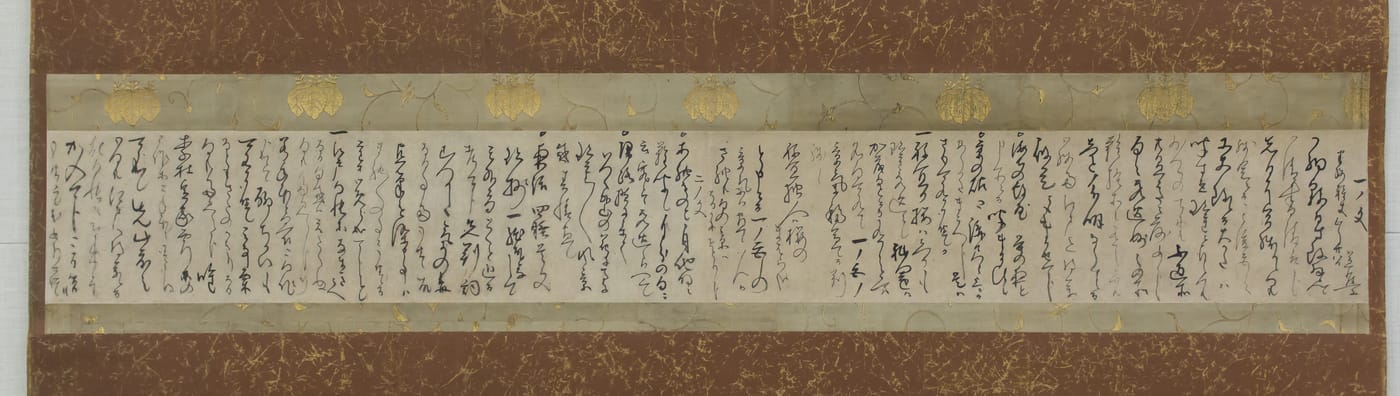
The principle was isshi sōden, complete transmission to a single heir. That heir received densho, the transmission scrolls. Not decorative art pieces. Curriculum records. Technical catalogues. Lineage documentation. Often accompanied by licenses, menkyo, and, at the highest level, menkyo kaiden, signifying full transmission.
Full transmission did not mean “I feel spiritually aligned.”
It meant: you now carry everything.
And those documents were not symbolic gestures. They bore seals. Personal seals. Without the correct seal, legitimacy could be questioned. Even in the early twentieth century, when a well-known figure presented a license that lacked a proper seal, historians noticed. Because in Japan, documentation matters.
That is what legacy looked like.
It left paper.
It left names.
It left generational chains that could be traced.
Edo period schools often maintained detailed genealogies. You could follow teacher to student, generation after generation. Not because they wanted social media credibility, but because authority inside a ryū depended on it. Without documented succession, the structure fractured.
And fractures were taken seriously.
Transmission was also limited. Classical schools rarely had endless levels. Two to nine stages at most. No rainbow spectrum. No fifteen degrees. You progressed through carefully controlled stages until, possibly, you were entrusted with the whole system.
And often only one person per generation reached that point.
That is legacy.
Now let’s move forward.
After 1868, Japan modernised. Feudal privileges dissolved. Organisations like the Dai Nippon Butokukai were founded in 1895 to regulate martial disciplines. Kodokan Judo introduced dan rankings in the late nineteenth century, standardising progression in a way classical schools never had.
Important distinction.
Modern dan systems are institutional frameworks.
Classical transmission was hereditary and document-based.
These are not the same thing.
Dan grades could be awarded by federations. Teaching titles formalised by committees. They served a purpose in a modern nation state.
But they were not medieval lineage.
This is where confusion begins.
When a modern organisation claims an unbroken thousand-year transmission, historians ask a very simple question:
Where are the records?
Japan has temple archives. Domain registries. Military documents. Family genealogies. Cultural property registrations. If a martial school truly existed in the 1500s, traces usually appear somewhere.
Not always (fires happened, wars happened) but often enough that total absence raises questions.
In the twentieth century, particularly from the 1950s onward, there was a boom. Martial arts globalised. Interest in ninja traditions exploded. Romantic narratives flourished.
Some organisations asserted multi-century lineages whose documentary trail begins suspiciously late.
That does not automatically mean fabrication.
But it does mean scrutiny.
When scrolls appear for the first time in the 1970s claiming medieval origins, scholars take notice. When genealogies cannot be independently corroborated, caution is rational.
And then there is another phenomenon entirely.
Modern synthesis.
A practitioner studies karate, judo, perhaps aikido, maybe sword work. They absorb influences, refine their understanding, create a cohesive system that reflects their experience.
That is evolution. Perfectly legitimate.
What becomes problematic is when that synthesis is reframed as rediscovered feudal knowledge. When new combinations are labelled “lost battlefield secrets.” When innovation is disguised as antiquity.
There is no shame in building something new.
There is something questionable about rewriting history to elevate it.
Real legacy does not need theatrical adjectives.
It needs continuity.
And continuity leaves evidence.
If your lineage claims eight hundred years but has no mention in pre-modern documents, no trace in regional archives, no independent confirmation outside your own organisation, historians will categorise it as unverified at best.
That is not hostility.
That is method.
Even menkyo kaiden, that revered license of full transmission, was only as valid as the authority of the person issuing it. If the issuer’s legitimacy was unclear, the document’s value diminished accordingly.
Transmission depended on recognised succession.
Recognition did not come from enthusiasm. It came from community acknowledgment and documentary proof.
Modern times complicate things further. Some lineages were genuinely damaged by war and social change. Some scrolls were destroyed. Oral transmission sometimes filled gaps.
So absolute certainty is not always possible.
But the absence of evidence cannot be replaced by narrative.
And here is where people become uncomfortable.
Many martial arts today function perfectly well as modern systems. They have structure, curriculum, skill development, integrity.
They do not need medieval ancestry to justify themselves.
Yet marketing pressure tempts exaggeration.
“Ancient secret techniques.”
“Forbidden scrolls.”
“Hidden lineage revealed.”
It sounds dramatic. It sells.
But serious historical study demands more than sound.
It demands traceability.
If you remove the adjectives and what remains is a twentieth-century founder who studied multiple arts and built something cohesive, that is not lesser.
It is modern.
Modern does not mean fake.
It means documented differently.
And perhaps this is the point that irritates people most.
When you separate documented transmission from constructed narrative, you remove mystique. You replace it with archival reality.
Which is less cinematic.
But far more solid.
Legacy is not about how old something feels.
It is about whether you can follow the chain without it dissolving into fog.
In classical Japanese martial traditions, that chain was guarded fiercely. One heir. Sealed documents. Recognised succession.
In modern organisations, legitimacy rests on institutional recognition and transparent origins.
Both can be valid.
What becomes problematic is when the two are blended without clarity.
When modern frameworks are dressed in medieval clothing and presented as uninterrupted antiquity.
History deserves better than that.
And perhaps the most thing I can say about this is simple:
If your legacy survives independent scrutiny, it does not fear questions.
If it collapses under basic historical inquiry, it was never legacy.
It was storytelling.
And storytelling, however dramatic, is not transmission.