Kukishin-ryū (九鬼神流) is a classical Japanese martial tradition known above all for its work with the staff and the spear, though in its fuller form it is comprehensive (sōgō bujutsu), reaching across several weapons and unarmed grappling. Its history runs in two very different registers that are best kept apart: a documented line of bōjutsu and sōjutsu transmitted alongside Hontai Yōshin-ryū jūjutsu into the present day, and a far broader set of medieval and shinobi claims attached to the school within a separate twentieth-century lineage, whose continuous early transmission is disputed. The name itself, and the tie to the Kuki family of Kumano, belongs to tradition rather than to firm record.
The name and the Kuki tradition
The school's name points to the Kuki (九鬼) family, a warrior house associated with the Kumano region and, in the Sengoku period, with naval power on the Pacific coast. Tradition links the origins of Kukishin-ryū to this house and to the religious and martial culture of the Kumano mountains, and some accounts carry the lineage back into the medieval period. None of this earliest stretch is independently documented in the way that later koryū history can be: the connection to the Kuki family and to Kumano is the school's own account of itself, a tradition worth recording honestly as tradition rather than asserting as established fact. What can be said with more confidence is that a tradition under this name was being transmitted by the Edo period, and that its better-attested history belongs to that later setting rather than to the medieval origins the name evokes.
A weapons tradition carried as the armed counterpart of a jūjutsu school: the staff and spear kept as living craft, with its older, grander claims held honestly at arm's length.
The documented staff and spear line
The clearest history of Kukishin-ryū is the one it shares with Hontai Yōshin-ryū, the jūjutsu tradition of the Takagi line. In this transmission the two schools travel together: the Takagi family and their successors carried Hontai Yōshin-ryū jūjutsu and Kukishin-ryū bōjutsu and sōjutsu side by side, so that a student of one studied the other, and the staff and spear came to serve as the armed counterpart of the jūjutsu. This paired line passed in the twentieth century to the Inoue family of the Kansai region, under the headmaster Inoue Tsuyoshi Munetoshi, and continues today with branches in Japan and abroad. It is this strand, the weapon work transmitted with Hontai Yōshin-ryū, that can be followed as documented koryū history rather than as legend.
What the school teaches
At its core Kukishin-ryū is a weapons tradition, and its signature is the rokushaku bō, the six-foot staff, handled with long sweeping strikes and thrusts, rapid changes of grip, and free use of both ends. Alongside the staff sits sōjutsu, the art of the spear, and in its comprehensive form the school also preserves sword work, the naginata, and a body of unarmed technique, so that it is better described as a sōgō bujutsu, a whole martial curriculum, than as a single-weapon art. The forms are practised in pairs in the koryū manner, one partner attacking and the other answering, and they assume a serious opponent who is also armed. For all its breadth, the bō and the spear remain the heart of the school, and it is for these that it is most respected.
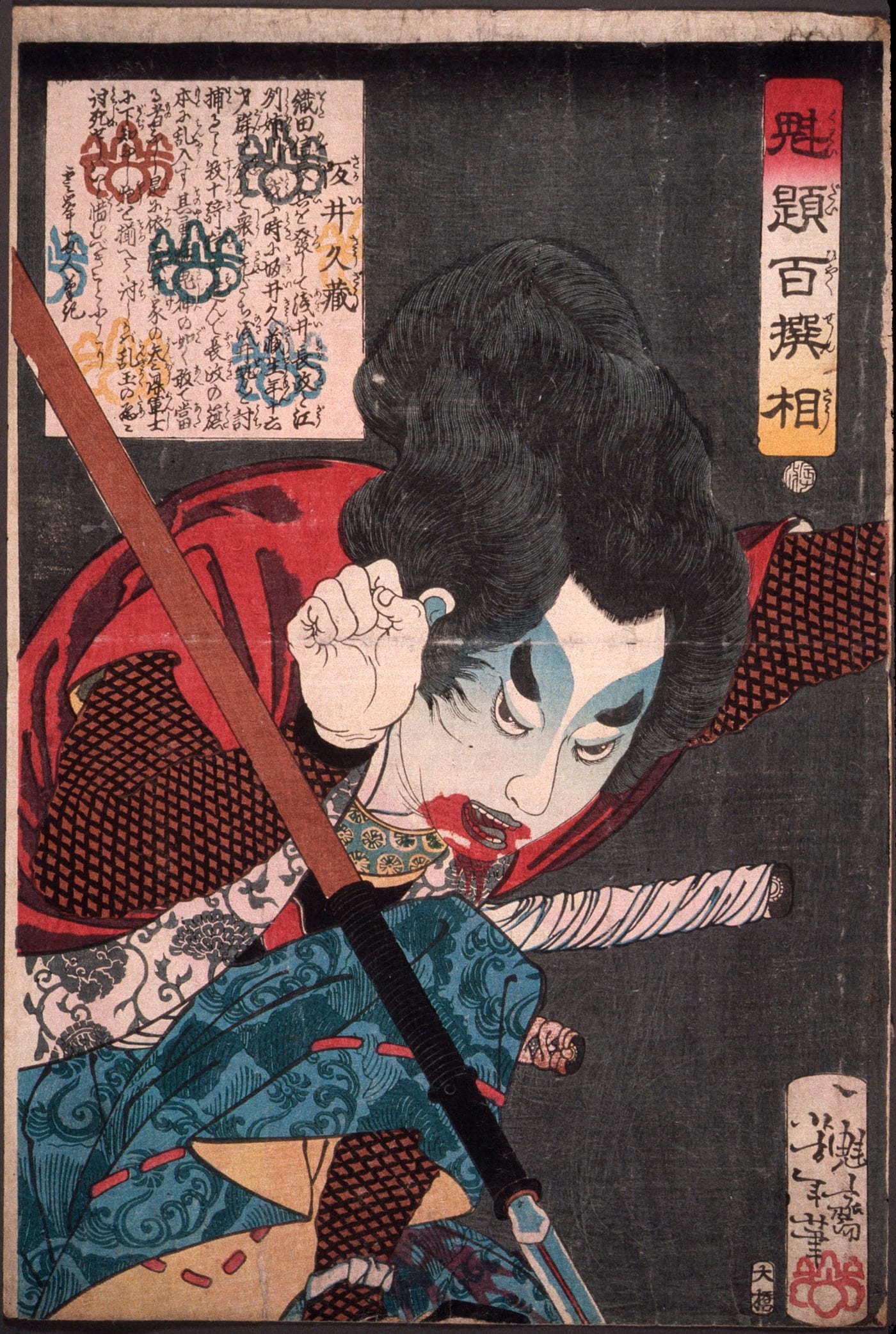
The contested medieval and shinobi claims
A second, much larger set of claims attaches to Kukishin-ryū through the lineage of Takamatsu Toshitsugu (1889–1972) and his student Hatsumi Masaaki (born 1931), whose Bujinkan organisation lists Kukishin-ryū among the nine traditions it teaches. In this telling the school is an old comprehensive system with medieval roots and connections to shinobi (ninja) practice. These claims are contested. The continuous transmission of the school from the medieval period, and the wider picture of an unbroken ninja inheritance, rest largely on the lineage's own account and on densho whose provenance is hard to verify independently; historians outside the tradition generally treat the early history as unproven. The honest position is to record that the Takamatsu line genuinely teaches material under the name Kukishin-ryū, while marking its claimed medieval and shinobi pedigree as contested rather than documented.
The school today
Kukishin-ryū therefore lives in more than one place at once. The staff and spear line transmitted with Hontai Yōshin-ryū continues as a documented koryū under the Inoue family and its branches, and is the strand a student can trace with the most confidence. The version carried within the Bujinkan is far more widely practised around the world, taught as one of that organisation's nine schools, though its deepest historical claims remain disputed. Reading the school honestly means holding these two registers apart: a modest, well-attested weapons tradition on the one hand, and a famous but contested medieval and shinobi inheritance on the other.