Tenjin Shin'yō-ryū (天神真楊流) is a Japanese jūjutsu tradition founded in the 1830s by Iso Mataemon Minamoto no Masatari (磯又右衛門源正足), born in 1790, during the late Edo period. It was a complete combat system encompassing striking, throwing, grappling, restraint, and resuscitation methods, and it became one of the most influential foundations beneath later Japanese martial arts, including judo.
Founding
Iso Mataemon did not invent the system from nothing. He trained in multiple traditions, including Yōshin-ryū (楊心流) and Shin no Shintō-ryū (真之神道流), tested himself against instructors from various domains, absorbed methods, refined principles, and eventually fused these systems into what became Tenjin Shin'yō-ryū. This adaptive approach reflects a broader pattern in which old Japanese martial traditions were often less concerned with purity than with practical synthesis.
The art Kano dismantled to build Judo, understanding what was kept reveals what was lost.
The name carries a documented origin. "Tenjin" came from Kitano Tenmangū (北野天満宮), after Iso Mataemon reportedly reflected there and became inspired by the image of willow branches bending in the wind, flexible and yielding but not broken. This image reflects a combative philosophy in which flexibility and adaptation, rather than hardness alone, are central to survival.
Historical Context
Tenjin Shin'yō-ryū emerged during a period in which the Tokugawa order still existed but was under growing pressure, with foreign ships, political instability, internal fractures, and economic tension. By the Bakumatsu period the style had spread widely across domains and reportedly accumulated over five thousand students, a remarkable figure for an era without modern advertising or mass communication. The system spread because it was regarded as practically and physically effective.
Techniques and Characteristics
Tenjin Shin'yō-ryū was a complete combat system that included atemi (striking vital areas), throws, joint locks, chokes, restraints, multiple-opponent scenarios, control methods, revival techniques, and bone-setting methods, as well as resuscitation practices known as kappō (活法). The fact that the same school taught both how to incapacitate and how to revive reflects a philosophy oriented toward responsibility rather than destruction alone.
Considerable emphasis was placed on atemi (当身). The strike was often not the conclusion of a technique but its opening, a means of disruption, balance breaking, and reaction creation, used as a distraction before a throw, a shock before a lock, or a destabilization before control. The system developed in contexts that assumed danger rather than fair, rule-bound duels: confined spaces, weapons, armor variables, sudden violence, and multiple attackers.
These principles were preserved through structured kata, organized sequences carrying timing, posture, distancing, kuzushi, psychological pressure, transitional movement, and combative logic. Within the tradition the kata are understood as encoded information and vehicles for transmitting principles rather than literal depictions of combat. The system contained over one hundred techniques and variations, transmitted through scrolls and a layered progression in which stages of understanding were linked to trust and ethical expectation.
Philosophy
The art reflects the broader coexistence of violence and refinement in Japanese martial culture, in which physical technique overlapped historically with calligraphy, poetry, strategy, spiritual discipline, medicine, etiquette, and governance, a holistic pattern characteristic of education among the premodern educated classes.
The concept of jū or yawara (柔), often translated as softness, is understood within the tradition as adaptive efficiency rather than weakness: yielding to regain position, absorbing to redirect, and remaining calm to preserve clarity. Emphasis was placed on balance and centerline control, both physical and psychological, with the practitioner expected to remain composed under pressure through calm breathing, efficient movement, and minimal unnecessary tension. The underlying mentality prioritized control before chaos, awareness before reaction, structure before force, and adaptation before ego, treating emotional control and restraint as inseparable from technical capability.
Influence and Legacy
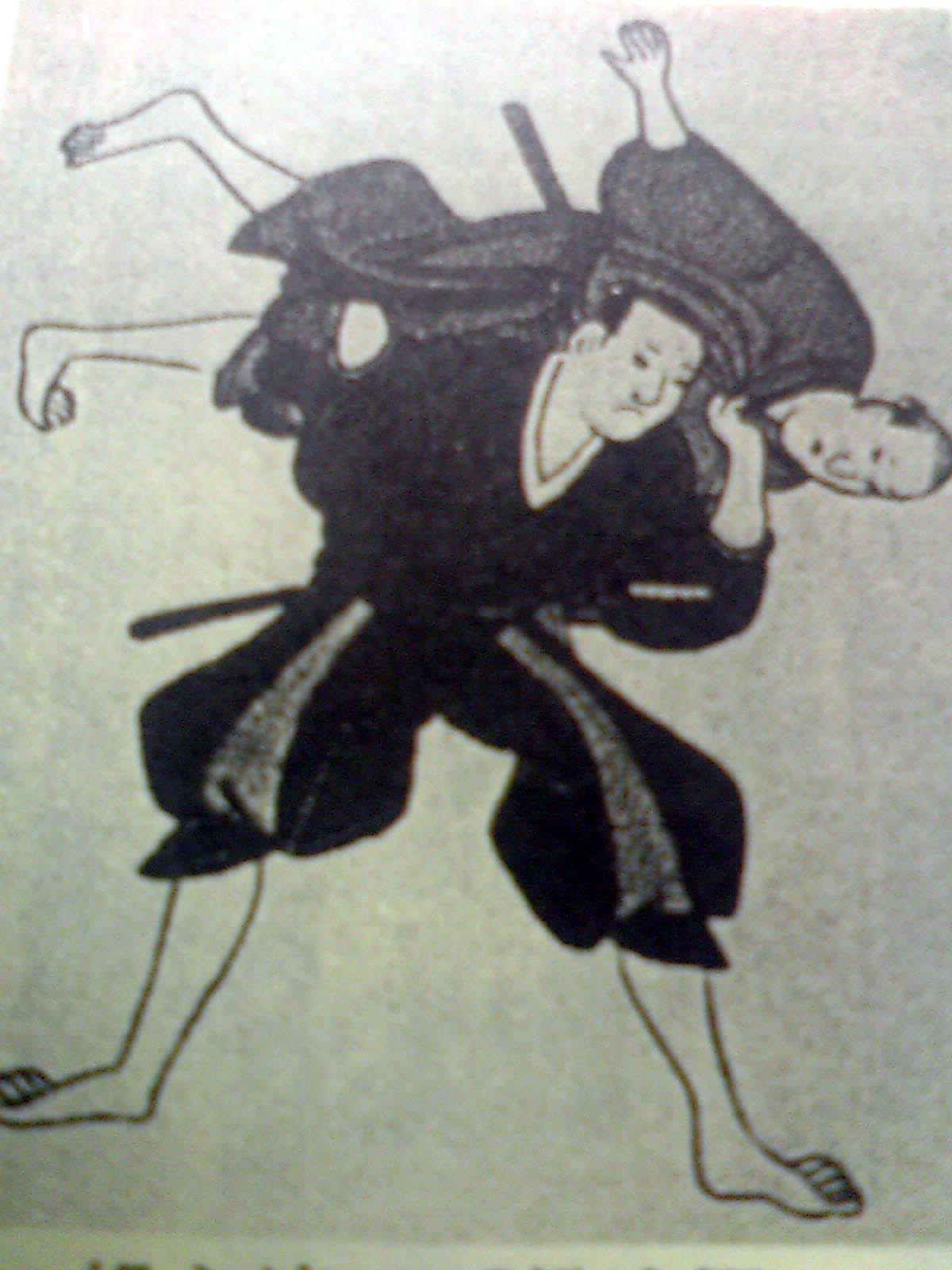
Tenjin Shin'yō-ryū had a significant influence on modern judo. Kanō Jigorō (嘉納治五郎) studied Tenjin Shin'yō-ryū before founding Kōdōkan judo (講道館柔道) in 1882, and many structural principles carried over, including throws, control methods, technical concepts, and philosophical traces. Despite this influence, the older system has remained largely invisible in popular discussions of judo history.
Parts of Tenjin Shin'yō-ryū survived into the modern age despite the collapse of the shogunate, the Meiji Restoration, industrialization, war, occupation, and rapid modernization. Some practitioners have continued to preserve the tradition (practicing kata, maintaining etiquette, studying old scrolls, and teaching) generally without profit or fame, as a deliberate act of preservation against cultural amnesia.