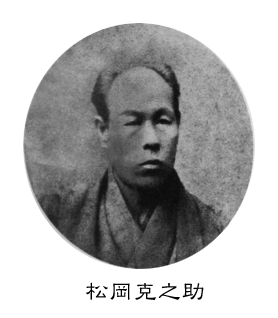
Shindō Yōshin-ryū (神道楊心流), a name usually translated as something like the "divine willow spirit school," is a Japanese martial tradition founded in 1864 by Katsunosuke Matsuoka, a samurai connected to the Kuroda clan. The name originally carried the sense of a "new willow spirit school," and the change in the writing is itself part of the school's history. Founded in late Edo Japan, just before the collapse of the old order, the school was conceived not as a narrow technique but as an integrated martial system, a sōgō bujutsu, blending unarmed methods with weapon-based principles.
Founding
Katsunosuke Matsuoka brought to the school knowledge from several earlier lines, including Tenjin Shin'yō-ryū, Totsuka-ha Yōshin-ryū, Jikishinkage-ryū, Hokushin Ittō-ryū, and Hōzōin-related spear work. He founded the school because he believed that many jūjutsu systems of his period had drifted too far into duel-oriented practice and had lost their broader military usefulness. Rather than simply preserving what he had inherited, he restructured it, combining unarmed and armed principles into a more integrated system.
The willow bends to survive, yielding is not weakness but the most demanding form of control.
Influence of Weapon Training
Because of its kenjutsu and weapon background, Shindō Yōshin-ryū's empty-hand techniques carry a weapon-influenced flavour. Its waza are described as softer and more weapon-influenced than some of the harder, more direct jūjutsu lines that fed into it. The "willow" image central to Yōshin traditions reflects this approach: rather than meeting force directly, the practitioner yields, redirects, traps, bends, and absorbs. In the school this principle is expressed through body mechanics, distance, timing, evasive movement, disruptive striking, and control of the opponent's structure.
History and Politics
Matsuoka fought on the Tokugawa side during the Boshin War and was wounded at Toba-Fushimi, reportedly shot in the back. He survived and later adopted his wife's family name, Ishijima, to conceal his identity under the new Meiji government, which viewed former Tokugawa supporters with suspicion. After the Meiji Restoration he turned toward medicine and bonesetting, opening a clinic near his dojo. This reflected a broader pattern in koryū, which often preserved healing methods such as kappō alongside their martial knowledge. His dojo gained a serious reputation, with students said to number in the thousands, and he was known for challenge matches and for remaining undefeated.
The 1895 Split and Succession
Matsuoka died in 1898 without appointing a mature direct heir in the conventional way. In 1895 a structure had already been established that divided the tradition into separate lines. Inose Motokichi became the second headmaster of the mainline, with the understanding that Matsuoka's grandson, Tatsuo Matsuoka, would eventually take over when old enough. At the same time, Ohbata Shigeta, another menkyo kaiden holder, was authorised to separate and oversee his own branch. Inose's mainline moved closer to the Kodokan judo model, emphasising unarmed shiai and compatibility with modern budō, while reducing or altering older dangerous techniques and weapon applications. This adaptation reflected the economic and social pressures of the Meiji and Taishō periods, when former samurai had lost status and older military methods had become less relevant.
The Ohbata line held more closely to the older integrated curriculum. Ohbata Shigeta came from a former samurai background, was educated, and worked as a writer for a newspaper while maintaining classical budō teaching. World War II nearly destroyed this line: Hideyoshi Ohbata, Shigeta's son, was killed on Saipan in 1944. Shigeta formally selected his young grandson Yukiyoshi as successor and sent him away from Tokyo for safety. Shigeta himself was killed during the firebombing of Tokyo in 1945, and the Eibukan dojo was destroyed.
The mainline later came to an end with the death of Tatsuo Matsuoka in 1989 without a fourth-generation successor, after which the Domonkai continued as a preservation body.
International Transmission
Yukiyoshi Obata, later known through the Takamura name, continued training under Namishiro Matsuhiro, whose knowledge helped preserve the weapons syllabus of the Ohbata-ha. Yukiyoshi moved first to Stockholm in the 1950s and then to California in the 1960s, and in 1968 he established what became the Takamura-ha Shindō Yōshin Kai. The Takamura-ha is today probably the best-known active preservation of Shindō Yōshin-ryū internationally. Its headquarters are associated with Evergreen, Colorado, under Toby Threadgill, who became the global head after Yukiyoshi Takamura's death in 2000 and after the other menkyo kaiden holders retired from active teaching. The organisation remains small by modern standards.
Curriculum
Shindō Yōshin-ryū does not use the modern kyu and dan ranking system familiar from karate, judo, and aikido. Instead it uses older licensing stages: shoden, chūden, jōden gokui, and ultimately menkyo kaiden, a structure that emphasises transmission rather than simple rank.
The shoden level includes taijutsu and buki teachings, with kata that emphasise proper distance, evasive movement, disruptive striking, and body control. In classical systems such striking, or atemi, is often used to break structure, interrupt intent, open a line, and damage balance so that control becomes possible, rather than only to incapacitate.
Chūden is more extensive, containing a large body of taijutsu kata and weapon kata involving daitō, shōtō, tantō, tetsubō, kogai, torinawa, and armed grappling. It also includes references to kogusoku and katchū, implying applications connected to armour.
Jōden gokui, the higher teachings, moves into more advanced and secret areas: deeper principles, body and mind influence, pressure points, breath, resuscitation, spiritual and moral teachings, and oral transmissions reserved for menkyo kaiden.
Legacy and the Link to Wadō-ryū
One of the most significant echoes of Shindō Yōshin-ryū is found in Wadō-ryū karate. Hironori Ōtsuka, the founder of Wadō-ryū, studied Shindō Yōshin-ryū under Nakayama Tatsusaburō, a licensed instructor connected to the mainline. This influence helps explain why Wadō-ryū incorporates jūjutsu thinking such as evasion, body shifting, entering, and unbalancing, blending striking with control, rather than moving like a direct Okinawan karate transplant.
The school's emphasis on natural movement and sophisticated body mechanics (receiving, shifting, angling, entering, and redirecting rather than meeting force directly) remains its defining technical characteristic. Much of the tradition remains difficult to access: not all documents are public, densho remain in private hands, and some details are fragmentary, with parts of the tradition reconstructed through lineal transmission, interviews, and specialist research.